
Garment District News set out to document costume and fashion manufacturing—with or without insider access, celebrity interviews, or quick hits.
When I ask the founders of Garment District News what their publication is really about, they don’t answer right away.
“We usually pause for a moment,” one of them tells me over video call, their cluttered studio visible behind them—fabric swatches pinned to corkboard, stacks of magazines, reference books spilling from shelves. “Not because we don’t know the answer, but because it’s layered.”
They settle on this: It’s about understanding how things are made, and why that process matters.
That deceptively simple mission has guided the independent magazine to start carving out a niche in an industry not known for transparency. While most fashion media chases runway shows and celebrity endorsements, Garment District News is building its reputation on something decidedly less glamorous: supply chains, fiber technology, and the invisible infrastructure behind every garment.
From Communications to Costume: An Unexpected Journey
The founders come from backgrounds in communications, journalism, and film analysis rather than traditional costume design or fashion. Their early work in television commercials, video production, and independent filmmaking sharpened their understanding of visual storytelling, while later experience in data analysis strengthened their ability to recognize patterns and industry shifts that others often can’t see or overlook.
“Our first love is storytelling,” they explain. “Our training in film analysis helped us extend that storytelling into costume design—understanding how wardrobe communicates character, history, and emotion without a single line of dialogue—and into fashion design, where pop culture reflects political, economic, social, and environmental realities. Those influences then become self-reflexive in costume, creating an intricate loop where each discipline continuously feeds the other.”
“Our passion for storytelling made us wonder—why those fibers? Why that fabric? Where did you find that Scottish wool to create a tartan for a kilt in a film? How do you even locate those suppliers?” they recall. “We started tracing each step in reverse, trying to codify this art, and discovered that many parts of the industry weren’t really talking to one another.”
But as they explored that world, something unexpected happened. They began tracing everything backward.
“From wardrobe departments to workrooms. From workrooms to suppliers. From suppliers to mills. From mills to raw materials,” they recount. “And suddenly, we weren’t just studying costume anymore. We were discovering an entire hidden universe of farms, fibers, fabrics, treatments, finishes, and technologies.”
That discovery revealed a troubling disconnect: the finished products they admired on screen were completely separated from the hundreds of hands that helped create them. That gap became their mission.
“We bring all of this—journalism, visual storytelling, data analysis—to the magazine in a unique way,” they tell me. “It’s not just one skill set. It’s the combination that allows us to tell these stories properly.”
Building Understanding Without Access
Garment District News entered the scene without the typical benefits that established trade publications enjoy. They had no built-in industry connections, no insider pipelines, and no guaranteed interviews to rely on when starting out. As the founders put it plainly, “We didn’t start with access. We started with curiosity.”
Despite lacking initial access, the team made concerted efforts to form connections. They sent emails, made phone calls, and pursued introductions wherever possible. However, they quickly discovered that gaining access, especially in the entertainment industry, is no easy feat. One founder explained, “Nobody in Hollywood is going to trust you or give you real access until you’ve proven your worth. It’s been part of the culture for as long as the industry has existed. You have to earn your place.”
Rather than waiting for approval or easy entry, Garment District News chose to begin their work regardless of the obstacles. They committed to thorough research, investigated supply chains, traced materials across continents, and examined how machinery, labor, and logistics influence creativity. Their guiding principle was simple: “We believe serious journalism doesn’t wait for perfect conditions. It builds understanding piece by piece.”
When asked why they persist in covering an industry that does not always welcome scrutiny, their answer was straightforward: “Because the industry doesn’t stop when interviews do.” Despite challenges, production continues, innovation progresses, supply chains evolve, materials circulate, and new ideas emerge. Garment District News remained dedicated to documenting every aspect, trusting that strong work would eventually attract visibility.
The team recognized they had to begin somewhere, holding onto the hope that “if you build something real, people eventually want to be part of it.” Until more designers and creative leaders are ready to speak openly, Garment District News continues to research, document, and connect the dots—quietly building credibility, one story at a time.
Making the Invisible Visible
Every garment represents an international collaboration, they argue—farmers and chemists, spinners and weavers, dyers, distressors, and finishers, engineers and pattern makers, logistics coordinators and port workers. Yet most coverage focuses only on the final image.
“We wanted to document the whole story,” they explain. “When readers open our pages, they’re not just seeing style. They’re going to be seeing systems.”
This approach means treating trends as questions rather than destinations. Why did this go viral? What technology made it possible? Which materials enabled it? Who benefited? What comes next?
“Instead of chasing what’s popular, we analyze why it became popular,” they say. “Our goal is not speed. Our goal is clarity.”
Long-Form in a Short-Form World
In an era of disappearing media—scroll, click, forget—Garment District News has deliberately positioned itself as the opposite. They are investing in long-form reporting, technical accuracy, historical context, and careful editing.
“Our features are meant to be read slowly. Revisited. Referenced. Collected,” they tell me. “Each issue is designed to remain useful long after publication.”
The magazines are meant to live on shelves, desks, and studio tables. To become collector’s editions—not because they’re rare, but because they remain relevant and educational.
This approach has attracted a diverse readership: design students and costume assistants, manufacturers and executives, educators and independent creators. Some are just beginning their careers; others have decades of experience.
“What they share is curiosity,” the founders say. “They want to understand the full picture.”
The Bigger Picture
At its core, they tell me, Garment District News is about respect—for craft, for labor, for knowledge, for process.
“We believe the garment industry deserves serious documentation,” they say. “Not simplified. Not sensationalized. Not fragmented. Explained. Carefully. Thoughtfully. Honestly.”
As our conversation winds down, they offer one final thought about what readers are supporting when they pick up an issue:
“You’re not just buying a magazine,” they say. “You’re joining a conversation about how creativity, industry, and culture intersect. You’re supporting long-form journalism in a short-form world. You’re helping preserve knowledge that might otherwise be lost.
And you’re not just reading pages or scrolling a website—you’re becoming part of a growing community platform, a place where professionals, makers, and learners can exchange knowledge, document experience, and preserve timeless stitching, tools, and techniques that risk disappearing simply because no one ever knew to ask how they were done.”
They pause again, then add: “And you’re reminding the industry that its stories matter—at every level. From fiber to film. From mill to movie set. From idea to impact.”
They make one last emphasis, “Our goal is that in five years, ten years, and fifty years – our readers will keep choosing Garment District News. That’s why they publish.
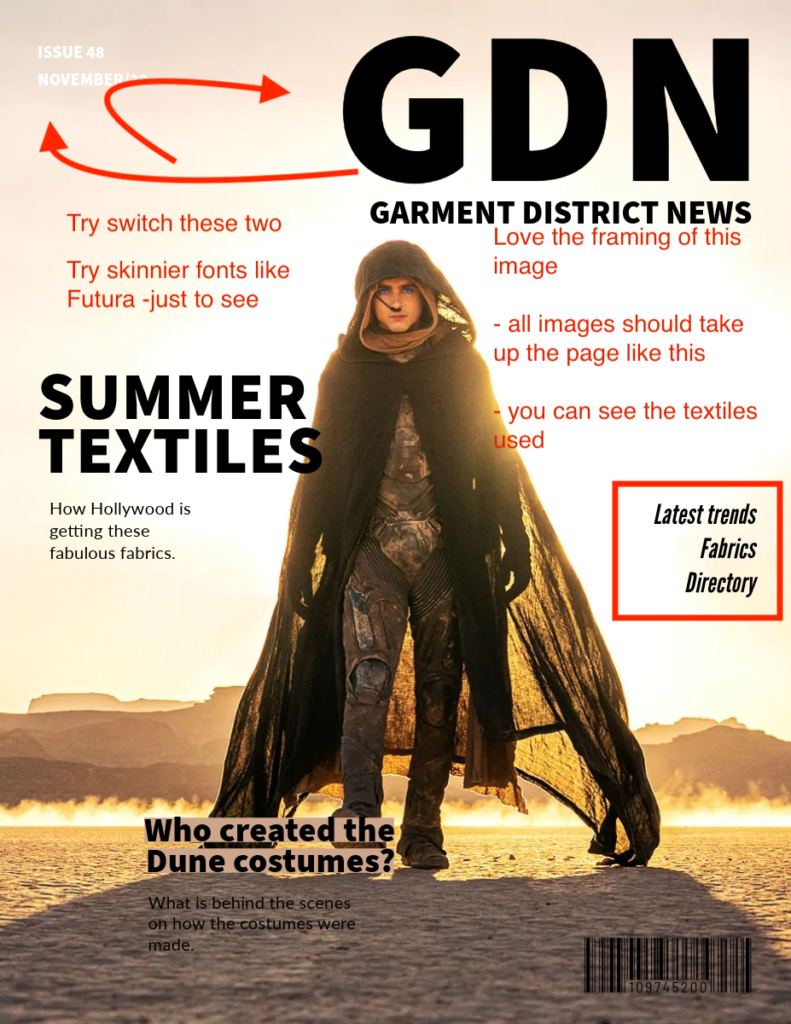
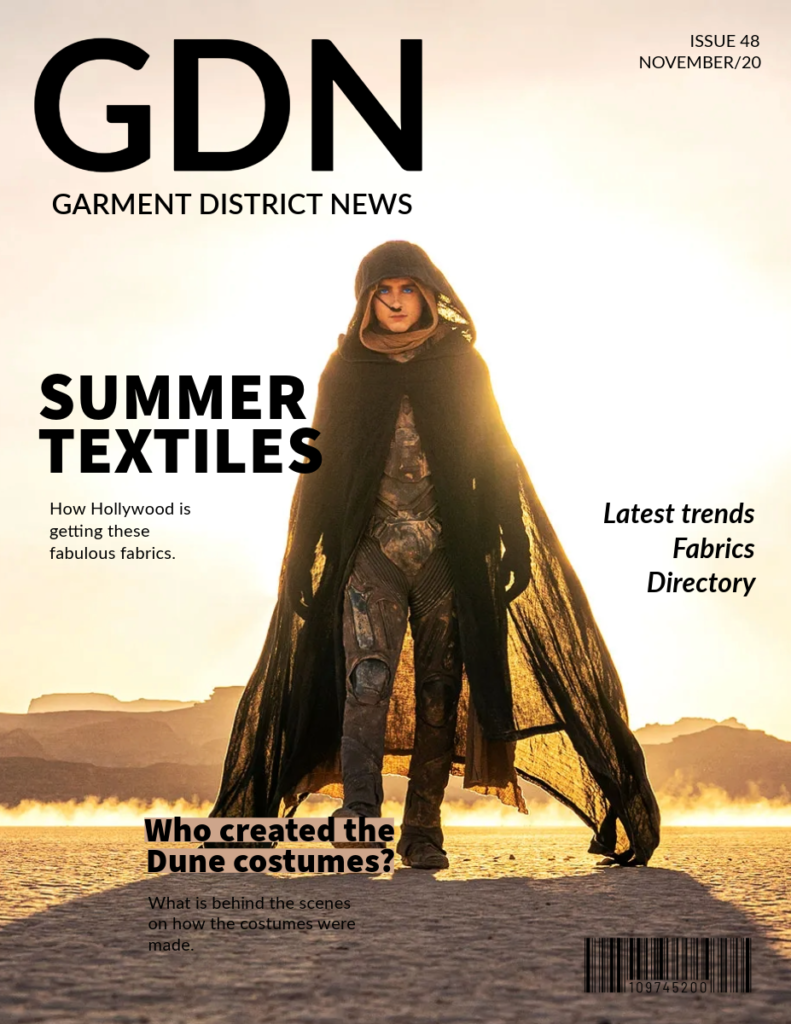
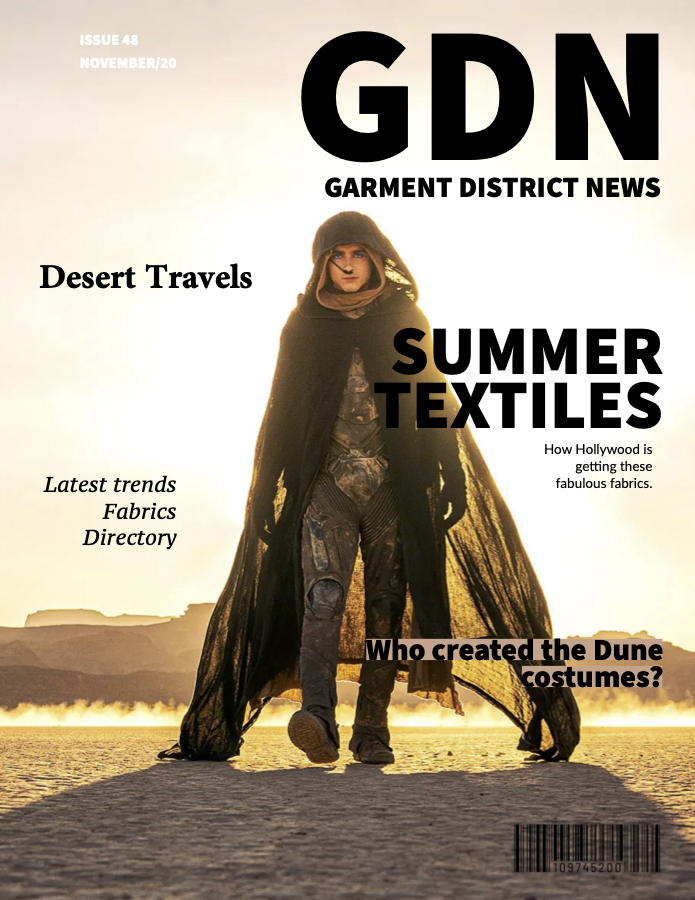
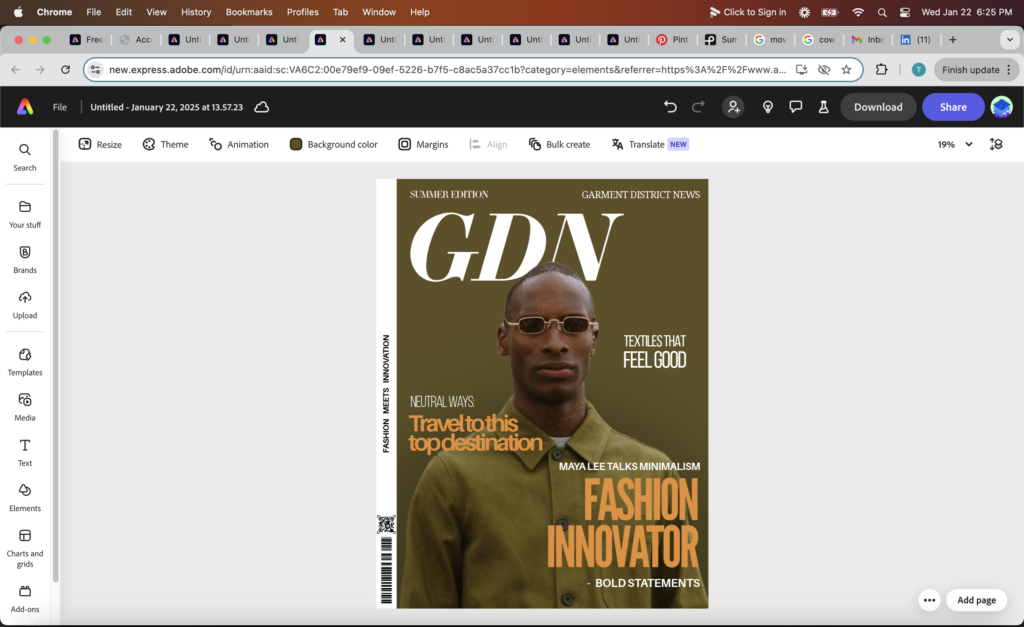
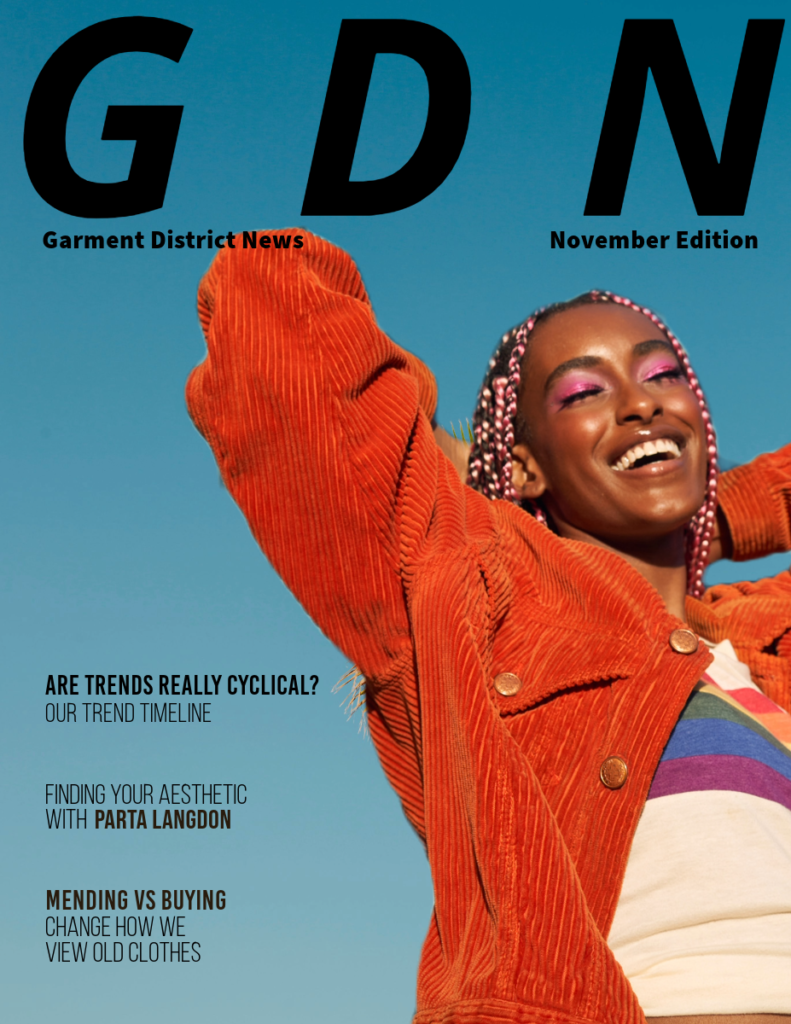
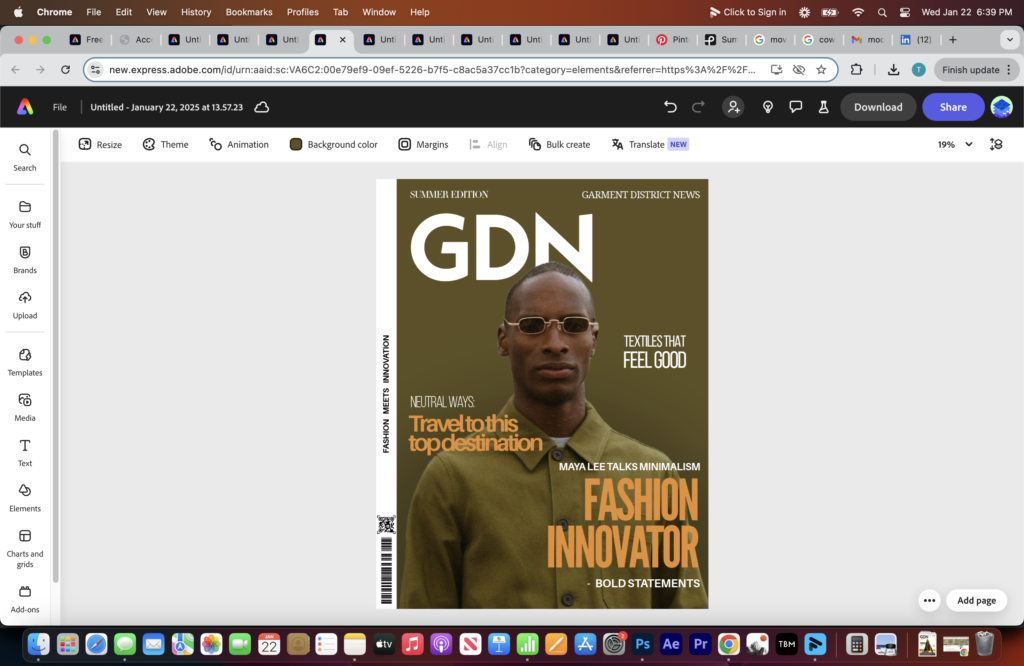
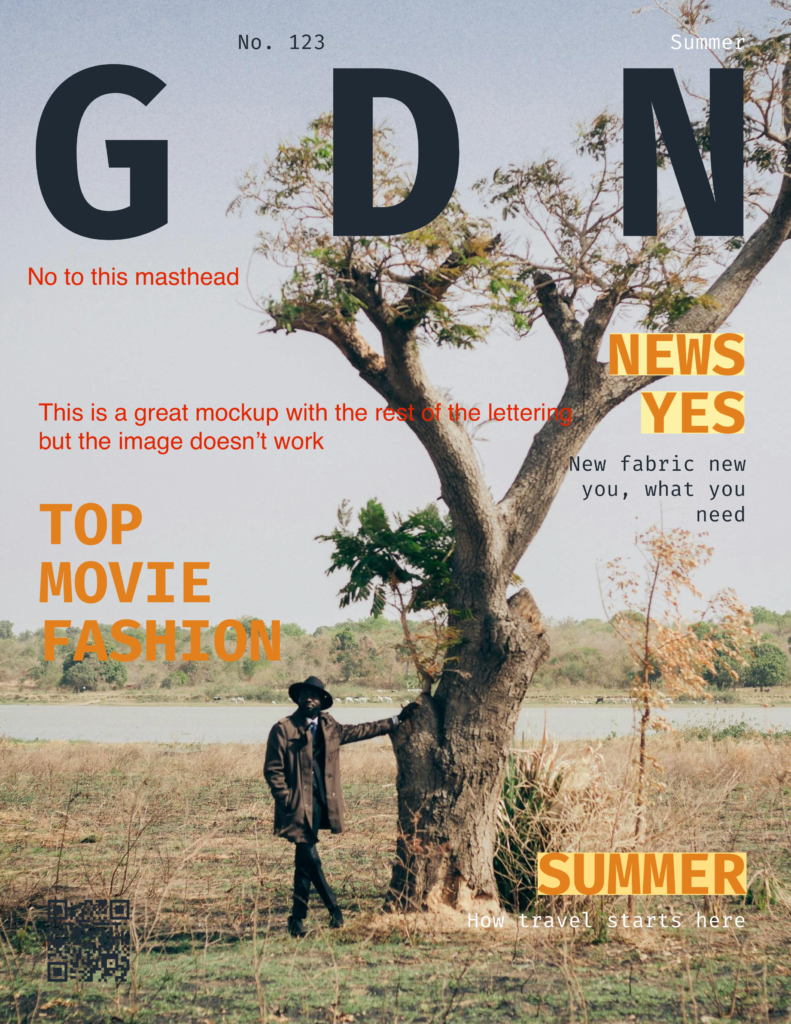
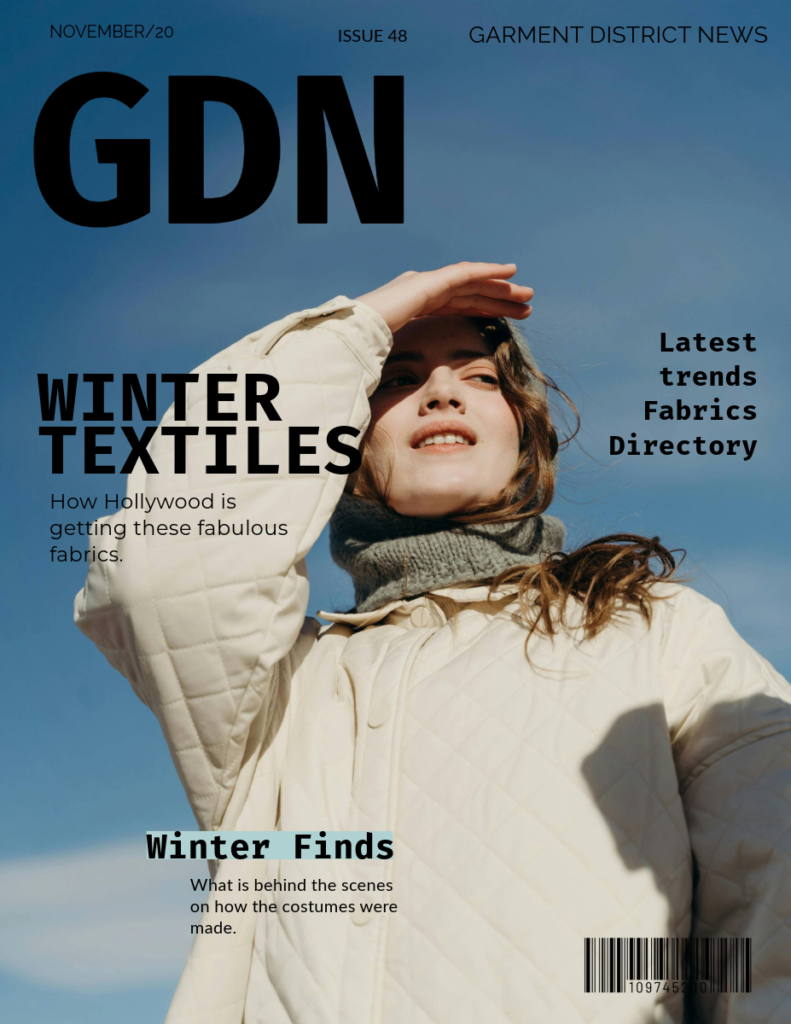
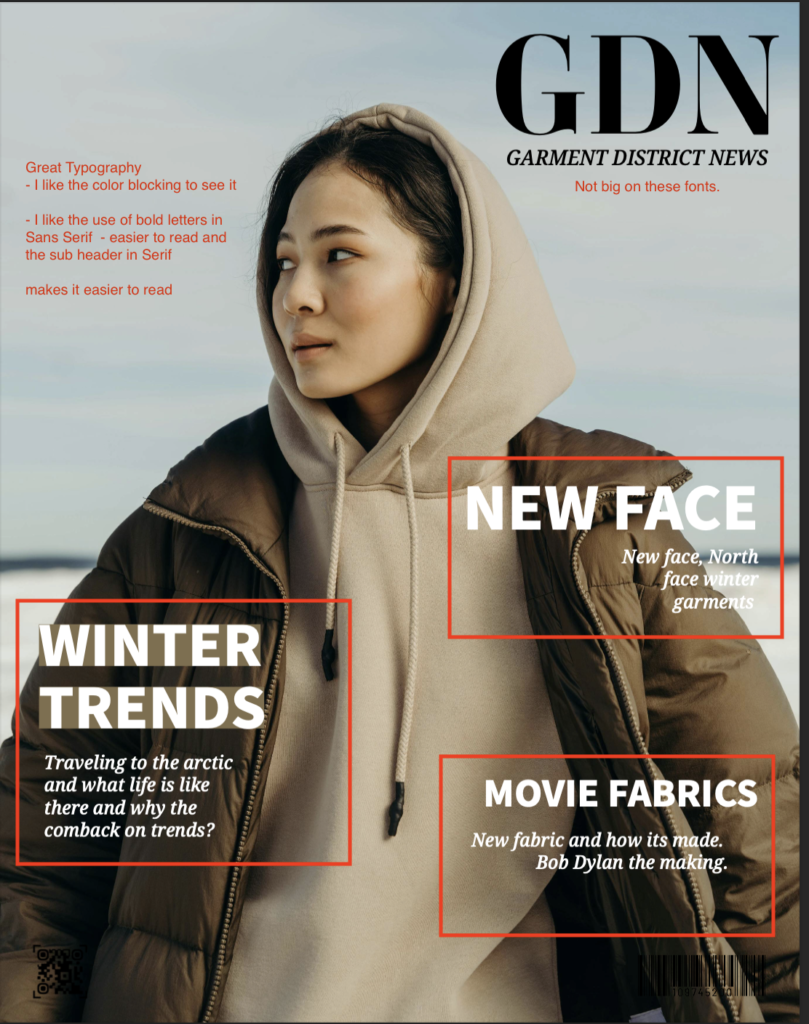
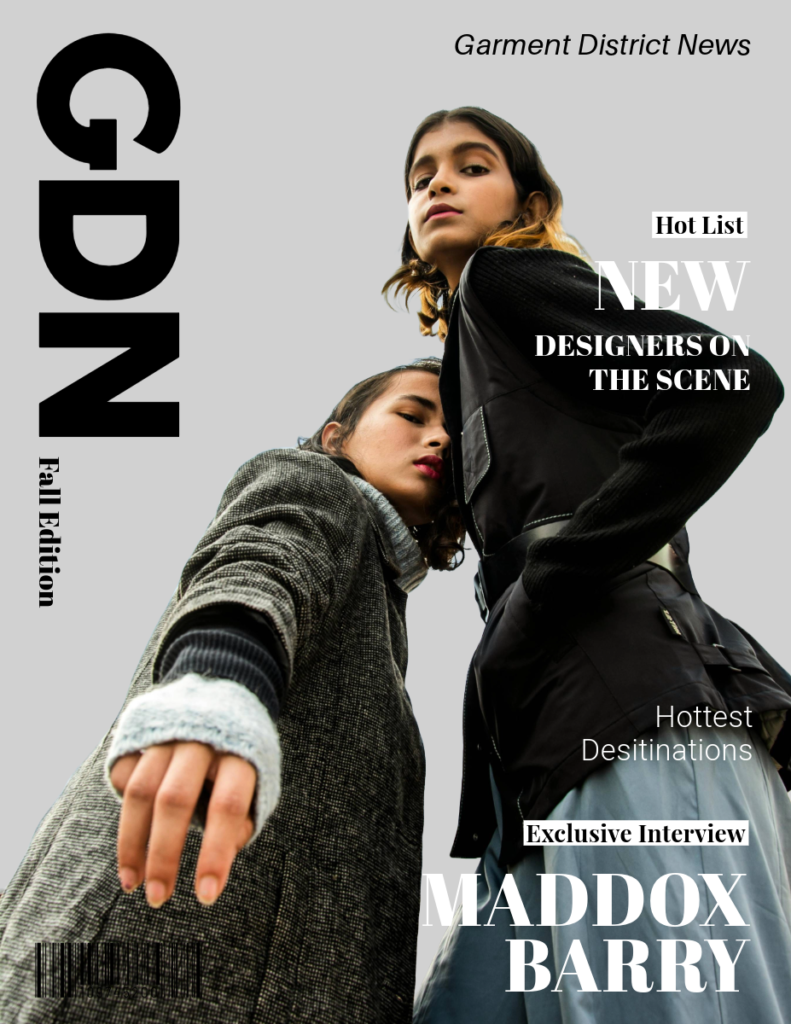
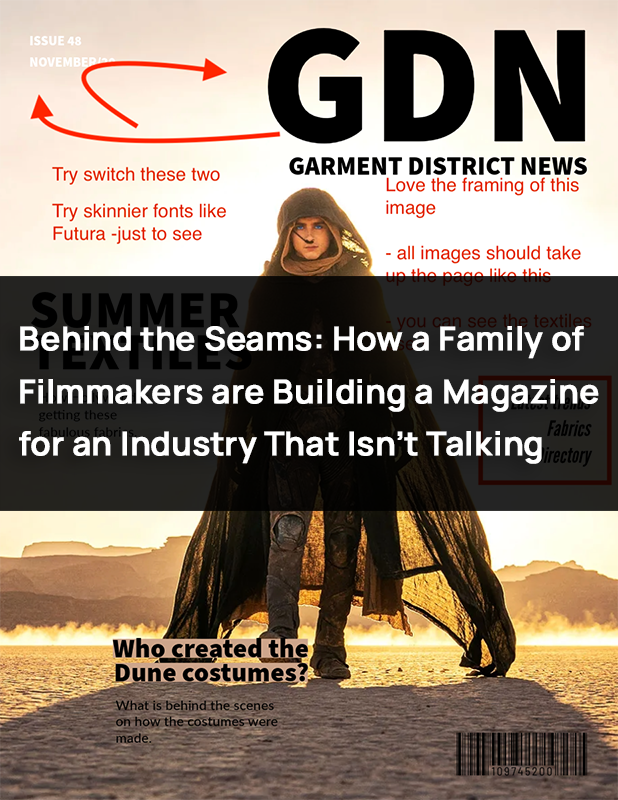
Check out their initial front cover design concepts—raw iterations that show how they translated “making the invisible visible” into visual form.