


Within the academic structure of University of California, Los Angeles, the study of costume design for theater, film, and television is anchored by the David C. Copley Center for the Study of Costume Design, housed within UCLA’s School of Theater, Film, and Television.
The Center functions as a research, teaching, and archival institution dedicated to examining costume design as both an applied craft and a scholarly discipline. Its work connects historical study, professional practice, and cultural analysis, positioning costume design within global creative industries.
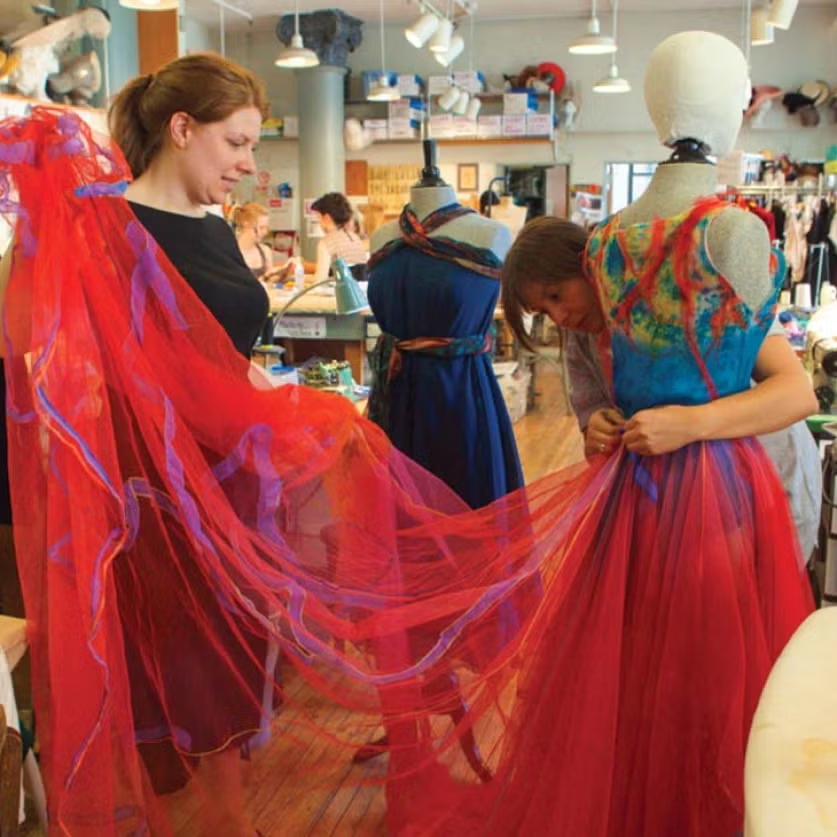
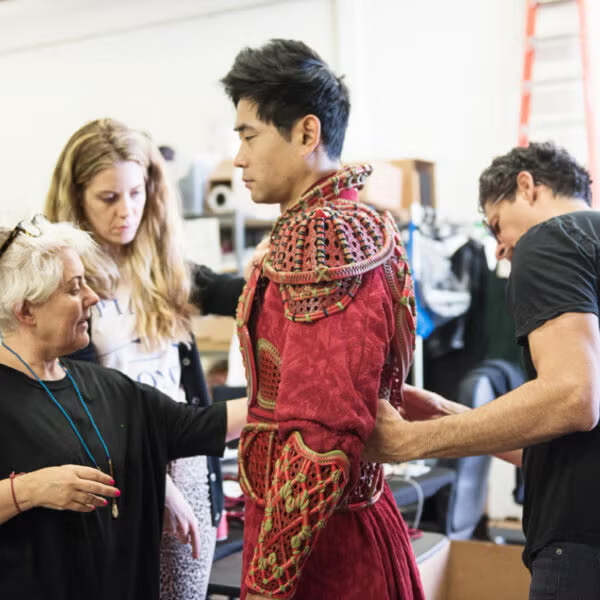
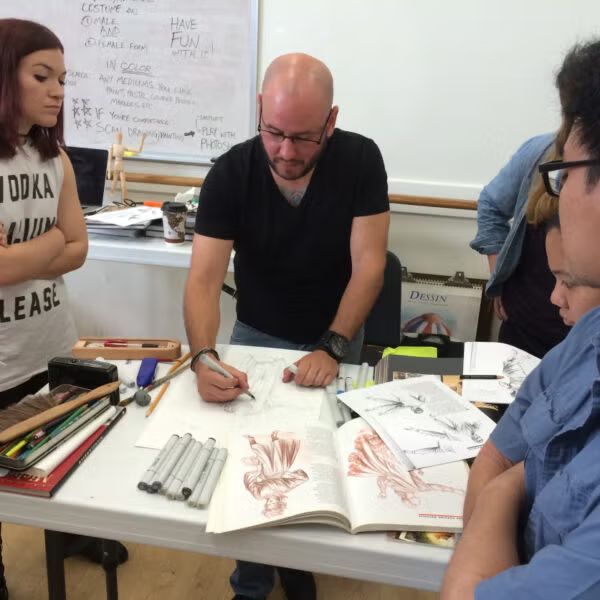
Institutional Role and Academic Framework
The Copley Center operates as a specialized academic resource within UCLA’s broader film, theater, and media programs. Rather than functioning solely as a training studio, it serves as a multidisciplinary hub supporting:
- Scholarly research
- Professional development
- Archival preservation
- Public programming
- Industry engagement
Its mission reflects an understanding of costume design as an intersection of art history, performance studies, material culture, fashion studies, and production management.
The Center supports both undergraduate and graduate instruction while also serving external researchers and practitioners.
Founding and Leadership
The Copley Center was established through an endowment from David C. Copley and was founded under the leadership of Deborah Nadoolman Landis, an Oscar-nominated costume designer, historian, and Distinguished Professor.
Under its founding direction, the Center was developed as the world’s first university-based institution devoted exclusively to the history, theory, and practice of costume design for performance media.
Its leadership model integrates academic scholarship with professional industry experience.
Educational Scope and Areas of Study
The Copley Center supports a wide range of research and instructional areas related to costume design.
Costume History and Theory
Programs and resources emphasize:
- Historical costume analysis
- Period research methodologies
- Archival documentation
- Genre-specific study
- Cultural symbolism in dress
Students and scholars examine how costume reflects social structures, political movements, and technological change.
Design Practice and Visualization
Instruction and programming address:
- Costume illustration
- Concept sketching
- Visual storytelling
- Research-based design development
- Presentation standards
Costume drawing is treated as both a technical skill and an independent artistic discipline.
Performance and Media Contexts
Study areas include:
- Film and television production systems
- Theater staging requirements
- Continuity and narrative design
- Collaboration with directors and cinematographers
- Costume supervision workflows
These subjects situate costume design within larger production ecosystems.
Fashion and Popular Culture
Research initiatives explore:
- Influence of film costumes on fashion trends
- Designer-brand relationships
- Media-driven style movements
- Cross-cultural costume circulation
- Public reception and fandom
This work connects costume design to global consumer culture and media economics.
Teaching Model and Learning Environment
The Center complements UCLA’s formal degree programs by providing structured educational programming beyond standard coursework.
Typical learning formats include:
- Master classes with industry professionals
- Research seminars
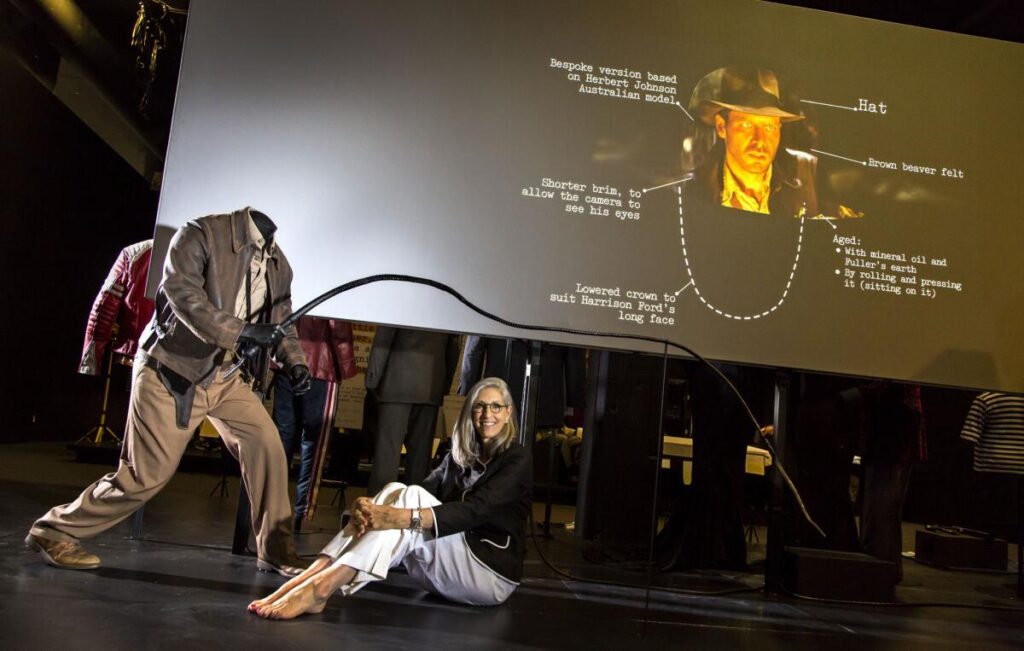
- Curated exhibitions
- Public lectures
- Scholarly workshops
These activities allow students to engage directly with working designers, historians, and archivists while developing critical research and analytical skills.
Instruction emphasizes documentation, source evaluation, and professional communication alongside creative development.
Research, Archives, and Collections
A central function of the Copley Center is the preservation and interpretation of costume-related materials.
Resources include:
- Original costume pieces
- Design sketches and renderings
- Production photographs
- Personal archives of designers
- Research documentation
These collections support academic inquiry into construction methods, material usage, aesthetic trends, and production practices across decades of theater, film, and television history.
Students are trained in archival research methods and material analysis.
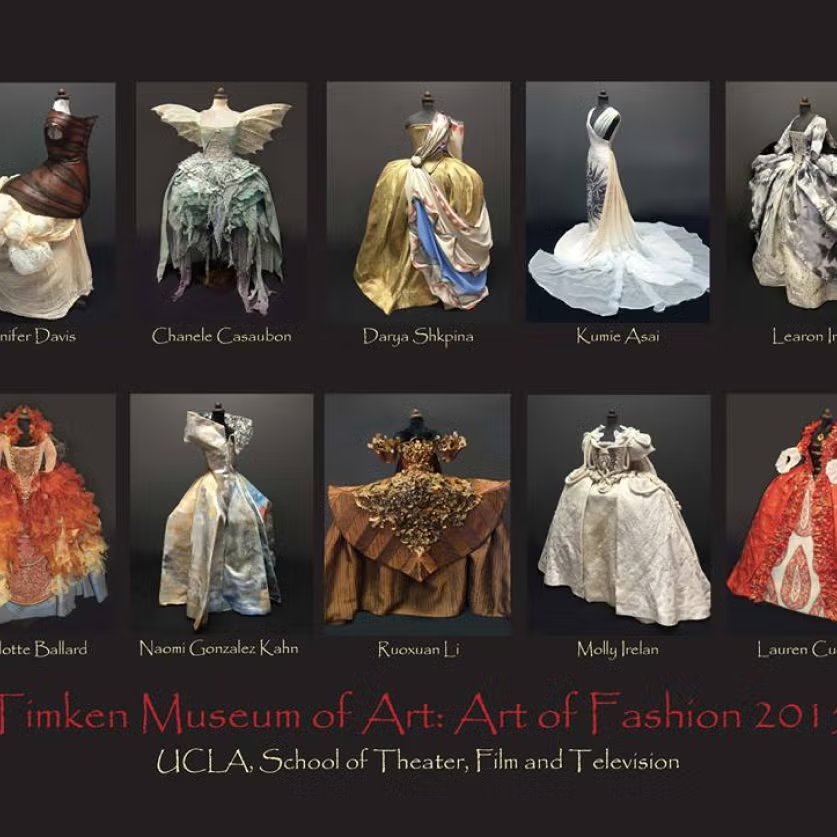
Public Programming and Scholarly Exchange
The Center maintains an active schedule of public and academic programming designed to foster dialogue between scholars and practitioners.
Annual activities include:
- Symposia and conferences
- Scholarly panels
- Thematic exhibitions
- Research publications
- International collaborations
These events position UCLA as a convening space for global discourse on costume design, attracting historians, filmmakers, and industry professionals.
Industry and Professional Integration
The Copley Center’s location within Los Angeles places it in direct proximity to major film and television production centers. This geographic context supports:
- Professional networking
- Industry-led instruction
- Collaborative research
- Internship pathways
- Career development opportunities
Students benefit from exposure to working costume departments, studios, and production networks.
This integration reinforces the practical realities of costume design, including budgeting, scheduling, labor coordination, and union standards.
Academic Standards and Student Engagement
Participation in Center-supported programs requires strong academic preparation and demonstrated commitment to research and creative practice.
Evaluation commonly includes:
- Research papers
- Archival projects
- Exhibition contributions
- Design documentation
- Scholarly presentations
Students are assessed on analytical rigor, historical accuracy, visual communication, and professional ethics.
Role Within Global Costume Design Education
Within the broader landscape of creative education, the UCLA Copley Center occupies a specialized research-oriented position.
Its model reflects several key trends in costume education:
- Integration of practice and scholarship
- Emphasis on archival literacy
- Focus on interdisciplinary research
- Documentation-driven methodologies
- Engagement with cultural history
Unlike programs centered primarily on production training, the Center emphasizes intellectual infrastructure for the long-term study and preservation of costume design.
Conclusion
UCLA’s David C. Copley Center for the Study of Costume Design represents a research-based model for understanding costume design as a cultural, historical, and professional discipline. Through archives, academic programming, and industry engagement, it connects creative practice with scholarly inquiry.
For those examining how costume design functions within theater, film, and television ecosystems, the Center offers an institutional framework that links material craftsmanship, visual storytelling, historical research, and global cultural influence.