

Ruth E. Carter
Sinners — Best Costume Design
Ruth E. Carter does not design costumes to decorate history—she designs them to bear witness. In Sinners, her fifth Academy Award–nominated work, Carter turns the American South of the 1930s into a living archive, where fabric absorbs memory, labor, violence, and faith. Every garment carries the weight of survival.
Carter’s career is one of historic firsts: the first Black woman to win the Oscar for Costume Design (Black Panther), the first to win twice (Wakanda Forever), and now, with Sinners, the most-nominated Black woman in Oscar history across any category. Yet Sinners does not trade in legacy. It is austere, grounded, and human—built not for spectacle, but for truth.
I just want everyone to know how much I care about our history and our stories.

A World Built, Not Borrowed
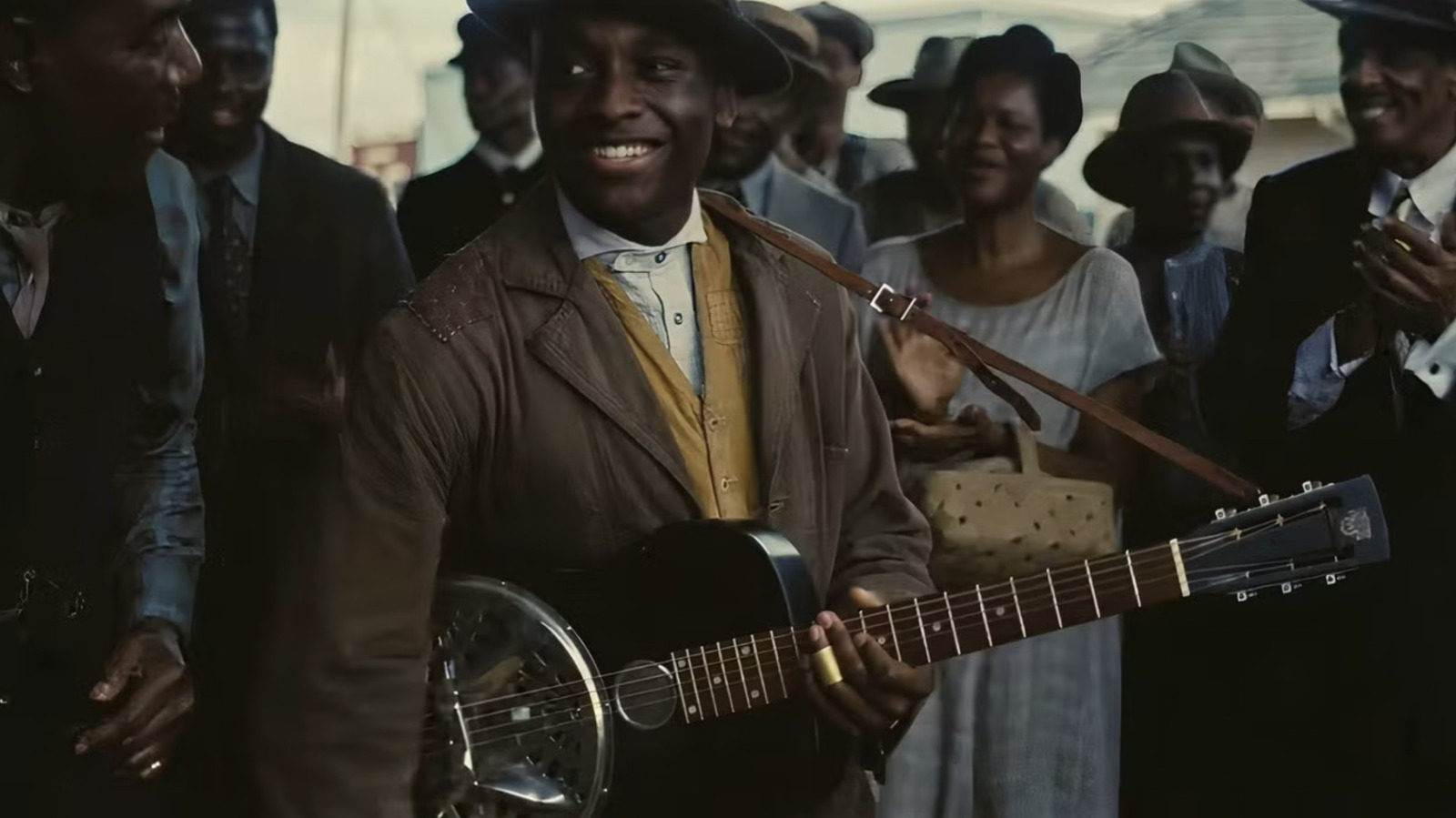
Set in 1930s Mississippi, Sinners unfolds over a single day, but Carter’s costumes suggest generations. Because of the film’s intense physicality and blood-heavy action, 90% of the costumes were built from scratch, rather than rented. Authenticity required control—over fabric, aging, fit, and durability.
Carter relied on cotton, denim, and wool, selecting textiles that could withstand modern filmmaking while appearing convincingly period. Every garment was heavily aged—frayed seams, softened collars, sweat-darkened cotton—so that nothing felt new, pressed, or aspirational. These were clothes grown into, handed down, repaired, and worn thin.
Caption — Built Costumes & Materials
Ninety percent of Sinners’ costumes were built from scratch using cotton, denim, and wool, then aggressively aged to reflect labor, climate, and survival in the 1930s Mississippi Delta.
One rule governed the fittings: no perfect tailoring. Pants were cuffed instead of hemmed. Sleeves ran long. Jackets sagged. The clothes had to look like they belonged to people still growing into them—physically and socially.
I didn’t want the clothes to fit perfectly. I wanted them to feel lived in. That looks more real.
Color as Character
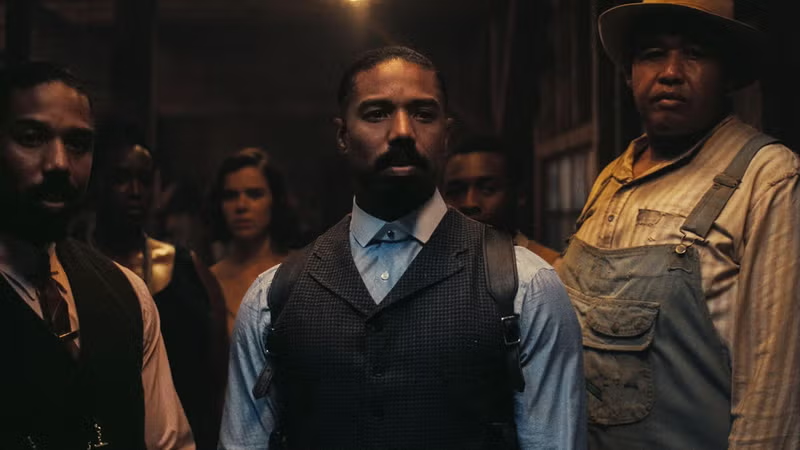
Carter’s palette in Sinners is deceptively simple—red, white, and blue—but its meaning is anything but. Inspired by colorized photographs of the South and American workwear, the scheme roots the film firmly in national identity, even as it interrogates it.
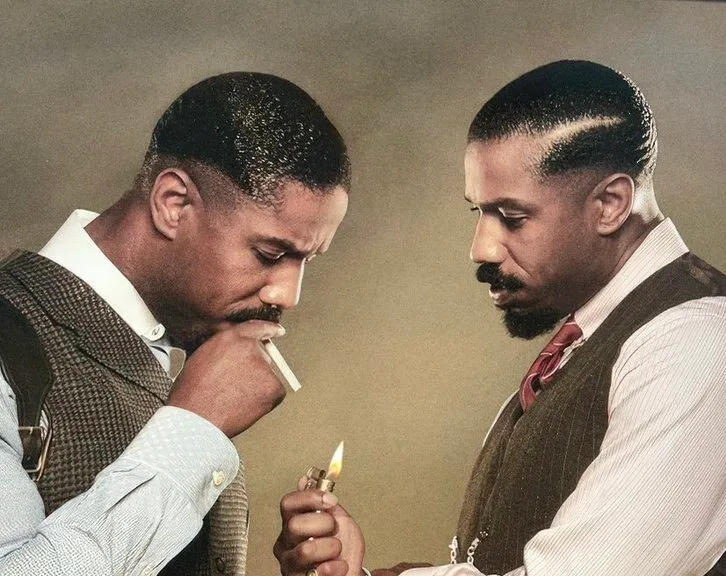
Smoke and Stack, twin brothers played by Michael B. Jordan, are differentiated not only by temperament but by chromatic language. Smoke lives in blue—denim caps, work shirts, gray-blue suits—an everyman’s armor. Stack inhabits red-browns and brick tones, tailored three-piece suits, polished shoes, jewelry that signals ambition and danger.
Caption — Color Symbolism
Blue defines Smoke’s working-class restraint; red-browns mark Stack’s volatility and aspiration. Together, they form a deliberate red, white, and blue American palette.
Carter also controlled red carefully, aware of the film’s bloodshed. Blue dominates the frame—cool, dusty, sweat-soaked—allowing moments of red to strike with intention rather than overwhelm.

Spiritual Armor
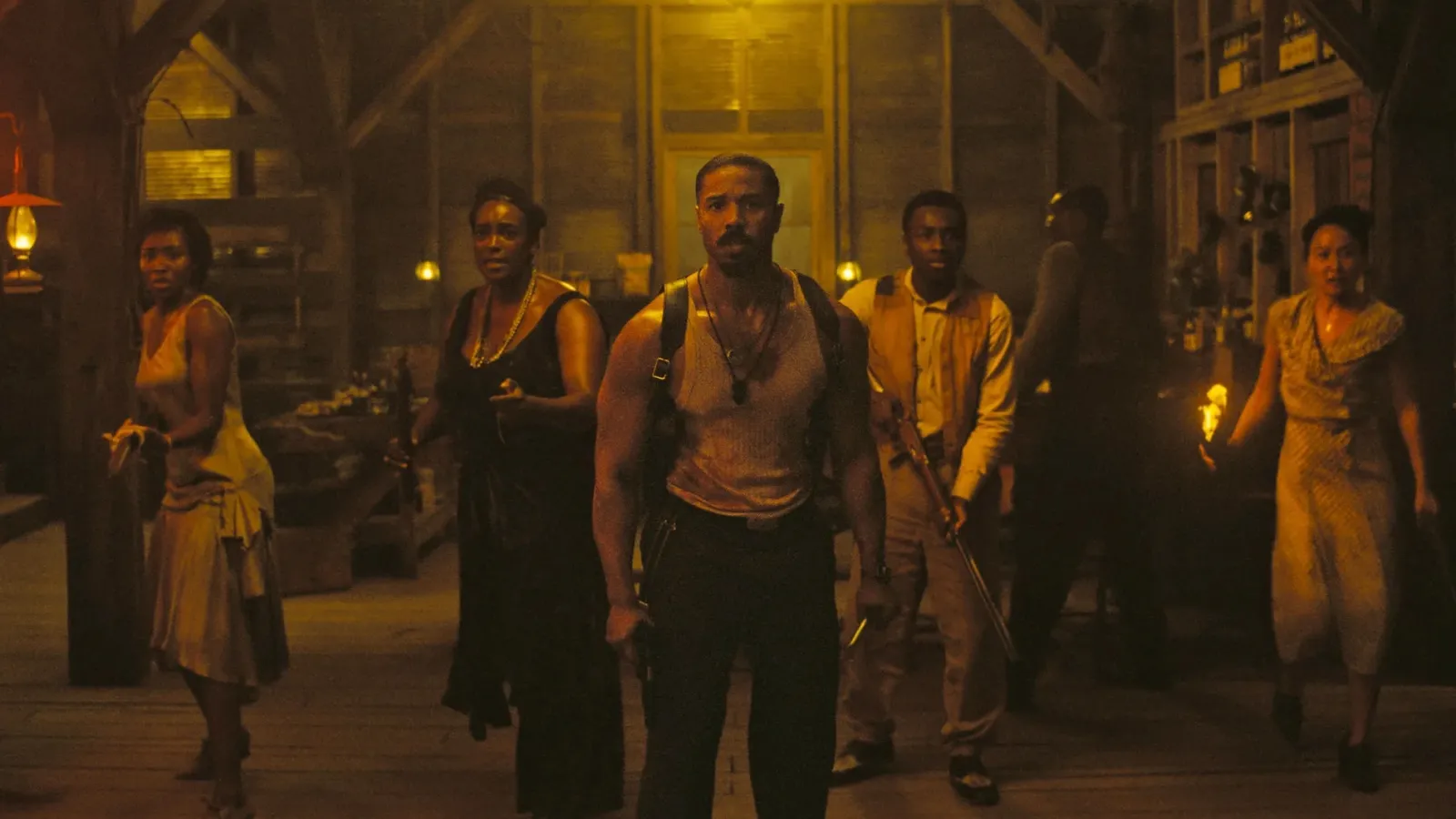
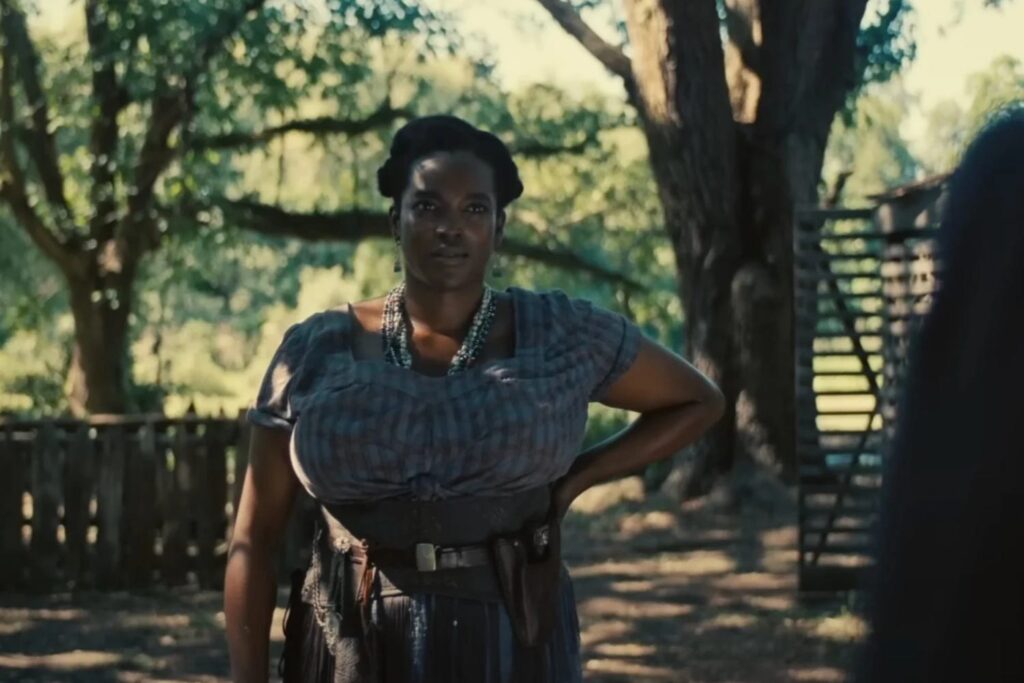
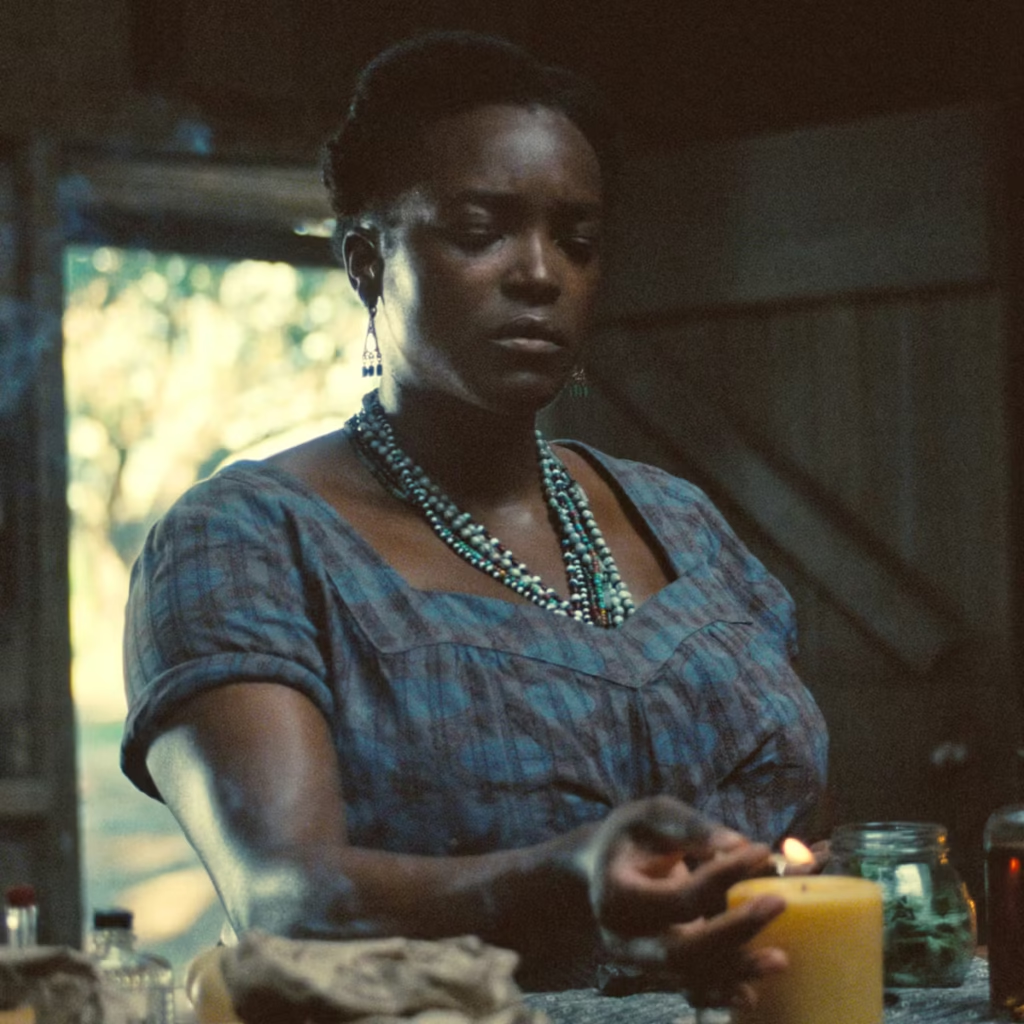
Annie, the film’s spiritual anchor, wears costumes that function as protection rather than display. Her wardrobe draws from Hoodoo traditions, ancestral memory, and practical ritual. Leather belts carry pouches for oil or tools. Prayer beads remain hidden beneath clothing. Raw silk skirts are dyed blue, layered with fringe that moves like breath rather than ornament.
Carter resisted familiar tropes. No shawls, no exotic shorthand. Annie’s power comes from everyday objects imbued with belief.
Caption — Spiritual Craft
Annie’s costumes integrate Hoodoo symbolism through concealed prayer beads, ritual tools, and layered textures—designed as spiritual armor, not spectacle.
They weren’t fashion statements. They were her protection.
Time, Blood, and Continuity
Because Sinners unfolds over a single day, costume continuity became a narrative challenge. Jackets come on and off. Shirts open and close. Blood accumulates. Carter’s team tracked every change meticulously so that performance, editing, and costume remained seamless.
Stack’s transformation—moving between control and collapse—is marked subtly through costume interaction rather than full changes. A vest put back on becomes a declaration of denial. A jacket removed exposes vulnerability. These moments are small, but they carry the weight of character.

Research as Responsibility
Carter’s process is rooted in scholarship. For Sinners, she returned to sources that have shaped her career: photography by Eudora Welty, histories of the Great Migration, The Warmth of Other Suns, and firsthand consultation with historians, including experts on Hoodoo traditions in the South.
This research does not appear on screen as reference—it appears as truth. The costumes never announce their accuracy; they simply exist within it.
It became my life’s mission to tell these stories in an authentic way.
A Living Record
Sinners arrives during a historic Oscar season, one that underscores both progress and disparity. Since 1929, only a fraction of Oscar statuettes have gone to Black women. Carter’s fifth nomination does not resolve that imbalance—but it stands as a record carved through discipline, care, and relentless excellence.
In Sinners, Ruth E. Carter does what she has always done best: she transforms costume design into cultural memory. These garments do not recreate the past. They carry it forward—thread by thread, stain by stain—so it cannot be forgotten.