

Garment District News | Costume Spotlight
The Woman King’s Power, Pigment, and Warrior Surface
In The Woman King, costume is not passive adornment. It is rank, discipline, movement, ritual, strength, and resistance — a visual language built from leather, cloth, metal, body detail, and the physical demands of warrior life.

The costume design in The Woman King succeeds because it never separates beauty from force. These garments are visually commanding, but they are also built to suggest hierarchy, combat readiness, ritual meaning, and lived physicality. The clothing does not merely frame the body. It projects training, discipline, belonging, and power.
That is what makes the film’s wardrobe so memorable. It is ceremonial without becoming fragile. It is visually rich without feeling precious. Instead, the costumes move with the body, gather dust, catch light, and carry the emotional pressure of a story shaped by warfare, loyalty, lineage, and survival.
In a film centered on the Agojie, costume must communicate quickly. The viewer needs to understand strength, structure, and identity at a glance. The Woman King achieves that through silhouette, texture, body detail, material contrast, and a tightly controlled relationship between adornment and military presence.
The Designer Behind the Look

Image: Gersha Phillips, costume designer for The Woman King.
Gersha Phillips
Gersha Phillips shaped the costume world of The Woman King with a design approach that balances symbolism, movement, and visual authority. The result is a wardrobe system that feels rooted in a living structure of status, training, and social meaning rather than a generalized historical fantasy.
What makes the design especially strong is its clarity. The warrior garments read as disciplined and formidable, yet they remain specific in detail — shaped by surface, structure, ornament, and the material logic of a society with its own visual codes.
The Story Behind the Costume
The Woman King must hold together several visual worlds at once: the disciplined identity of the Agojie, the authority of the royal court, the physical reality of warfare, and the emotional journeys of individual characters. That requires more than attractive wardrobe. It requires a coherent costume language.
The Agojie costumes are especially striking because they are built around bodily readiness. These garments must suggest speed, endurance, strength, and precision. Leather, wrapped construction, structured accents, and controlled ornament work together to create silhouettes that feel powerful without losing movement.
Just as important is the role of surface. In a film like this, finish cannot be generic. Dust, wear, body detail, and material contrast keep the costumes from feeling theatrical. The wardrobe needs to look trained in, lived in, and physically engaged with the world around it.
The film also uses costume to clarify social order. Rank, ceremonial presence, and collective identity register through proportion, richness, detail, and distinction in dress. The difference between warrior wear and court wear matters because it expands the visual world beyond battle and turns costume into a full cultural language.
For Garment District News, The Woman King stands as a strong example of how costume can bridge movement design, symbolic visual storytelling, and material presence. These garments do not simply tell us when the story takes place. They tell us who belongs, who leads, who has trained, and what the body must endure.
“In The Woman King, costume turns strength into silhouette.”
Garment District News editorial takeaway.
Technical Breakdown
Textile
The costume world relies on structured cloth, wraps, leather elements, ornament, and layered materials that can suggest both symbolic value and warrior function. These are garments designed to hold meaning while still feeling physically operational.
Color / Pigment Story
The palette leans into earth, clay, leather, dark naturals, metal accents, and controlled color notes that reinforce authority, identity, and the relationship between body and environment.
Construction
Silhouettes are built for physicality: structured and wrapped zones balanced with flexible movement areas, armor-like accents, and disciplined lines that make the body read as strong, trained, and combat-ready.
Processing / Finish
Surface finish is essential: dust, wear, matte texture, body markings, and environmental contact keep the wardrobe from feeling pristine. The costumes carry ceremonial force without appearing untouched.


Material and Cultural Context
The strength of The Woman King lies in how it presents costume as part of a larger cultural system. These garments do not float free of the world. They are linked to training, ritual, hierarchy, warfare, and collective identity.
That matters in a historical epic, where costume can too easily become flattened into spectacle. Here, the design works harder than that. It distinguishes bodies in motion, defines authority and belonging, and helps the viewer understand the physical stakes of the world.
For Garment District News, the film is also useful because it shows how surface storytelling operates through texture, leather, pigment, ornament, and movement-readiness. Costume becomes not just dress, but evidence of discipline, purpose, and cinematic force.
From Concept to Screen
The wardrobe had to project strength, rank, and cultural presence without sacrificing movement.
Costumes were shaped through layered materials, leather structure, ornament, and research-driven visual codes that could distinguish role and status.
The clothing had to work in action, dust, heat, and battle staging while remaining powerful and readable on camera.
The film stands as a major example of costume design that combines physical performance, symbolism, and cinematic presence.
Gallery
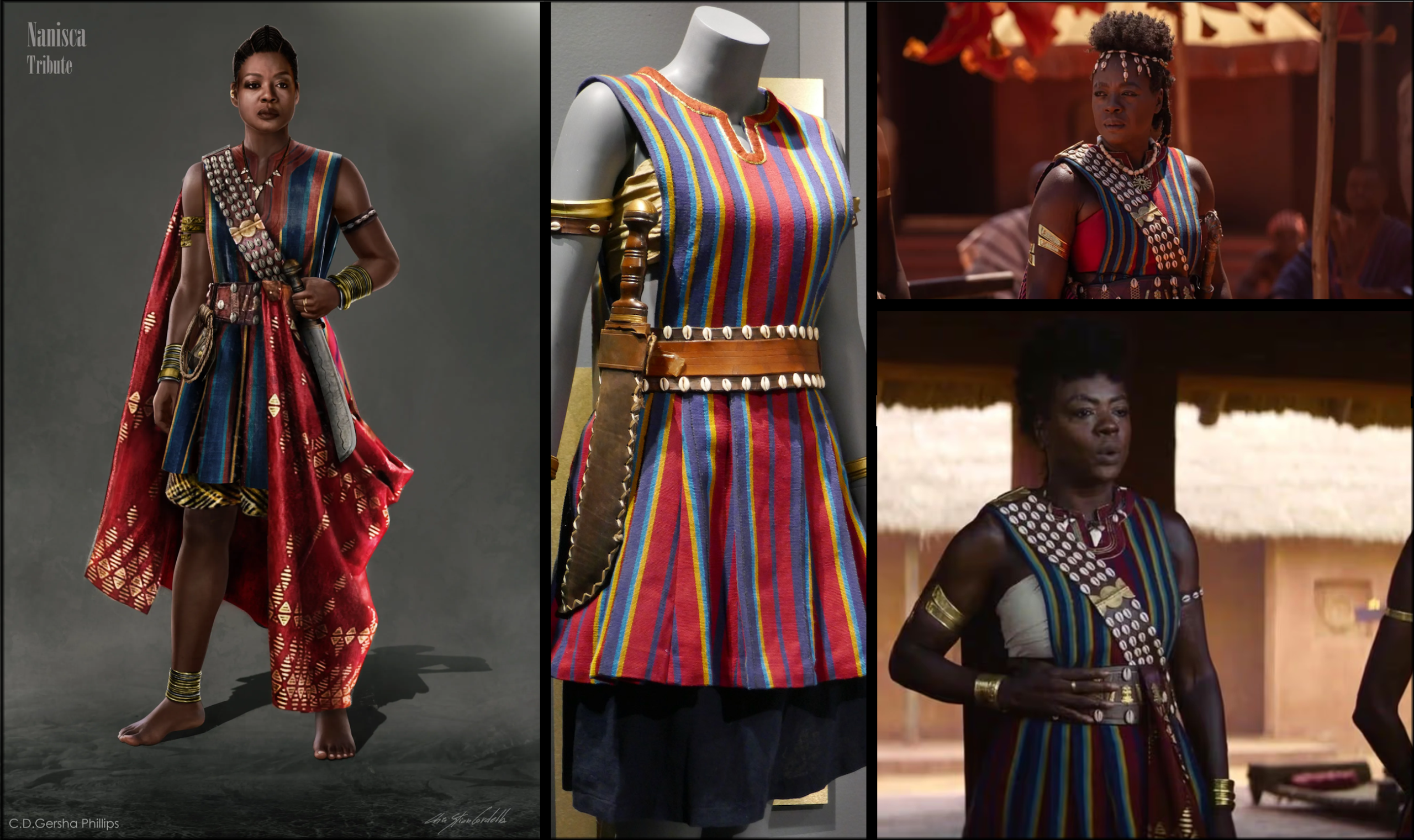
Browse the image reference strip below and open each frame in a high-detail viewer to inspect textile construction, woven strip cloth, indigo-inspired blue coloration, court dressing, warrior symbolism, and ceremonial surface detail in The Woman King.
Why It Endures
The costumes in The Woman King endure because they fuse cinematic impact with material intelligence. They are bold enough to command the frame, but specific enough to feel rooted in a believable social and physical world.
That is what gives the wardrobe its lasting force. These garments do not simply tell the audience who the characters are. They tell us what the body has been trained to do, how power is organized, and how costume can carry cultural meaning without losing motion, tension, or human presence.