

Garment District News | Film, Dye & Costume Analysis
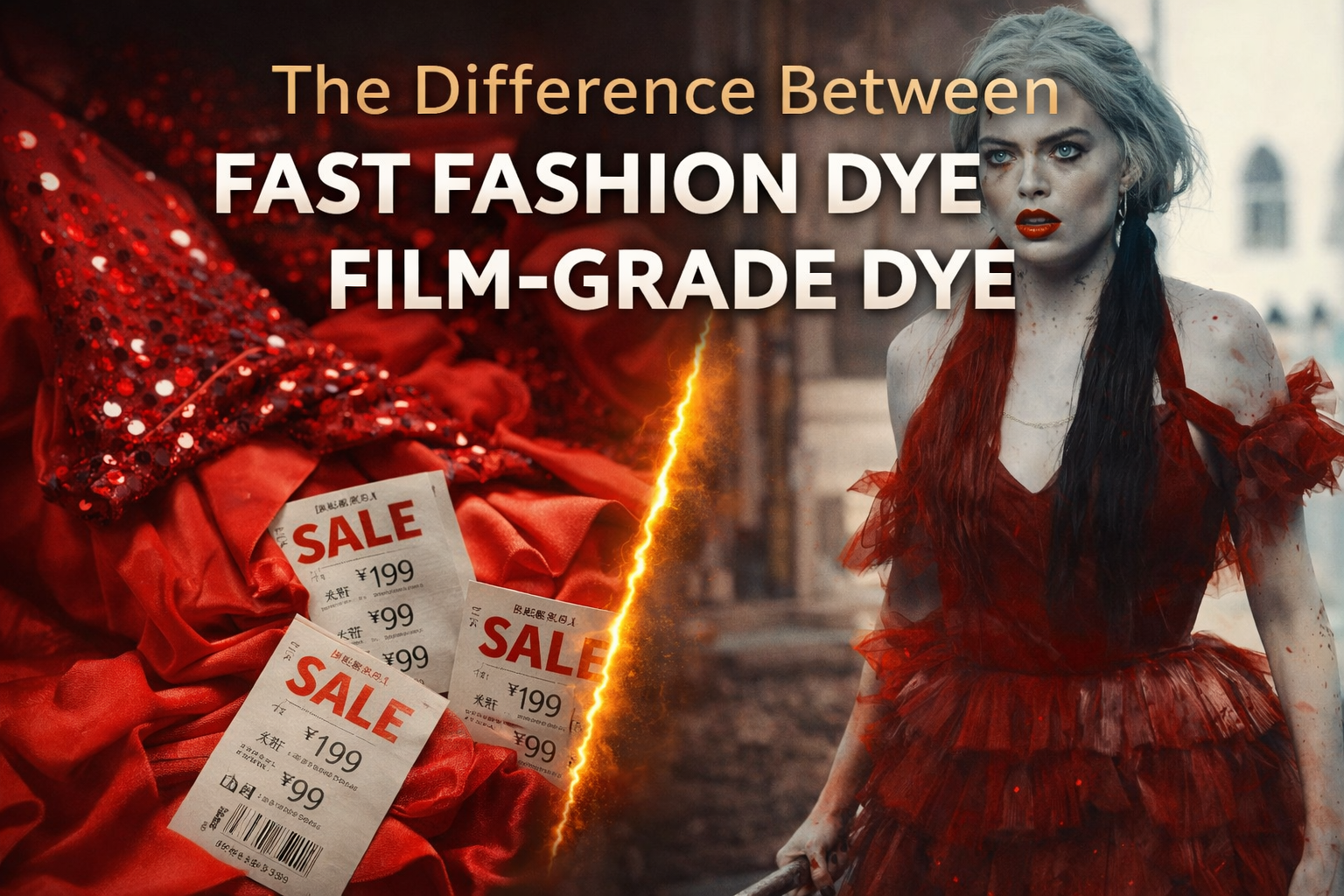
Fast Fashion Dye vs. Film-Grade Dye
Why costume color for the screen has to survive sweat, stunts, dust, lighting shifts, and continuity — while fast fashion often only needs to survive the sales floor.
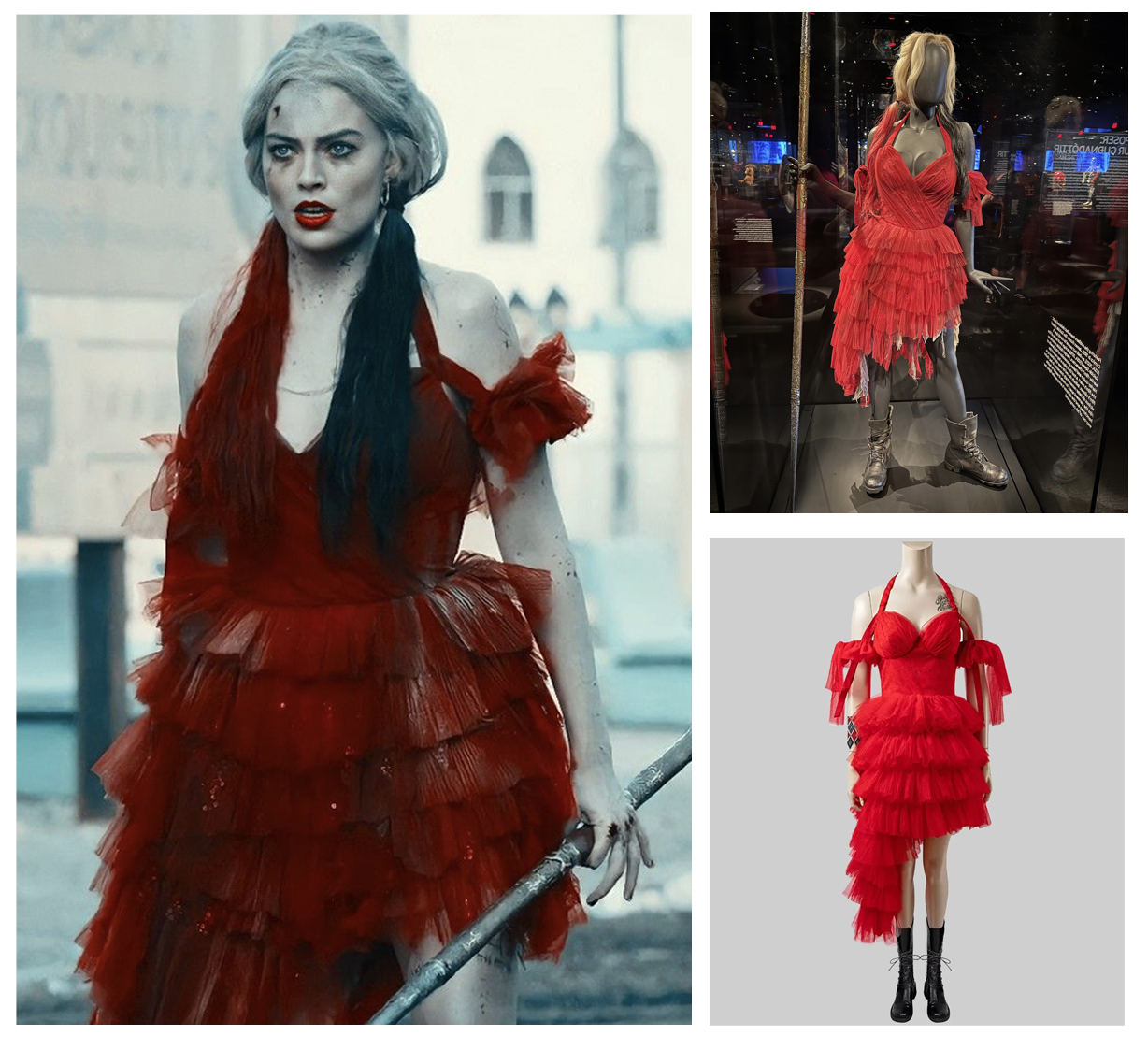
There is a reason a five-dollar T-shirt and a screen costume can both be “blue” and still belong to entirely different worlds.
Fast fashion is usually built to win the first impression. Film costume is built to survive the close-up, the stunt, the sweat, the continuity photo, the lighting test, the water scene, the second unit, and the reshoot. One is often engineered for speed and cost. The other is engineered for story, camera, and repeatable performance.
In other words: fast fashion dye asks, Can we get this color onto the garment cheaply and quickly? Film-grade dye asks, Will this color still read correctly after movement, heat, friction, dust, sweat, blood, water, wax, and twenty takes under changing light?
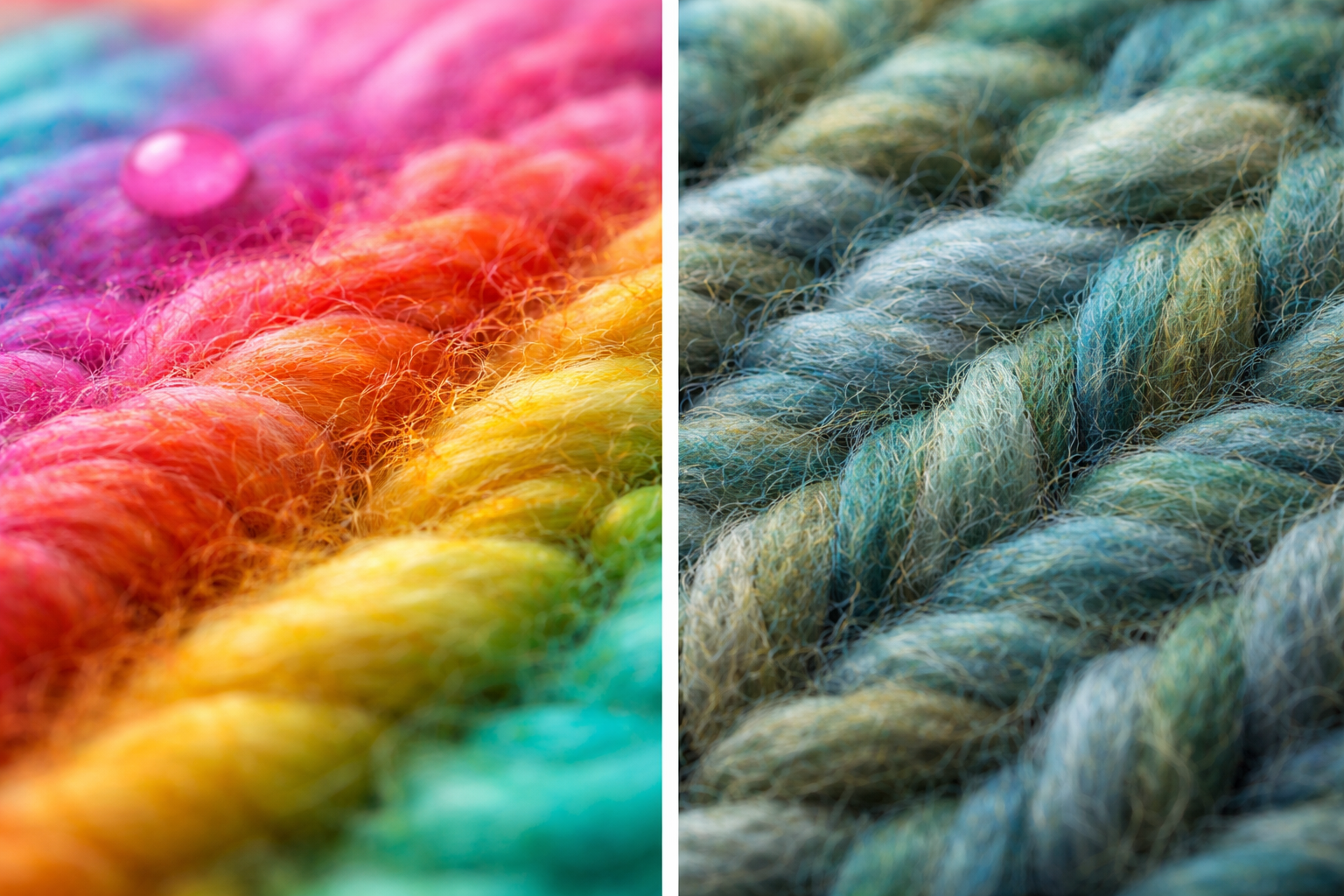
Fast Fashion Dye: Built for Speed
In the fast-fashion pipeline, dye choices are often optimized for scale, turnover, and price point. The garment needs to look appealing under store lighting, work for ecommerce photos, and hit a trend window before it closes. That does not automatically mean poor quality, but it does mean the priorities are different.
Surface saturation can be enough. A garment may look strong on the rack, then reveal weaknesses through washing, abrasion, or prolonged wear. In cinema, that same weakness becomes a production risk. If color shifts between takes, bleeds when distressed, or reacts unpredictably under lighting, it creates visual inconsistency the audience may never consciously identify — but will still feel.
Film-Grade Dye: Built for Story
Costume departments treat color as a storytelling system. Dye is not just decorative. It becomes part of character psychology, production design, era, environment, symbolism, and continuity.
Jacqueline Durran’s now-famous green dress in Atonement remains one of the clearest examples of color operating as dramatic force. The dress is remembered not simply because it was attractive, but because it was emotionally loaded. Its color carried tension, sensuality, memory, and power.
In projects like Kindred, repeated indigo garments for enslaved women required discipline across duplication, palette, and historical context. In a visually controlled production, indigo is never just blue. It is labor, class, time, wear, and atmosphere.
Film-grade dye is not about making a garment look colorful. It is about making color behave truthfully on camera.
When Costumes Have to Survive More Than Fashion Ever Will
A fashion garment usually has one life. A film costume may have many. Hero versions, stunt versions, blood-rig versions, water-work versions, aged versions, duplicates for continuity, and backups for damage all have to look like the same garment at the exact right stage of narrative life.
That is where film-grade dye and finishing separate themselves from the retail world. Jenny Beavan’s work on Mad Max: Fury Road showed how clothing had to feel sun-blasted, filthy, and lived-in without collapsing into visual confusion. The costumes were treated as world-building infrastructure.
On The Lighthouse, waxed and treated surfaces were calibrated for black-and-white cinematography. On Fahrenheit 451, oil-and-wax treatments were used so uniforms would react to firelight in a specific way. These are not “fashion color” decisions. They are cinematic engineering decisions.


Did Dye Ever Come Off on the Actor?
Publicly documented major film anecdotes about costume dye visibly rubbing off on actors are less common than people might expect. That absence is revealing. It suggests costume departments work hard to prevent those failures before they reach camera.
But color-transfer problems do happen around productions. On The Woman King, costume designer Gersha Phillips described working with intentionally colored red dirt that got onto everything. If someone leaned on a wall or sat on a step, the pigment transferred. It is not exactly the same as a bleeding costume, but it shows how quickly color can become chaos once it interacts with bodies, surfaces, and repeated movement.
In costume, the true horror story is not always one dramatic accident. Often it is the slow continuity nightmare of uncontrolled pigment.

Experimental Dye, Controlled Risk, and Costume Lore
Costume departments experiment constantly. The difference is that the best departments do it with discipline. Trial and error is part of the job, especially when a designer is trying to create a palette or finish that does not exist commercially.
Sometimes experimentation becomes part of the craft story. Penny Rose spoke about trial and error while building color distinction in 47 Ronin. More recently, designer discussions around projects like Agatha All Along have included techniques such as ice dyeing to create organic, camera-rich color movement in linings and specialty garments.
These experiments matter because cinema asks more from cloth than fashion retail usually does. A costume may need to appear mystical, ancient, bruised, smoky, wet, overhandled, aristocratic, or decayed — and it must still be repeatable.
Why This Matters to Readers Outside Hollywood
The lesson reaches beyond costume. It changes how we think about garments in everyday life. Consumers are often taught to ask whether they like a color. Film teaches a sharper question: what is this color doing?
Is it signaling wealth, threat, softness, innocence, memory, heat, ritual, labor, decay, or rebellion? Is it absorbing light? Catching flame? Fading beautifully? Holding up under weathering? In cinema, every one of those questions matters.
That is why the difference between fast fashion dye and film-grade dye is not merely technical. It is cultural. It is the difference between color as trend and color as language.
Final Stitch
Fast fashion dye is often about getting color onto fabric quickly enough to sell the fantasy. Film-grade dye is about making color survive reality.
That reality includes sweat, friction, dust, stunt work, continuity, relighting, symbolic storytelling, and the unforgiving honesty of the camera. When film-grade dye is doing its job perfectly, the audience never thinks about the dye at all. They remember the character.