

Garment District News | Costume Spotlight
Mad Max: Fury Road’s Dust, Dye, and Distress
In Mad Max: Fury Road, costume is never just clothing. It is abrasion, heat, grease, scavenging, ritual, and survival — a surface language built from dust, sun-bleaching, body wear, and the violent logic of a collapsing world.
By Garment District News
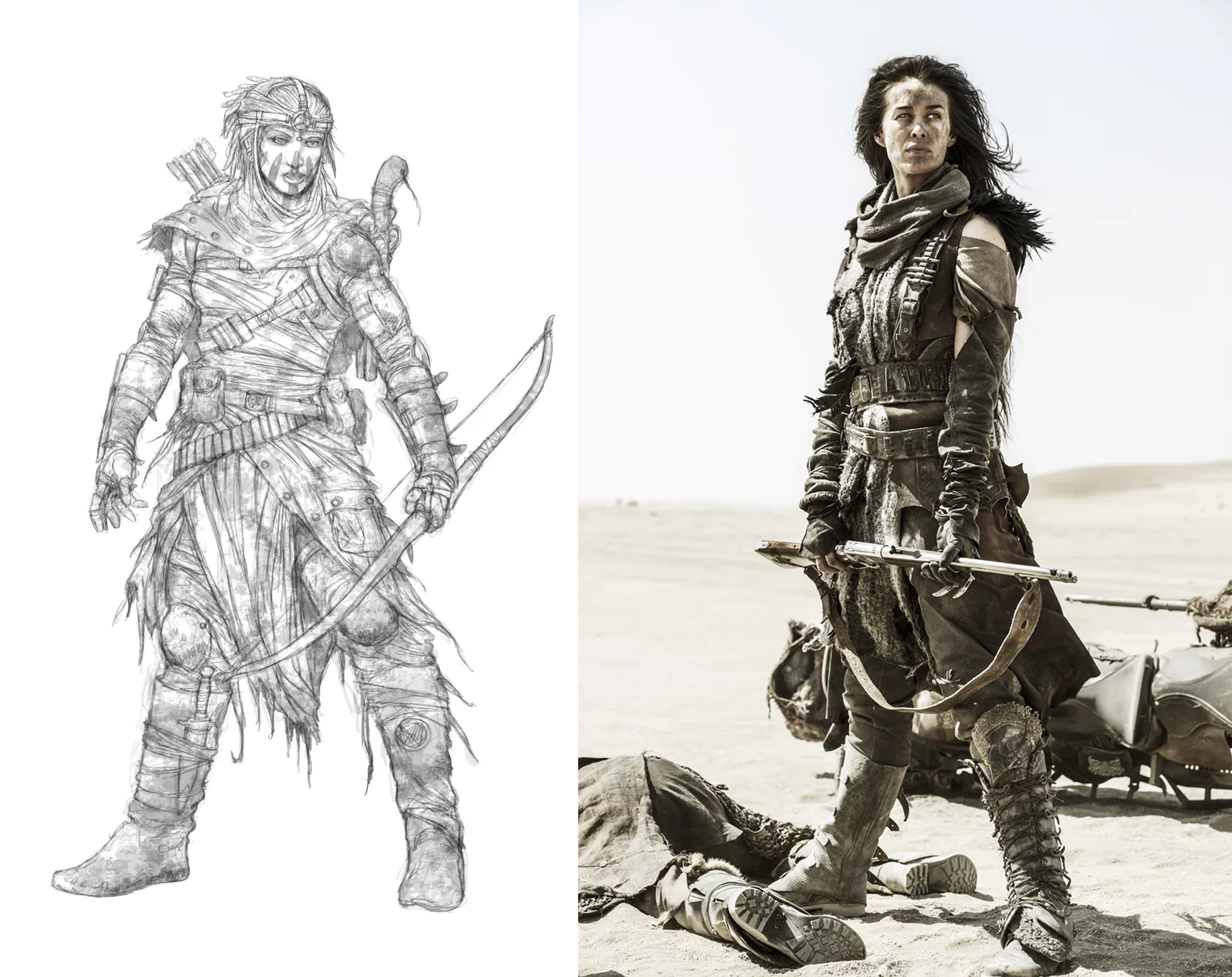
The genius of Mad Max: Fury Road is that it makes costume feel born from environment. Nothing looks freshly made. Nothing looks untouched. Wardrobe in this film behaves like architecture and weather at the same time — built from salvage, then altered by heat, dust, friction, oil, sweat, and speed.
That is why the costumes stay lodged in memory. They do not communicate luxury, polish, or fantasy in the conventional sense. They communicate use. Every wrap, seam, harness, and stain tells the viewer that these bodies move through a brutal economy where resources are scarce and survival depends on adaptation.
In a post-apocalyptic film, it would have been easy to rely on generic “grunge.” Fury Road does something more disciplined. It develops a coherent material language for different factions, roles, and bodies: Furiosa’s practical armor, Max’s stripped-back utility, Nux’s fanatical War Boy surface, and the wives’ pale garments transformed by desert exposure and escape.
The Designer Behind the Look
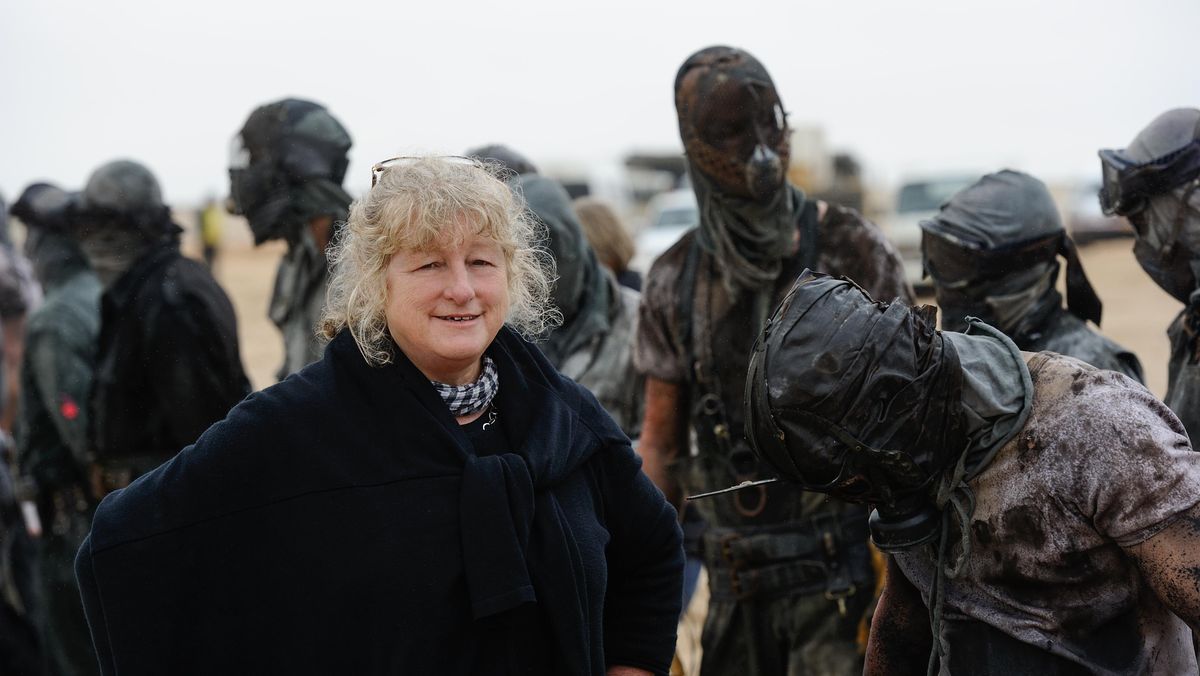
Image: Jenny Beavan, costume designer for Mad Max: Fury Road.
Jenny Beavan
Jenny Beavan’s costume work on Mad Max: Fury Road is one of the clearest examples of clothing functioning as worldbuilding. The wardrobe does not merely decorate the action. It establishes social systems, belief structures, bodily endurance, and the mechanical reality of a civilization rebuilt from wreckage.
What makes the work extraordinary is its control. The costumes feel chaotic because the world is chaotic, but the visual logic underneath them is precise. Texture, distress, shape, and finish all help distinguish factions and emotional states while remaining believable under desert light, dust, and motion.
The Story Behind the Costume
In Mad Max: Fury Road, costume design has to do several jobs at once. It must communicate scarcity, movement, violence, hierarchy, and character with almost no wasted gesture. The film moves fast. The audience cannot stop to study every garment. That means the clothing has to read instantly and still reward close inspection.
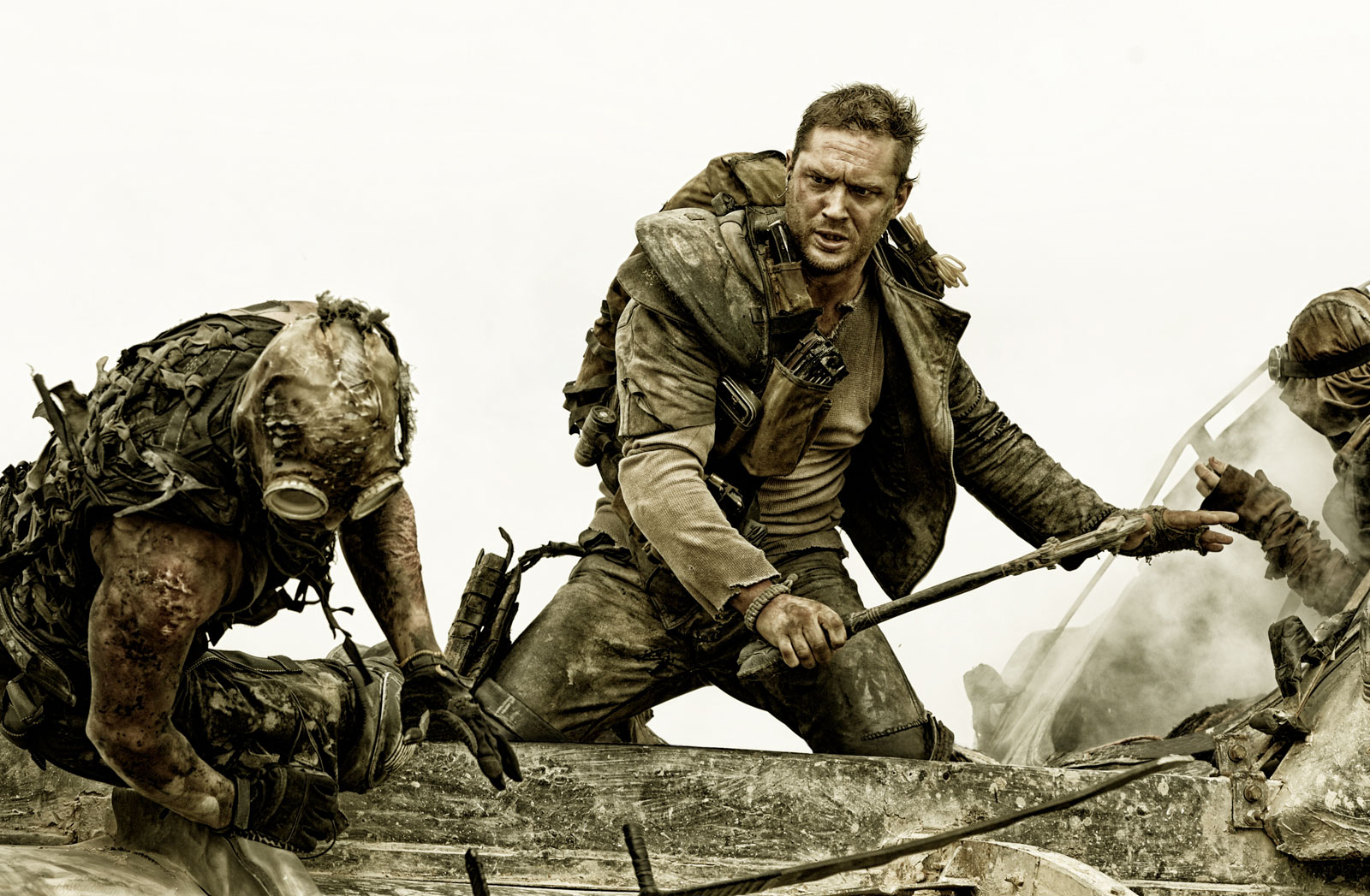
That immediacy comes from surface. This is one of cinema’s great examples of distress work operating not as decoration but as narrative evidence. Fabrics look dragged through sand. Leather looks baked and handled. Hardware looks repurposed. Pale garments pick up dust and tonal contamination. Utility pieces look adjusted again and again as bodies and needs changed.
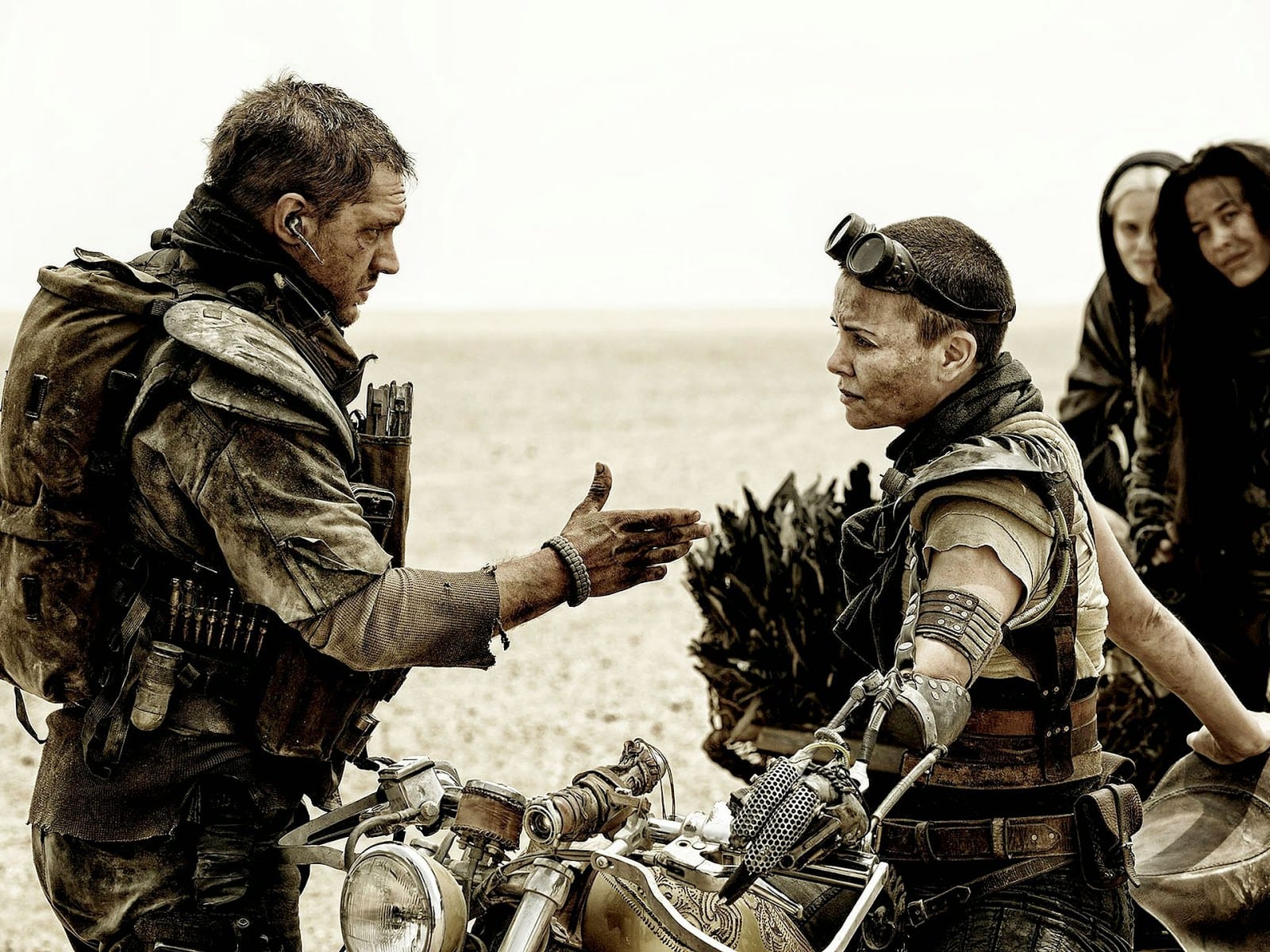
Furiosa’s costume language is especially powerful because it balances protection and movement. The pieces feel mechanical yet bodily — armor, straps, practical layers, and a silhouette that reads as hardened by labor rather than styled for spectacle. Max, by contrast, appears as a figure reduced to necessity: weathered layers, functional wraps, and the stripped logic of a man surviving moment to moment.
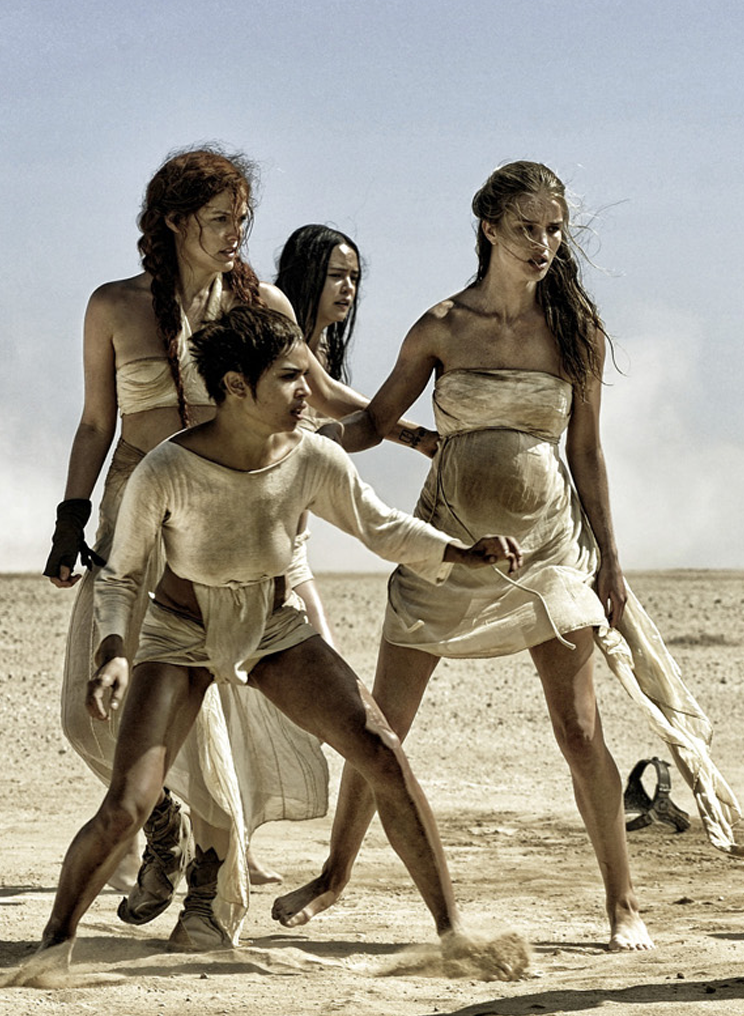
The wives’ wardrobe adds another dimension. Their pale cotton garments initially register as softness, vulnerability, and contrast against the rusted, filthy world around them. But once they move through the desert, those same garments begin to collect the environment. Dust alters brightness. Motion changes drape. Clean fabric becomes part of the story of exposure.
This is where Fury Road becomes especially relevant to any discussion of fast fashion versus film dye and finish. In disposable apparel, surface is often shallow — a trend effect printed on top. In film, especially here, surface must perform. It has to hold under light, movement, camera distance, close-up, and narrative scrutiny. The result is a costume world where treatment and wear are inseparable from meaning.
“In Fury Road, distress is not an afterthought — it is the costume’s way of telling the truth.”
Garment District News editorial takeaway.
Technical Breakdown
Textile
The film’s wardrobe relies on rugged, breathable, weathered-looking materials that can plausibly survive a desert world: cottons, wraps, leather, webbing, patched layers, and scavenged-looking fabrics that feel repaired, reused, and repurposed rather than conventionally tailored.
Dye / Color Story
Color in Fury Road is dominated by desaturated earth, oxidized metal, soot, chalk, blackened grease, and sun-struck neutrals. Costume color is not there to beautify the world. It is there to show what heat, dust, fuel, and scarcity do to cloth over time.
Construction
Silhouettes are built for action, bodily stress, and faction identity. Harnesses, wraps, cropped layers, hardware, bindings, and asymmetry create garments that feel adjusted over time instead of conventionally finished. The construction tells you these are survival bodies, not dressed bodies.
Processing / Finish
The defining finish is environmental degradation: abrasion, bleaching, dusting, oil marking, sweat implication, and layered distress. These surfaces make the costumes readable on screen as objects that have been lived in, fought in, repaired, and pushed to their limit.
Material and Cultural Context
Post-apocalyptic costume often borrows from punk, military surplus, industrial wear, fetish hardware, and improvised repair culture. Mad Max: Fury Road distills those references into something unusually cinematic and coherent. It turns salvage into visual order.
For Garment District News, that matters because the film demonstrates how surface treatment can become storytelling infrastructure. The viewer understands class, cult belief, bodily function, and danger through materials before dialogue ever explains them. This is costume not as accessory, but as evidence.
It also exposes the difference between a manufactured distressed look in fashion retail and a narratively integrated distressed look in film. On screen, distress has to hold up emotionally and spatially. It must make sense from a distance, in motion, under harsh light, and in close-up. Fury Road succeeds because the wear feels earned.
From Concept to Screen
The wardrobe had to make the world feel rebuilt from wreckage, where every garment reflected scarcity, motion, and bodily risk.
Costumes were shaped through layers, salvage logic, strategic asymmetry, and faction-specific silhouettes that could read instantly on screen.
Dust, movement, heat, and action photography made finish crucial. Surface treatment had to remain legible while the film moved at relentless speed.
The film’s costume world became a benchmark for post-apocalyptic design because its distress and texture feel narratively necessary rather than merely stylized.
Gallery
Browse the image reference strip below and open each frame in a high-detail viewer to inspect costume distressing, texture, layering, material wear, and silhouette.
Why It Endures
The costumes in Mad Max: Fury Road endure because they prove that worldbuilding can live directly on the body. The garments do not feel invented for a costume department showcase. They feel extracted from a functioning, damaged society. That difference is everything.
This is why the film remains so useful in any discussion of dye, finish, distress, and surface storytelling. It shows that the most convincing costume work does not simply display a style. It records a life. In Fury Road, cloth remembers heat, metal, movement, violence, and survival — and the viewer reads all of it at a glance.