

Garment District News | Costume Spotlight
Atonement’s Green Dress
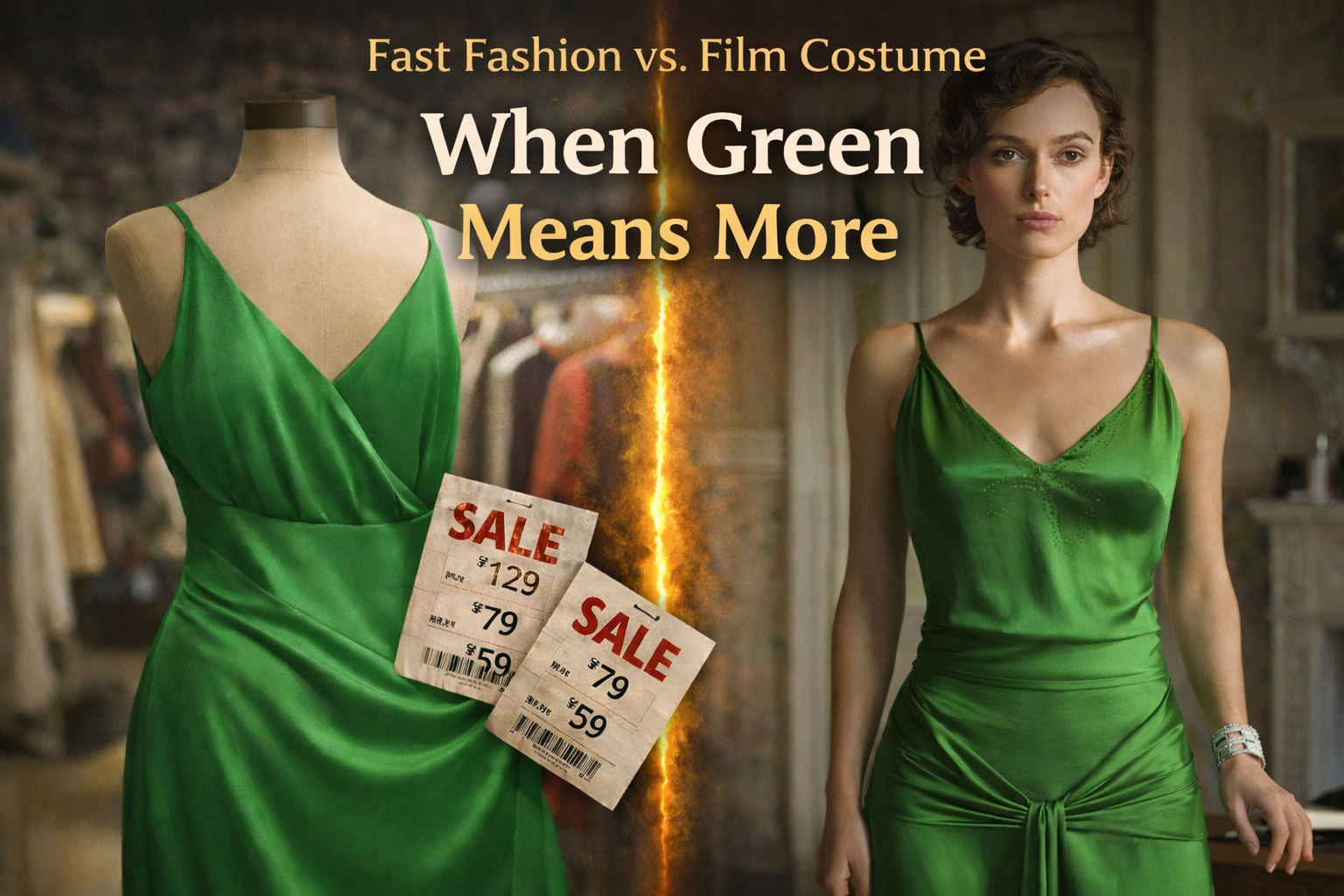
Few screen costumes have fused romance, danger, and memory as completely as Cecilia Tallis’s emerald gown. Designed for a pivotal sequence in Atonement, the dress became not just a period costume, but one of modern cinema’s defining garments.
By Garment District News
The green dress in Atonement works because it arrives at exactly the point where desire, class tension, and catastrophe begin to lock together. Audiences remember its color first, but what gives it power is how completely it belongs to the emotional architecture of the film. It is fluid without seeming soft, seductive without becoming ornamental, and unforgettable without looking overworked.
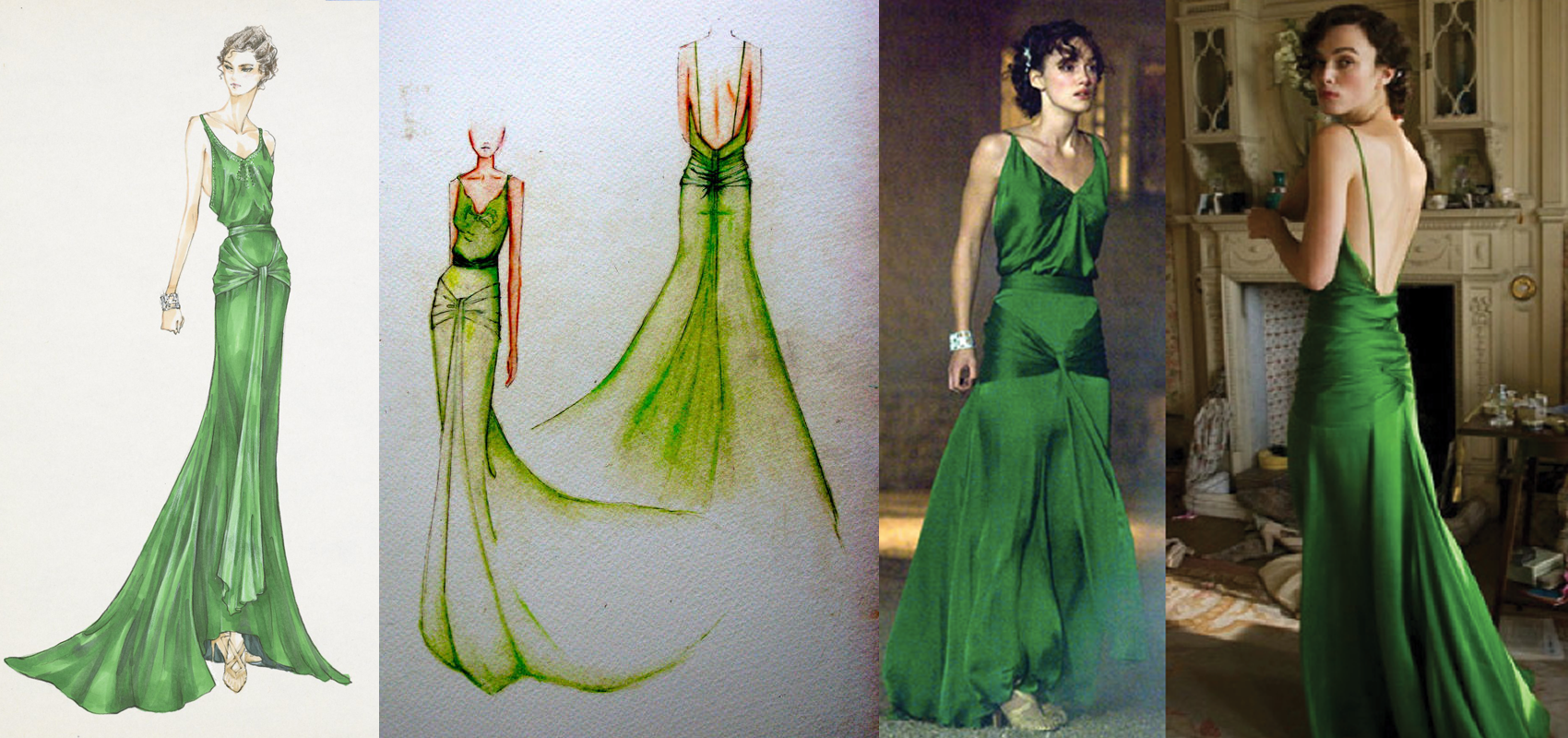
Costume designer Jacqueline Durran created the gown for the library scene, one of the film’s most pivotal moments. The dress was intended to feel memorable, body-aware, and emotionally loaded, drawing on 1930s eveningwear while avoiding the stiffness of strict reproduction. The result was a custom creation that blended period influence with modern sensuality.

Image: Jacqueline Durran, costume designer for Atonement.
The Designer Behind the Look
Jacqueline Durran
Jacqueline Durran is known for costumes that do more than establish period — they sharpen character, tension, and emotional tone. Her work often carries a precision that feels effortless on screen, even when the garments themselves are highly considered constructions.
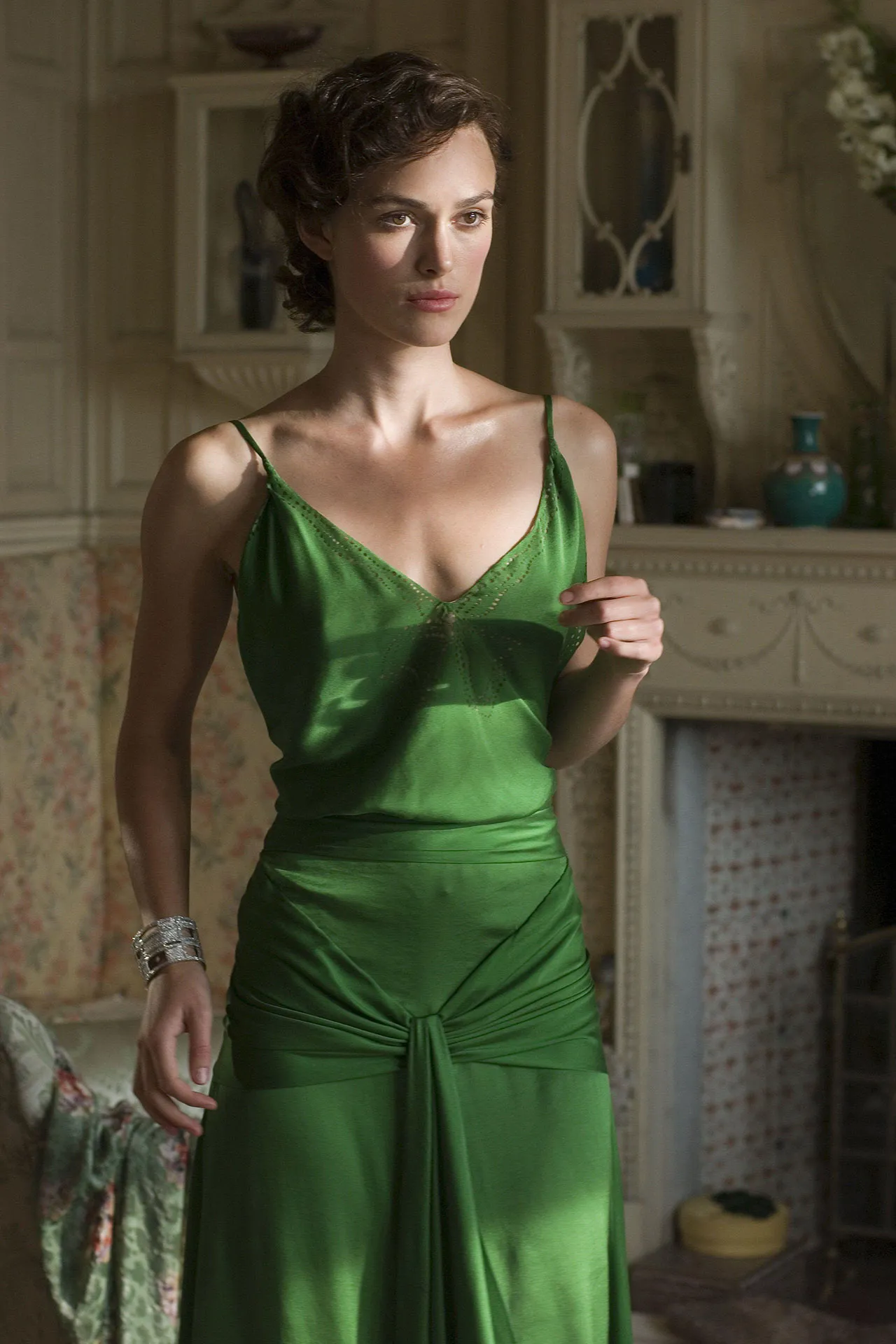
In Atonement, that discipline is everywhere. The green dress is not overloaded with embellishment, but every decision matters: color, cut, openness of the back, movement of the skirt, and the subtle chest detail that gives the gown its quietly playful sensuality.
The Story Behind the Costume
The dress was created for a scene that required the costume to do several things at once. It needed to convey Cecilia’s sophistication and self-possession, but also the emotional instability that surrounds her relationship with Robbie. It had to feel period-aware while still looking unexpectedly modern to a contemporary audience.
The famous green itself was selected to be unforgettable. The silk satin was chosen for its ability to catch light and move with the body, while the bias cut gave the gown a floating quality that made it feel alive rather than static. The overall silhouette drew from the 1930s, but the finished result was a custom interpretation — backless, fluid, and more openly sensual than a strict vintage recreation.
One of the most distinctive details appears across the chest, where the dress creates a soft bow-like effect. This was not achieved with beading. Instead, Jacqueline Durran used small perforated cut-out holes in the emerald silk satin to form a subtle decorative pattern. Combined with the drape of the fabric and the bias cut, those perforations created the illusion of a tied bow — delicate, playful, and sensual without becoming fussy.
The result is a garment that functions almost like a plot device. Audiences do not simply remember that Cecilia wore a green dress. They remember that green dress — the drape, the movement, the tension, the charged stillness. It is costume design as emotional trigger.
“It had to be memorable.”
A fitting summary of why the dress still resonates: its color, cut, and detail were designed to stay in the audience’s mind.
Technical Breakdown
Textile
The gown’s look depends on emerald silk satin with enough fluidity to skim the body and enough luminosity to react beautifully under interior light. Its lightweight handle helps create the impression that the dress is floating rather than hanging.
Dye / Color Story
The green was chosen to be unforgettable. This is not incidental color; it is narrative color. The emerald tone heightens Cecilia’s presence, separates her from the setting, and turns the library sequence into visual memory.
Construction
The gown was designed for a 1930s-inspired silhouette with a backless cut, fluid bias drape, and a floating effect in motion. Its chest detail is especially notable: the bow-like shape was created through tiny perforated cut-out holes, not beading. These perforations formed a subtle pattern in the silk satin that, together with the drape and bias cut, produced the illusion of a tied bow.
Processing / Finish
The most important finish here is optical rather than distressed: translucency, sheen, movement, and controlled softness. The gown had to read sensually in motion and remain fully legible within a tense interior scene, proving how surface behavior can shape emotion on screen.
Material and Cultural Context
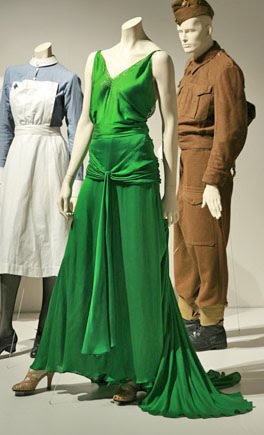
The dress sits at an unusual intersection of period costume and modern fashion memory. Although rooted in 1930s references, it has become a broader cultural shorthand for cinematic elegance, romance, and danger. That crossover is rare: the dress is unmistakably from a film, yet it escaped the film to become a style legend in its own right.
For Garment District News, the dress is especially compelling because it demonstrates how textile behavior becomes storytelling. The silk satin, the engineered emerald dye, the bias-cut construction, and the perforated chest detail all support the same outcome: a costume that looks emotionally inevitable. This is not fast-fashion color. It is film-grade color, calibrated for atmosphere, memory, and narrative pressure.
From Concept to Screen
A dress memorable enough to anchor one of the film’s most emotionally charged scenes.
Emerald silk satin, bias-cut movement, and perforated chest detailing created a look that felt light and unforgettable.
The dress needed to move fluidly, hold tension, and photograph beautifully through intimacy, silence, and emotional pressure.
The gown became one of the most discussed and enduring costumes in modern cinema.
Gallery
Browse the reference strip below and open each frame in the high-detail viewer to inspect the emerald dyed satin, the delicate laser-cut bow illusion, the hem finish, and the gathered drape that gives the dress its floating cinematic movement.
Why It Endures
The dress endures because it proves that wardrobe can carry emotional memory long after a scene ends. It is beautiful, but its beauty is inseparable from tension, restraint, and desire — all of which are intensified by color, surface, and movement.
In that sense, the green dress is not simply one of the most famous costumes in modern cinema. It is one of the clearest examples of how film-grade color and textile behavior can turn a garment into narrative memory.