
Designer Deep Dive
In the rarefied world of Paris Haute Couture, where legacy houses like Dior and Chanel dominate the schedule, one designer represents something different: the meeting of ancient craft traditions and contemporary global fashion. Indian designer Rahul Mishra has become one of the most significant cultural voices on the international runway, bringing the techniques, stories, and artisanship of India’s textile heritage to Paris.
His work is not simply fashion—it is a cultural ecosystem.


From a Village in India to the Global Runway
Rahul Mishra was born in Malhausi, a small village near Kanpur in northern India, where storytelling, craft traditions, and cultural heritage played a major role in daily life.
Before becoming a designer, Mishra studied physics, an unusual background that later influenced the conceptual thinking behind his collections. He then trained in fashion at the National Institute of Design in Ahmedabad and later at Istituto Marangoni in Milan, becoming the first non-European designer to receive a scholarship there.
His career breakthrough came in 2014, when he became the first Indian designer to win the International Woolmark Prize, one of fashion’s most prestigious awards.
For Mishra, however, global recognition was never the ultimate goal.
His mission was something far larger: bringing India’s artisan communities into the global luxury economy.
Couture as Cultural Preservation
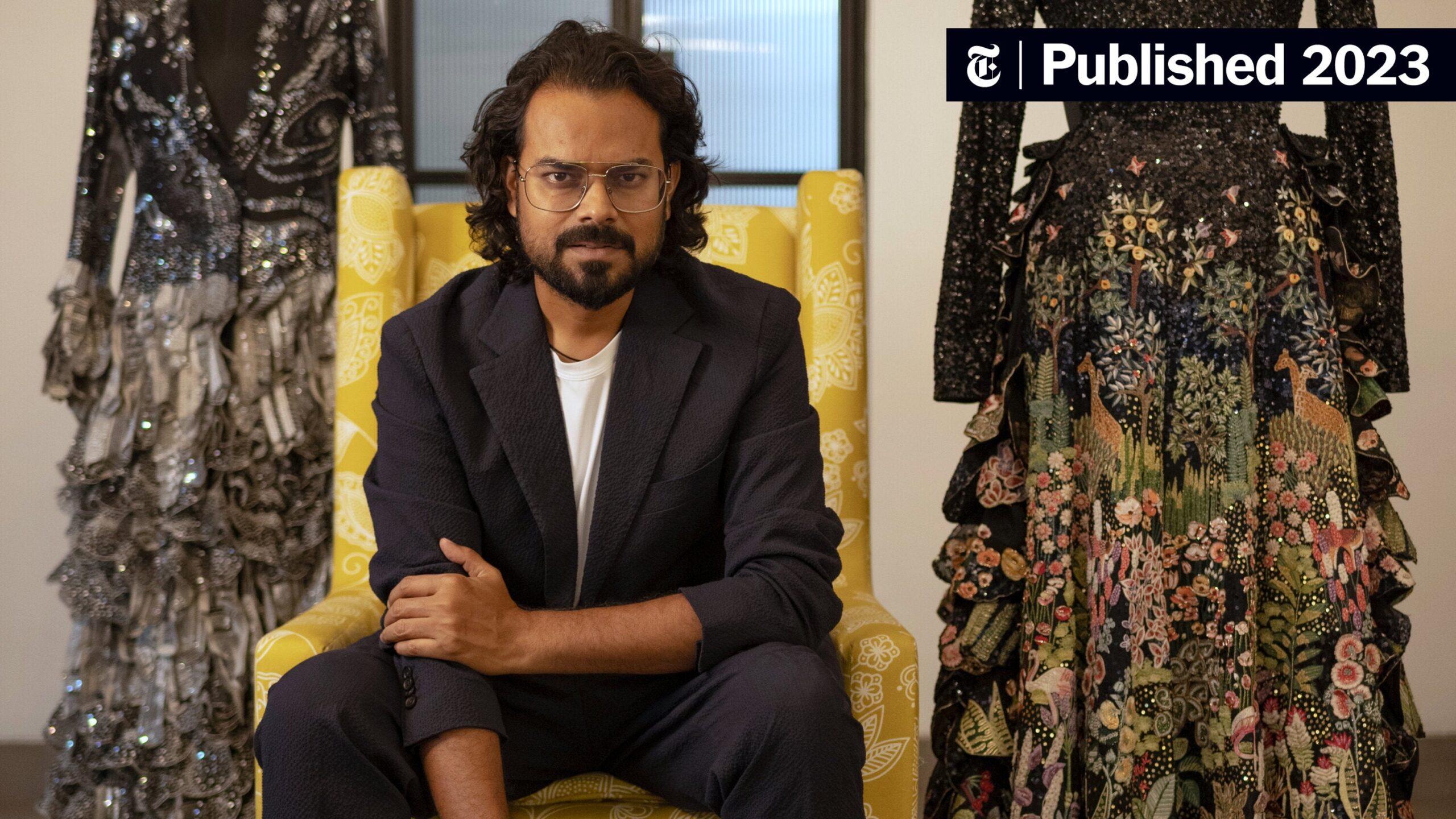
Unlike many designers who rely heavily on machine production, Mishra’s atelier is built around hand craftsmanship.
His collections depend on techniques such as:
- zardozi embroidery
- hand weaving
- traditional dyeing methods
- intricate threadwork passed down through generations
Each garment can take hundreds or even thousands of hours of manual labor, created by skilled artisans across India.
This philosophy reflects Mishra’s concept of “mindful luxury,” a model of fashion that prioritizes sustainability, craftsmanship, and cultural heritage rather than mass production.
His atelier collaborates with craft communities across India, helping sustain traditional textile techniques that might otherwise disappear in the era of industrial fashion.
Paris Haute Couture Week 2026: A Cosmic Collection
At Paris Haute Couture Week Spring/Summer 2026, Mishra presented a collection inspired by the five elements of nature—earth, water, fire, air, and ether.
The garments combined dramatic silhouettes with elaborate embroidery, translating philosophical ideas into couture form.
Some designs featured:
- swirling embroidered galaxies
- mineral-like textures inspired by geological formations
- sculptural shapes supported by internal frameworks
The collection blurred the boundaries between science, spirituality, and couture craftsmanship, reflecting Mishra’s belief that fashion can tell stories about humanity’s relationship with nature.
Behind each garment were teams of artisans who translated these ideas into thousands of individual stitches.
A Global Platform for Indian Craft
Mishra’s presence in Paris represents a broader shift in the global fashion landscape.
For decades, luxury fashion was dominated by European houses. But designers from countries with deep textile traditions—such as India—are now gaining recognition for their craftsmanship and cultural perspective.
India’s textile sector alone employs more than 45 million people, making it one of the largest labor sectors in the country.
By bringing Indian craftsmanship to Paris, Mishra helps connect those artisans with global luxury markets.
Fashion analysts say this model may represent the future of high fashion: designers acting as bridges between traditional craft economies and modern luxury consumers.
Culture, Identity, and Storytelling in Fashion
One of Mishra’s defining characteristics as a designer is his commitment to storytelling.
Many of his collections draw inspiration from:
- Indian mythology
- nature and ecology
- traditional craft symbolism
- philosophical ideas about humanity and the universe
These narratives are woven directly into the garments through embroidery and textile design.
For Mishra, fashion is not just about aesthetics—it is about preserving cultural memory through clothing.
The Rising Global Influence of Indian Fashion
Mishra is part of a growing wave of Indian designers gaining international recognition.
Industry observers note that Indian fashion is becoming increasingly visible on global runways, blending traditional techniques with modern silhouettes and global aesthetics.
This rise reflects the enormous cultural and economic power of the region’s textile traditions.
India is one of the world’s oldest textile civilizations, with weaving, embroidery, and dyeing techniques dating back thousands of years.
Designers like Mishra are helping translate that heritage into contemporary fashion for a global audience.
Why Rahul Mishra Matters
Rahul Mishra’s success demonstrates that the future of fashion may not lie solely in technology or trend cycles.
Instead, it may lie in heritage, craftsmanship, and human skill.
In an era when fast fashion dominates global retail, Mishra’s work represents an alternative vision:
- fashion built slowly
- garments created by human hands
- clothing that carries cultural meaning
His couture collections prove that fashion can be both a luxury product and a cultural archive.
And on the runways of Paris, thousands of miles from the villages where many of the textiles originate, Mishra’s designs remind the industry of something often forgotten:
The most powerful fashion stories are not just about style.
They are about people, culture, and the preservation of human craft.