
The designer behind AGBOBLY is proving that joy, color, and cultural pride can fuel a global fashion vision—no compromises required.


Jacques Agbobly’s first New York Fashion Week presentation wasn’t held in a sleek white box gallery or a minimalist SoHo loft. Instead, fifteen models stood scattered throughout a bustling showroom filled with vintage luggage, sunflowers, and the kind of anticipatory energy that comes when something feels genuinely new. The line to get in wrapped around the block. Inside, attendees found themselves surrounded by bold stripes in Togolese flag colors, sculptural knitwear in electric yellows and deep blues, and tailored suits that somehow managed to honor both West African craft traditions and contemporary queer aesthetics.
The collection, titled “Bienvenue Aboard,” explored themes of migration, optimism, and uncharted beginnings—subjects Agbobly knows intimately. Born in Togo and raised in Chicago after immigrating at age nine, the designer spent childhood afternoons hiding under cutting tables at their grandmother’s house, watching tailors transform brightly colored African textiles into custom garments for community members. Those memories, that sensory experience of fabric and craft and making, became the foundation for what would eventually become AGBOBLY.


From Pandemic Frustration to Fashion Week
The brand didn’t start with a business plan or investor pitch. It started with necessity and rage. In March 2020, COVID-19 sent Agbobly home from Parsons just a month before graduation. Suddenly jobless and watching the global reckoning around Black lives unfold, they did what felt urgent: they started making knitwear.
What launched as Black Boy Knits was deeply personal—made-to-order, fully customizable pieces that let each client feel seen and celebrated. The name itself was a declaration, a refusal to diminish or hide identity for the sake of broader appeal. By 2023, Agbobly had rebranded under their family name, a decision rooted in honoring heritage while expanding their vision beyond a single product category or demographic.
The evolution makes sense when you understand Agbobly’s ambition. They’re not building a knitwear line. They’re building a comprehensive heritage brand on the scale of Louis Vuitton or Dior, but centered on African craft and queer, immigrant narratives. It’s an audacious goal for a self-funded designer still in their twenties, but Agbobly—who uses they/them pronouns—approaches it with the kind of quiet confidence that comes from knowing your vision is essential.
Craft Meets Vision in Dumbo
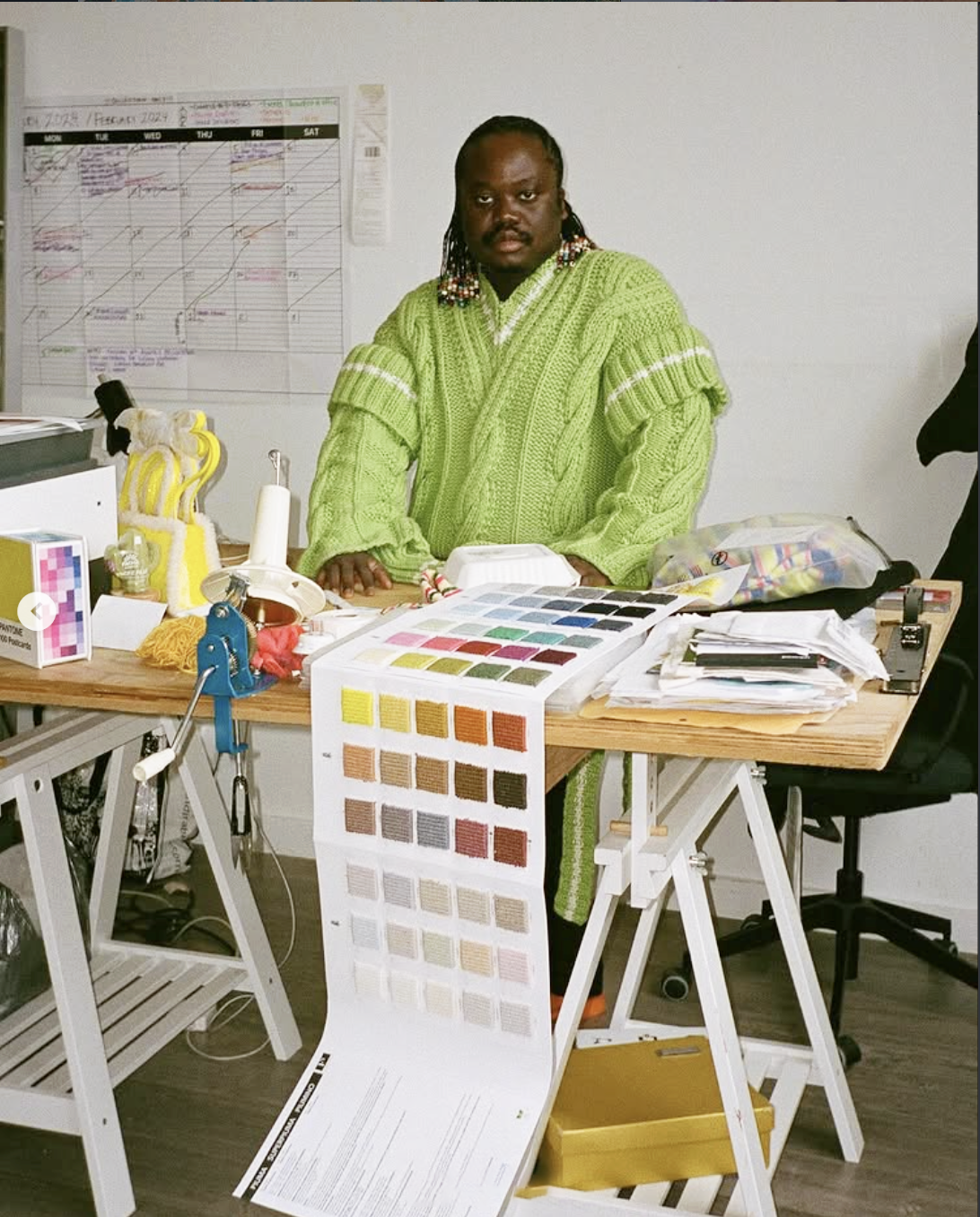
Agbobly’s production happens in a Dumbo studio, where they work with a small team to create pieces that range from custom one-of-ones to their first wholesale-ready collections. The work is meticulous, often time-intensive, rooted in techniques learned from watching those Togolese tailors and refined through formal education at Parsons.
Their aesthetic is impossible to categorize neatly. There’s knitwear, yes—sweaters with bold geometric patterns, sculptural pieces that challenge what knitwear can be. But there’s also tailoring with Western-inspired topstitching, draped eveningwear that feels both ancient and futuristic, accessories that pull from multiple cultural reference points. The through-line isn’t a single silhouette or technique. It’s the saturation of color, the insistence on joy, the refusal to make Blackness or queerness palatable for mainstream consumption.
The fashion industry has noticed. CFDA/Vogue Fashion Fund finalist in 2022. WWD’s inaugural “One to Watch” Honor. DHL Logistics in Fashion Award. LVMH Prize semi-finalist nomination in 2024. These aren’t participation trophies—they’re signals that Agbobly’s vision resonates beyond niche audiences, that there’s hunger for what they’re creating.


Learning While Building
One of Agbobly’s most important relationships has been with designer Thom Browne, who’s served as a mentor and advisor. From Browne, Agbobly learned to believe their ideas are essential, irreplaceable, worth fighting for. It’s advice they’ve taken to heart, even when it means turning down opportunities that don’t align with their long-term vision or maintaining made-to-order practices that limit scale but preserve integrity.
Now Agbobly is passing that knowledge forward. They teach at Parsons, their alma mater, working with students who see themselves in Agbobly’s journey—the immigrants, the queer kids, the ones who grew up watching family members make things by hand and wondering if that counted as high fashion.
The Garment District plays a crucial role in this ecosystem. For Agbobly, it’s not just about sourcing fabric or finding production partners, though both are essential. It’s about community, mentorship, the accumulation of generational knowledge that happens when you’re physically present in spaces where people have been making clothes for decades. It’s about learning which suppliers understand your vision, which pattern makers can execute your sketches, which trim shops carry the exact shade of thread you need.
The Work Ahead
Agbobly’s current challenge is one every emerging designer faces: how to scale without losing what makes the work special. They’re navigating wholesale partnerships, exploring collaborations, building infrastructure that can support growth. But they’re also protecting the core of what AGBOBLY represents—the customization, the cultural specificity, the celebration of identities that mainstream fashion has historically ignored or fetishized.
Their Fall 2025 collection is already in development, pushing further into tailoring and exploring new fabrications while maintaining the vibrant color palette and cultural pride that defines their aesthetic. There are conversations happening around international expansion, potential retail partnerships, collaborations with other designers and artists.
But what’s most striking about Agbobly isn’t the accolades or the Fashion Week presentations or even the ambition to build a global brand. It’s the steadiness of purpose, the clarity about why they’re making what they’re making and for whom. In an industry that often rewards trend-chasing and commercial compromise, Agbobly is building something rooted in history, community, and an unapologetic vision of what fashion can be when it centers joy instead of fear.
From childhood afternoons under cutting tables in Togo to teaching the next generation at Parsons, Agbobly’s journey is still unfolding. The luggage and sunflowers from “Bienvenue Aboard” weren’t just set dressing—they were a promise. This designer is going somewhere, carrying their heritage with them, and they’re not asking permission to arrive.
Designer Snapshot
Name: Jacques Agbobly
Brand: AGBOBLY (formerly Black Boy Knits)
Location: Dumbo, Brooklyn
Background: Born in Togo, raised in Chicago, Parsons graduate
Signature Style: Vibrant knitwear and tailoring celebrating West African craft, Black and queer narratives, bold color, cultural pride
Accolades: CFDA/Vogue Fashion Fund Finalist (2022), WWD “One to Watch” Honor, LVMH Prize Semi-Finalist (2024), DHL Logistics in Fashion Award
Follow: @agbobly | agbobly.com
All images are courtesy of AGBOBLY