Concept as Craft at Berlin Fashion Week


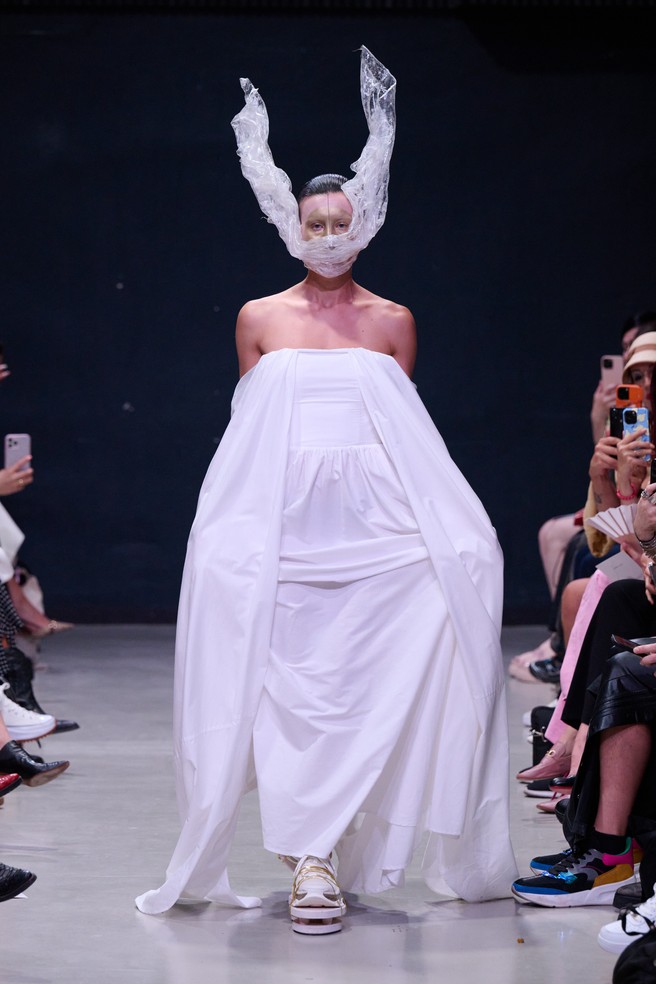
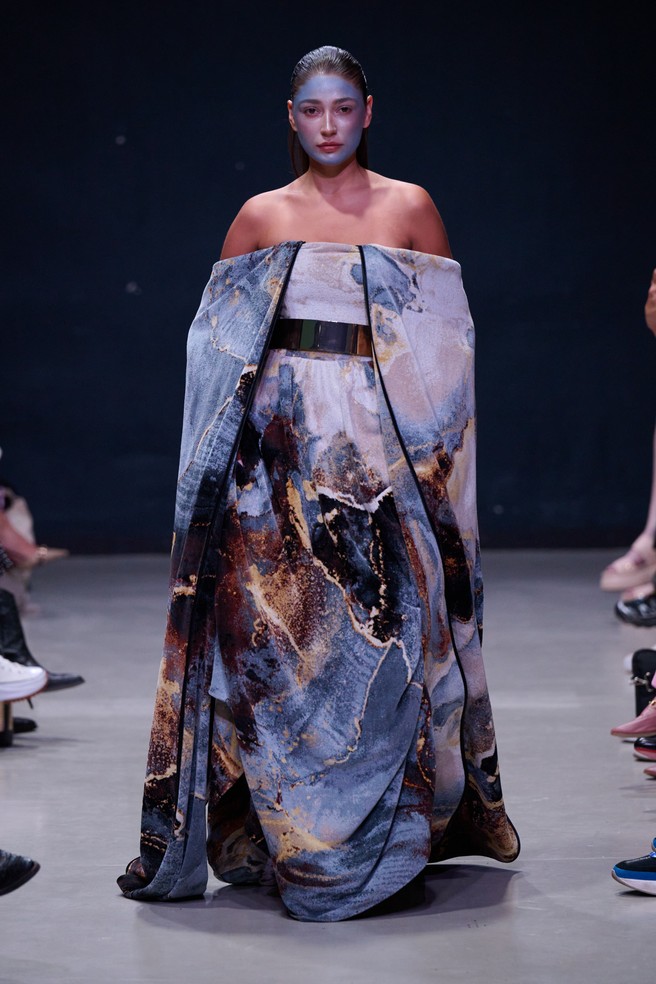
In Berlin’s fashion ecosystem—where ideas often carry more weight than spectacle—Rebekka Ruétz has emerged as a designer defined by clarity of vision. Her work is driven by concept first, but never trapped by it. Each collection unfolds like a narrative: researched, structured, and translated into garments that feel intentional rather than performative.
Ruétz’s presence at Berlin Fashion Week has been consistently shaped through the city’s curated formats, spaces designed to foreground thought, process, and responsibility over commercial gloss. It’s a natural fit. Her collections reward close reading.
Experimental Silhouettes, Controlled Expression
Ruétz is known for silhouettes that challenge balance and proportion without tipping into excess. Volumes are explored, not exaggerated. Shapes feel engineered—sometimes architectural, sometimes fluid—but always grounded in wearability. There is tension in the work: softness against structure, restraint against disruption.
Rather than chasing novelty, Ruétz uses experimentation as a method of inquiry. The garments ask questions about how clothing relates to movement, presence, and the body in space.
Responsibility as a Design Constant
Responsible production is not positioned as an afterthought in Ruétz’s work—it is embedded into the creative framework. Her approach prioritizes thoughtful sourcing, controlled production, and longevity, reinforcing the idea that concept-driven fashion can still operate with accountability.
This balance—between experimentation and responsibility—places her squarely within Berlin’s evolving fashion identity: progressive, conscious, and intellectually engaged.
Why Rebekka Ruétz Matters
Rebekka Ruétz represents a quieter form of innovation. Her work doesn’t rely on provocation or spectacle; it relies on coherence. In a fashion landscape often dominated by speed and surface, her collections insist on depth—on the value of process, narrative, and ethical intent.
At Berlin Fashion Week, Ruétz’s work acts as connective tissue between emerging experimentation and mature design thinking. It is fashion that asks to be understood, not simply seen.
And in Berlin, that makes all the difference.