

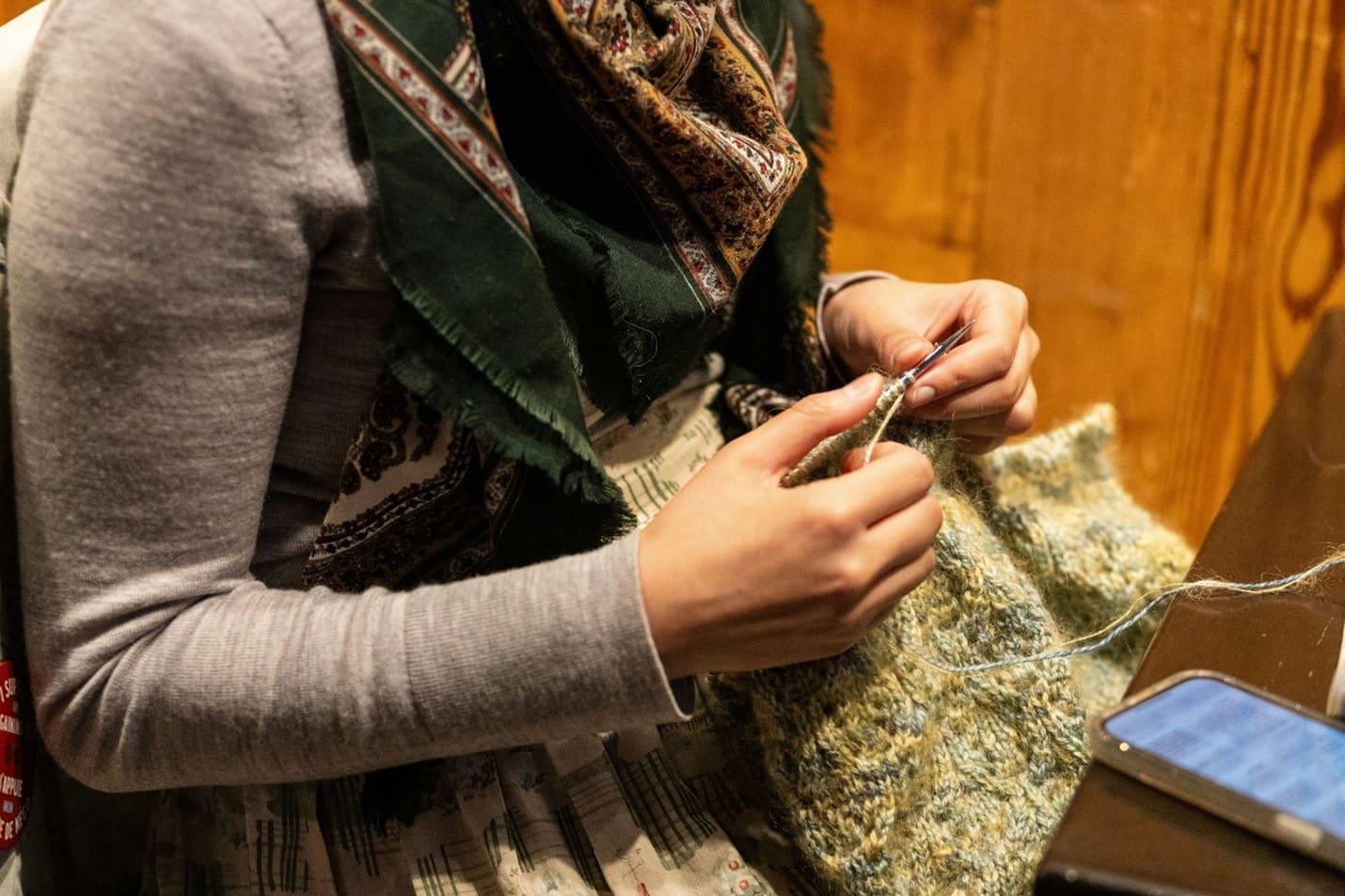
 In an increasingly fast-paced and digitally driven world, more people are turning to traditional crafts to find calm, focus, and emotional balance. Knitting, once considered a pastime of older generations, is being rediscovered as a powerful tool for mental wellbeing. Recent research and media coverage have highlighted its surprising psychological benefits, positioning knitting as more than just a hobby; it’s a form of therapy.
Knitting for Mental Health
Knitting is gaining recognition as a simple yet effective way to support mental health, with research pointing to its role in reducing anxiety and improving emotional regulation.
1. Knitting as a Tool for Emotional Regulation
One of the most compelling insights comes from research referenced in a recent BBC article, where Professor Birmingham of the University of British Columbia studied knitting in a treatment centre for young women with severe eating disorders. These patients were undergoing highly anxiety-inducing treatment protocols.
Remarkably, around 75% reported that knitting helped reduce distress and shift their focus away from food-related anxiety. This highlights knitting’s potential as a grounding activity that supports emotional regulation in high-stress situations.
Now Read: Wool’s End of Life Story
2. The Science Behind Repetitive Motion
The calming effect of knitting lies in its repetitive, rhythmic movements. Birmingham compares this to EMDR (eye movement desensitisation and reprocessing), a therapeutic technique used for anxiety and PTSD.
Knitting involves coordinated, bilateral hand movements, which may help engage both hemispheres of the brain. This rhythmic activity can create a soothing effect, similar to meditation, helping to quiet intrusive thoughts and reduce overall anxiety levels.
3. Promoting Mindfulness and Presence
Knitting naturally encourages mindfulness. The need to focus on stitches, patterns, and hand movements keeps attention anchored in the present moment. This can be particularly beneficial for individuals who struggle with rumination or racing thoughts.
By providing a structured yet gentle focus, knitting offers a mental “pause button,” allowing the mind to rest and reset.
4. The Therapeutic Benefits of Natural Materials
In addition to the act of knitting itself, the materials used can enhance the experience. Knitting with natural fibres like wool offers sensory and environmental benefits. Wool is breathable, soft, and tactile, contributing to a comforting and enjoyable knitting experience.
Moreover, working with wool can foster a deeper connection to sustainable practices and nature, which further supports mental wellbeing.
5. Building Routine and a Sense of Achievement
Knitting projects, whether small or large, provide a clear sense of progress and accomplishment. Completing rows, patterns, or entire pieces can boost confidence and self-esteem. Additionally, incorporating knitting into a daily routine can create structure and predictability, which are important for mental stability.
For individuals dealing with stress or recovery, these small, tangible achievements can be incredibly empowering.
A Simple Stitch Towards Better Mental Health
Knitting is far more than a creative pastime; it is a practical, accessible tool for improving mental health. Supported by emerging research and expert insights, it offers a unique combination of rhythmic movement, mindfulness, and sensory engagement.
Whether used as a therapeutic aid or a daily ritual, knitting provides a simple yet effective way to support emotional wellbeing in today’s demanding world.
For more information on the wool industry around the world, take a look at our fact sheets, statistics and guidelines.
Now Read: When Wool Meets the Sea: The Science of Alginate Blends
The post The Mental Health Benefits of Knitting: How a Simple Craft Supports Emotional Wellbeing appeared first on International Wool Textile Organisation.