


Fashion Can No Longer Destroy Its Unsold Clothes: What the EU’s New Ban Means for the Global Supply Chain
Europe has closed one of fashion’s most troubling exits. Large companies can no longer routinely destroy unsold clothing, accessories, and footwear—but preventing destruction does not answer the next question: Where will all those products go?
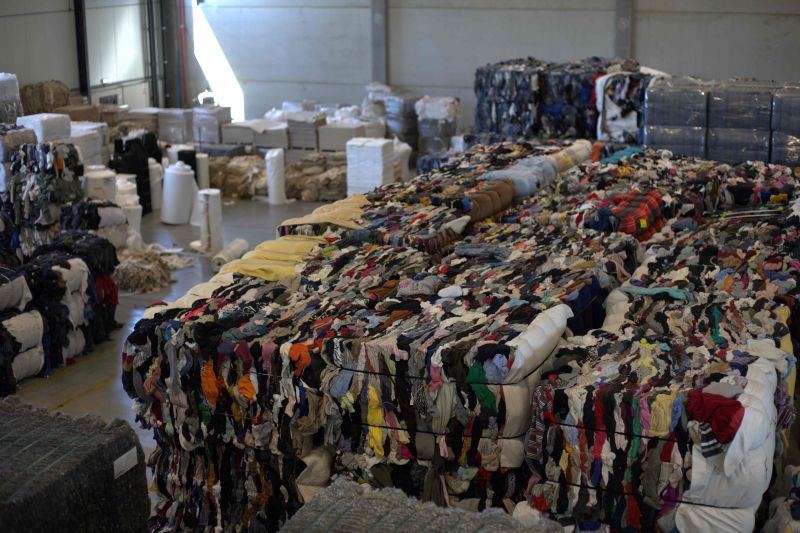
For years, fashion’s excess-inventory problem was largely hidden behind warehouse walls. A garment could be designed, sampled, manufactured, shipped across continents, photographed, marketed, stocked—and then destroyed without ever being worn.
That route is now closing in the European Union.
Beginning July 19, 2026, the EU’s prohibition on the destruction of unsold apparel, clothing accessories, and footwear applies to large companies. The measure was established under the Ecodesign for Sustainable Products Regulation , commonly known as the ESPR.
The European Commission also adopted rules outlining limited exceptions and specifying how businesses must disclose information about discarded unsold products. Medium-sized companies are scheduled to face the disclosure obligations and destruction prohibition beginning in 2030, while micro and small businesses are generally exempt.
The regulation represents a significant intervention in fashion waste. It is also the beginning—not the conclusion—of a much larger supply-chain reckoning.
Preventing destruction does not automatically prevent overproduction. It does not expand warehouse capacity, construct recycling plants, create resale demand, or make a mixed-fiber garment recyclable.
It simply removes one of the industry’s easiest ways to make excess inventory disappear.
Fashion can no longer treat destruction as the quiet final stage of the collection calendar.
The garment may be unsold, but its cost has already been paid
By the time a garment reaches a warehouse, much of its environmental and financial footprint has already been created.
Fiber has been cultivated, extracted, or manufactured. Yarn has been spun. Fabric has been woven or knitted. Dyeing and finishing have consumed water, chemicals, heat, and energy. Workers have cut, sewn, pressed, labeled, inspected, packed, and transported the product.
Destroying the final garment does not erase those inputs. It compounds them.
The European Environment Agency has examined the destruction of returned and unsold textiles as part of Europe’s transition toward a circular economy.
The agency has emphasized that available information remains fragmented, making mandatory disclosure an important part of the new regulatory framework.
Policymakers cannot meaningfully reduce a waste stream that companies do not consistently measure or publicly report.
Why would a company destroy wearable merchandise?
From the outside, destroying new clothing can appear irrational. Inside the traditional fashion business model, however, companies have used destruction to address several commercial and operational concerns.
Protecting brand value
Luxury and premium brands may fear that large volumes of discounted merchandise will weaken exclusivity, interfere with carefully controlled distribution, or train customers to wait for markdowns.
Destruction can preserve the appearance that a product was scarce—even when the original production volume exceeded demand.
Avoiding storage costs
Unsold inventory occupies expensive warehouse space. As products age, businesses continue paying for storage, inventory management, insurance, handling, transportation, security, and recordkeeping.
Keeping an unsuccessful product can eventually cost more than its recoverable value.
Preventing unauthorized resale
Brands may worry that excess merchandise will enter unauthorized outlets, gray-market distribution networks, counterfeit channels, or countries where sales rights belong to another distributor.
Managing unsafe or noncompliant products
Some products cannot be legally or safely resold. Merchandise may contain defects, contamination, missing safety documentation, incorrect labeling, prohibited substances, damaged protective features, or intellectual property that cannot be removed.
EU rules provide narrowly defined exceptions where destruction may be justified, including certain health, safety, legal, technical, and intellectual-property circumstances.
The exceptions are not intended to preserve destruction as a routine inventory-management method.
What the new EU framework requires
- Large companies are prohibited from destroying covered unsold apparel, clothing accessories, and footwear beginning July 19, 2026.
- Businesses subject to disclosure rules must report the number and weight of discarded unsold products.
- Companies must identify why products were discarded and disclose relevant waste-treatment pathways.
- Businesses must report measures taken—or planned—to prevent the destruction of unsold goods.
- Limited exceptions remain available when reuse, repair, remanufacturing, or another lawful pathway is not feasible for specified reasons.
What happens to unsold clothing now?
Removing destruction as a standard option does not guarantee that every garment will find a new owner. It creates pressure to develop more responsible destinations for excess products.
Possible destinations for unsold inventory
Resale and off-price retail
Brands can redirect merchandise to outlet stores, sample sales, employee sales, resale platforms, or approved off-price retailers.
This is one of the fastest ways to keep a finished product in use. However, resale only works when there is a customer. Moving the same garment from one warehouse to another does not make it circular.
Donation
Donation can provide needed clothing, but it should not be treated as an unlimited disposal system.
Recipient organizations must sort, store, transport, and distribute what they receive. Products that are inappropriate for local climates, cultures, size requirements, or actual community needs can overwhelm charities and shift the waste problem into another region.
Donation creates value when it responds to verified demand—not merely when it clears a brand’s balance sheet or warehouse.
Repair and refurbishment
Returns and slightly damaged products may be cleaned, repaired, relabeled, repackaged, or restored.
That work requires trained labor, replacement components, standardized assessment, and systems capable of determining whether repair is financially and technically viable.
This could create opportunities for alteration specialists, cleaners, cobblers, leather technicians, textile conservators, and regional repair centers.
Remanufacturing and upcycling
A company may deconstruct garments and turn their materials into new products. This approach can produce distinctive limited editions, but it remains difficult to scale.
Removing buttons, zippers, linings, labels, adhesives, interlinings, elastic, and decorative trims is labor-intensive. Every garment may require a different disassembly process.
Upcycling is valuable, but it cannot independently absorb the volume of excess inventory created by the global fashion industry.

Fiber-to-fiber recycling remains the industry’s difficult promise
The ideal circular model would turn an unwanted garment into usable fiber for a new garment.
The technical reality is more complicated.
A relatively clean, uncontaminated, single-fiber textile can be easier to process than a finished garment combining multiple fibers, coatings, trims, labels, hardware, prints, and adhesives.
A single jacket might contain:
- A polyester or nylon outer shell
- A cotton or viscose lining
- Elastane in stretch panels
- Polyester sewing thread
- Fusible adhesive interlining
- A polyurethane coating
- Metal zippers and snaps
- Plastic buttons
- Foam shoulder pads
- Printed care and brand labels
The product may have been designed for appearance, performance, and efficient assembly—but not for efficient disassembly.
Recycling that garment may require identifying its composition, separating incompatible materials, removing hardware, and finding a process capable of handling what remains.
Even then, the recovered fiber may be shorter, weaker, contaminated, or suitable only for a lower-value product.
The ban will expose fashion’s infrastructure gap
Europe’s rule does not create recycling capacity merely by requiring companies to find alternatives to destruction.
Recyclers need reliable incoming material, accurate fiber-content data, sorting capacity, contamination controls, functioning equipment, customers for recycled output, long-term purchasing commitments, and prices that can compete with virgin materials.
This is where fashion’s circular promises face their real test.
A textile recycler cannot survive on sustainability statements. It needs predictable material, reliable buyers, and contracts that make investment possible.
Brands may now have a stronger incentive to sign multiyear agreements with recyclers instead of contacting them only when warehouses become full.
They may also need to provide more consistent information about fiber composition, dye chemistry, finishes, coatings, hardware, and contamination.
Without those details, recyclers are left to reverse engineer products that were never designed for their systems.
The most important change must happen before production
The greatest value of the destruction ban may not be what happens to unsold clothing after it exists.
It may be what companies do to avoid creating it.
Brands will need to improve:
- Demand forecasting
- Assortment planning
- Regional inventory allocation
- Size and color forecasting
- Initial production quantities
- Reorder and replenishment systems
- Product testing
- Return-rate analysis
- Material selection
- Garment disassembly
- Supplier data collection
- Product traceability
Smaller initial runs followed by faster replenishment could replace large speculative orders.
Made-to-order and on-demand production may become more attractive. Digital sampling may reduce unnecessary physical prototypes, although it cannot eliminate the need to test fit, fabric behavior, construction, color, durability, and production quality.
The regulation also raises an uncomfortable question about fashion’s definition of success.
Is a collection successful because it produced and shipped millions of units—or because it accurately matched supply with demand and sold nearly everything it made?
Digital product information could follow the garment into its next life
The broader Ecodesign for Sustainable Products Regulation establishes a framework for improving product durability, repairability, resource efficiency, circularity, traceability, and access to product information.
Digital product passports are expected to become an important part of that framework as requirements are developed for specific product categories.
For textiles, a useful digital record could eventually help sorters, repairers, resellers, and recyclers identify:
- Fiber composition
- Dyes, finishes, and coatings
- Trim and hardware composition
- Country and facility of manufacture
- Repair instructions
- Disassembly guidance
- Potentially hazardous substances
- Recommended reuse or recycling pathways
A conventional fiber-content label was primarily designed for the person buying or caring for the garment.
A digital product passport may need to serve everyone who handles that garment after the original owner—or the original retailer—is finished with it.
The regulation reaches far beyond Europe
A garment sold in Paris may contain cotton grown in the United States, yarn spun in India, fabric woven in Italy, dyeing performed in Türkiye, sewing completed in Morocco, trims manufactured in China, and inventory data stored on servers managed by a multinational technology company.
When Europe changes product rules, suppliers around the world feel the effects.
Manufacturers serving European brands may be asked to provide more detailed material records. Textile mills may face increased demand for mono-material or recyclable fabrics.
Trim suppliers may need to identify component materials. Software platforms may be expected to connect sourcing, inventory, resale, repair, disposal, and recycling data.
The result could create a new competitive question for suppliers:
Can you prove not only how this product was made, but what can happen to it when it does not sell?
Fashion has lost the right to make excess invisible
The EU prohibition will not solve fashion waste by itself.
Companies could still overproduce. Unsold goods could remain in storage for years. Products could be exported to markets that cannot absorb them.
Merchandise could be classified as recycled while being converted into low-value materials that never return to clothing.
Enforcement, disclosure, infrastructure, investment, and product design will determine whether the law changes the system or merely redirects the waste.
Still, its underlying principle is significant.
A company that decides what to make must also take responsibility for what remains.
Fashion can no longer treat destruction as the quiet final stage of the collection calendar.
The unsold garment is now part of the public conversation—and perhaps, finally, part of the true cost of doing business.
Sources and Further Reading
- European Commission: New EU rules to stop the destruction of unsold clothes and shoes
- Regulation (EU) 2024/1781 establishing the Ecodesign for Sustainable Products Regulation
- European Environment Agency: The destruction of returned and unsold textiles in Europe’s circular economy
- European Commission: EU Strategy for Sustainable and Circular Textiles
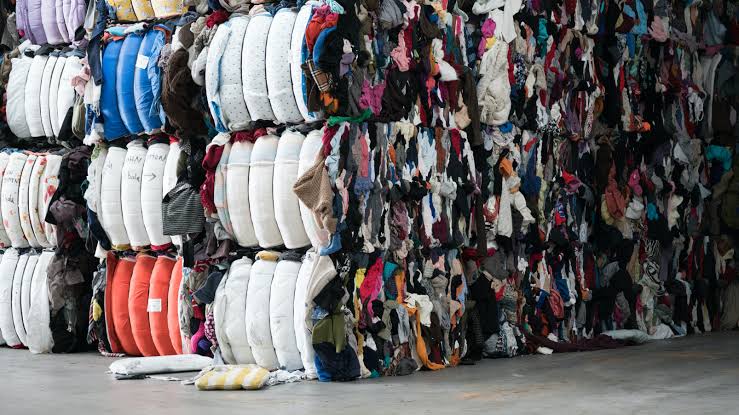
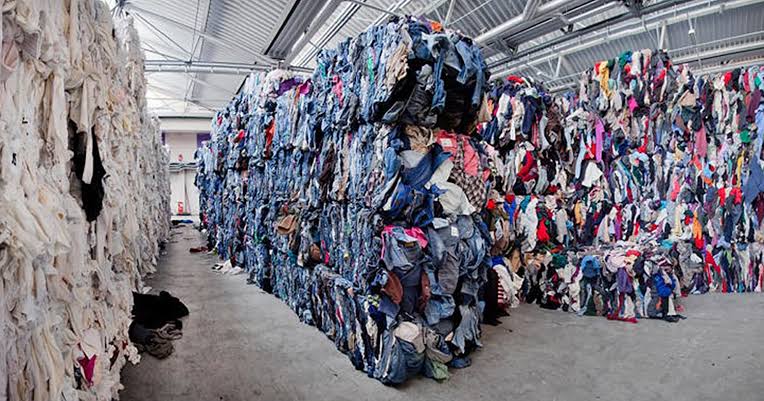
Editor’s note: The images accompanying this article depict bales of discarded textiles and clothing. The photographed contents should not automatically be interpreted as new, unsold EU inventory; they are used to illustrate the volume, handling, and sorting challenges associated with unwanted textiles.