

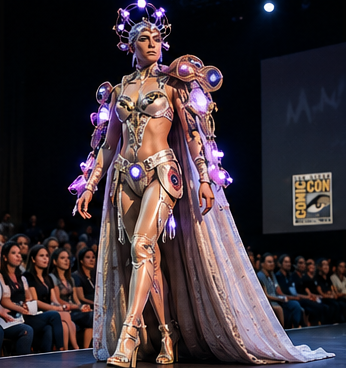
The Other Runway: Where Cosplay, Couture, and Wearable Technology Meet
Cosplay has developed into a multidisciplinary design field where sewing, sculpture, armor, props, performance, electronics, and storytelling meet. From convention catwalks to international championships, creators are finding new stages on which to present their work.
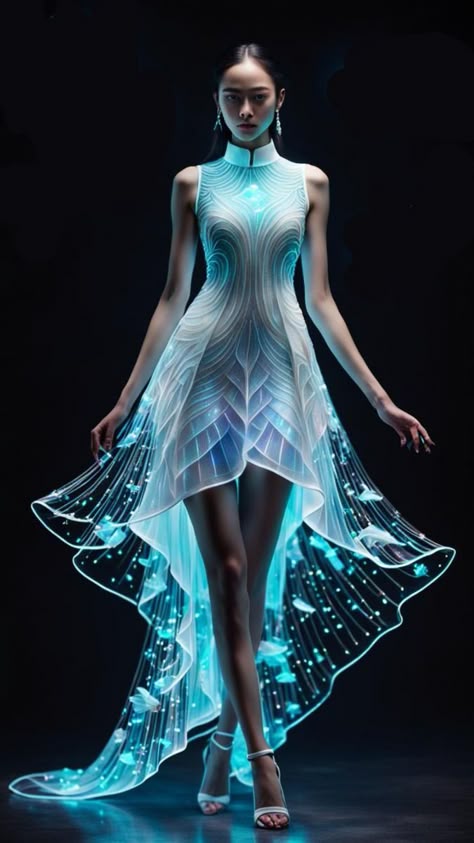
Cosplay begins with transformation. A person studies a character, fictional world, historical reference, game, animation, comic, film, or original idea—and then attempts to make that imagined identity physically real.
The result may include a hand-tailored coat, a corseted gown, embroidered armor, a moving wing structure, illuminated props, a sculpted headpiece, prosthetic makeup, body paint, leatherwork, mechanical effects, or digitally fabricated components.
It may be presented in a hallway, photographed in a studio, performed in a masquerade, judged in a craftsmanship competition, or sent down a convention runway.
Cosplay is often described simply as dressing like a character. That definition does not fully represent the research, construction, engineering, performance, and problem-solving involved.
Cosplay is not only about wearing a costume. It is about building, interpreting, inhabiting, and presenting a complete visual world.
Cosplay is a design discipline of its own
Cosplay overlaps with fashion design, costume design, theatre, prop fabrication, special effects, makeup, and performance. It is not identical to any one of them.
A fashion designer may begin with a customer, market, collection, textile, or silhouette. A film costume designer begins with character, narrative, camera, continuity, and the director’s visual world.
A cosplayer may begin with an existing character reference and become the designer, patternmaker, tailor, model, prop builder, makeup artist, stylist, performer, photographer, and publicist for the same project.
Character-Accurate Cosplay
Reproduces an established character’s clothing, armor, accessories, hair, makeup, and props as closely as possible.
Interpretive Cosplay
Reimagines a character through another era, culture, fashion genre, textile tradition, silhouette, or personal design language.
Original-Character Cosplay
Creates a new character with an original costume, story, visual identity, props, and performance.
Cosplay Couture
Uses couture, tailoring, corsetry, draping, embellishment, and runway techniques to transform fandom into original fashion.
From sewing pattern to complete character
A single cosplay can require dozens of interconnected decisions.
The creator must determine what the garment would look like from angles that may never appear in the source material. Front and back views may contradict each other. A video-game costume may contain shapes that are visually convincing on a screen but impossible to construct on a human body.
The cosplayer must translate digital or illustrated imagery into:
- Patterns that fit a real person
- Fabrics with appropriate weight and movement
- Closures that remain hidden but accessible
- Armor that can flex, separate, or release safely
- Footwear that can withstand hours of standing
- Props that meet event safety requirements
- Makeup that survives heat, lighting, and photography
- Structures that can travel through doors and crowded halls
A successful cosplay must not only look right. It must remain wearable long enough to be presented.
Where couture enters cosplay
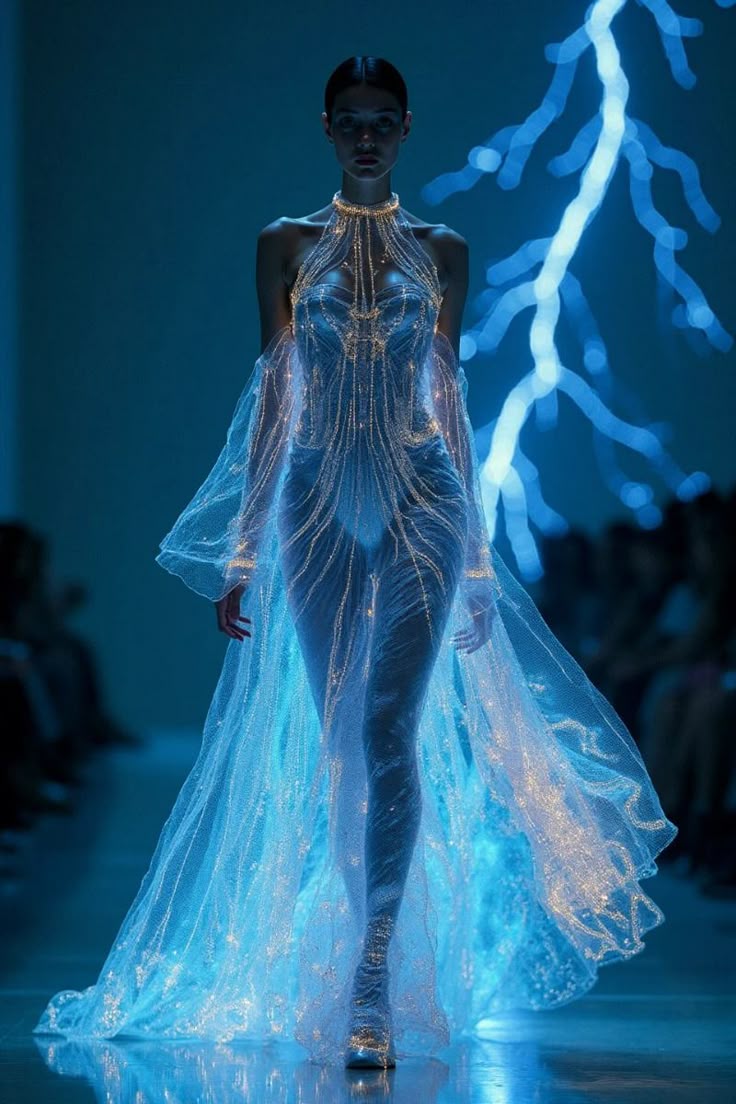
Couture techniques give cosplayers ways to produce volume, structure, surface detail, and visual drama that ordinary ready-to-wear construction may not provide.
These techniques may include:
- Custom draping
- Flat-pattern development
- Hand tailoring
- Internal corsetry
- Boning and structured foundations
- Hand embroidery
- Beading and sequins
- Fabric manipulation
- Pleating and smocking
- Hand-painted textiles
- Appliqué
- Custom dyeing
- Millinery
- Leather molding
Cosplay couture does not always reproduce a character’s original outfit. It may reinterpret the character as a ball gown, tailored suit, bridal look, evening ensemble, historical costume, avant-garde runway piece, or high-fashion editorial concept.
A superhero’s insignia might become beadwork. A villain’s armor might become the seam structure of a corset. A fantasy city might become the silhouette of a skirt.
Cosplay couture asks what a character’s world would look like if it were translated into fashion rather than copied literally.
Wearable technology changes what a costume can do
Some cosplay designs are no longer static garments. They light up, move, transform, react, emit sound, open, close, unfold, or respond to the performer.
Creators may use:
- LED lighting
- Fiber optics
- Conductive thread
- Microcontrollers
- Servo motors
- Magnets
- Pneumatic mechanisms
- Programmable sound
- Remote controls
- Motion sensors
- Three-dimensional printed parts
- Laser-cut structures
The technology must be integrated into a garment that touches a moving, breathing body.
Designers must manage heat, battery placement, weight, wiring, visibility, ventilation, balance, repair access, emergency removal, and cleaning.
Questions behind every technological effect
- Can the wearer reach the switch?
- Can the electronics be removed before cleaning?
- How long will the battery last?
- What happens if the mechanism fails on stage?
- Can the costume be removed quickly?
- Will wiring remain secure while the body bends?
- Can damaged components be replaced?
- Will the effect remain visible under bright lighting?
Materials beyond the fabric store
Cosplayers routinely combine traditional textiles with materials borrowed from theatre, engineering, sculpture, construction, electronics, and industrial fabrication.
A cosplay workroom may contain:
- Silk, cotton, wool, linen, lace, and synthetic fabric
- EVA foam
- Thermoplastics
- Worbla and related molding materials
- Resin
- Silicone
- Latex
- Acrylic
- Wood and metal supports
- Foam clay
- Flexible paints and coatings
- Magnets and hidden fasteners
- Three-dimensional printed components
- Electronics and wiring
These materials make extraordinary shapes possible, but they also create durability and sustainability challenges.
Adhesives may release. Paint may crack. Thermoplastic can warp inside a hot vehicle. Foam can tear. Electronics can become inaccessible. Mixed materials may be difficult to repair, clean, separate, or recycle.
Innovation is not merely creating the effect. It is ensuring that the effect continues to work.
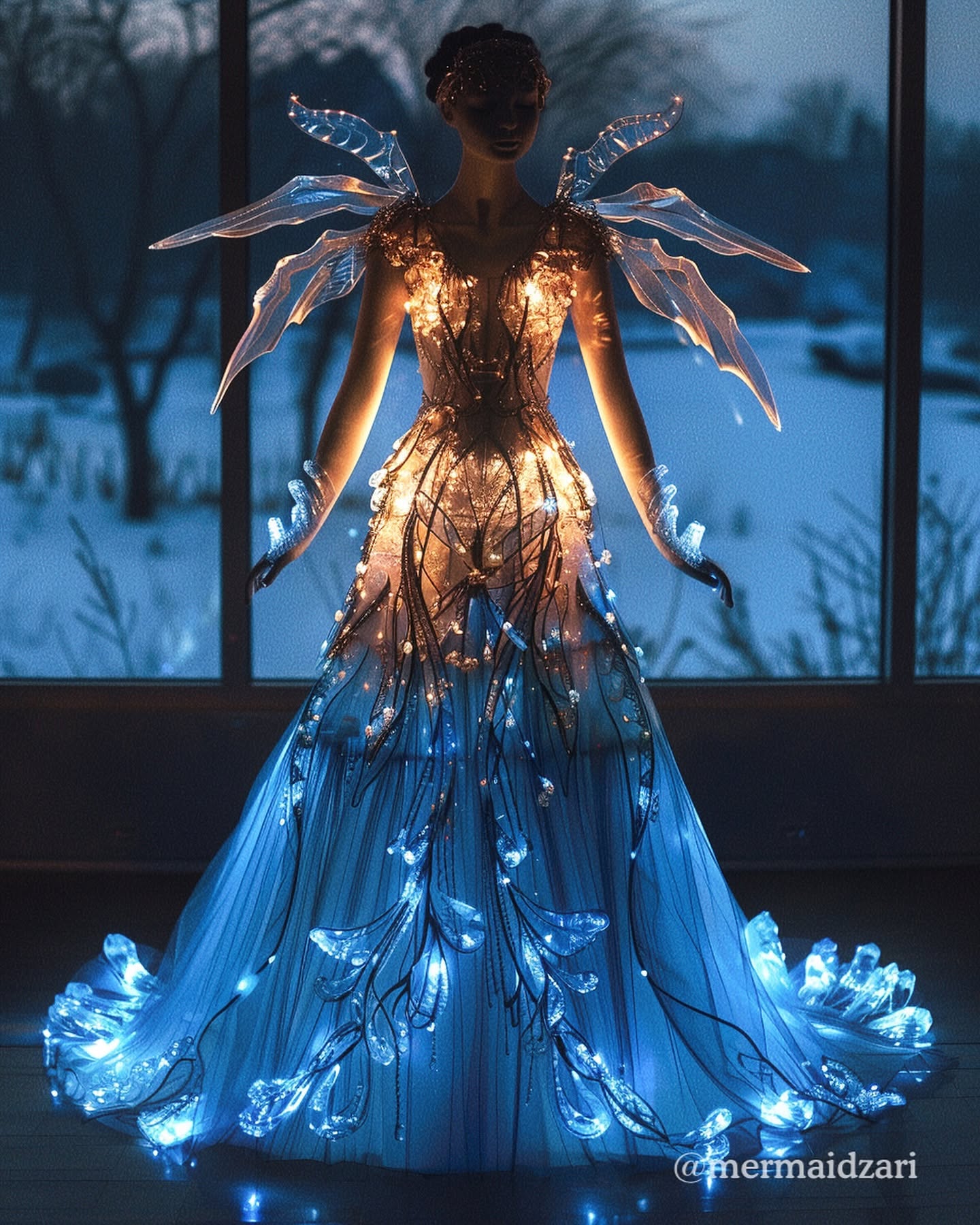
The cosplay runway is not one kind of stage
The phrase cosplay runway can describe several different presentation formats. Understanding the format is important because each one rewards different skills.
Common cosplay presentation formats
Cosplay runway and competition opportunities
Opportunities range from welcoming convention catwalks to highly selective international championships.
Rules, deadlines, divisions, permitted materials, prop requirements, and handmade percentages change from event to event. Cosplayers should always review the current official rules before applying.
Her Universe Fashion Show
Presented during San Diego Comic-Con, the Her Universe Fashion Show focuses on original fandom-inspired fashion rather than conventional character replicas.
Designers combine runway fashion, couture, theatrical presentation, licensed entertainment properties, technology, sculptural construction, and storytelling. It is especially relevant for creators who want to move from cosplay into professional fashion or licensed product development.
GalaxyCon Runway Costume Contests
GalaxyCon events may offer several levels of costume presentation, including a runway contest, craftsmanship competition, masquerade, youth events, and specialized contests.
The runway format provides a lower barrier to entry for participants who want the experience of walking a stage, while craftsmanship divisions place greater emphasis on construction, complexity, props, finishing, and technical execution.
Current rules and host cities are available through GalaxyCon .
Cosplay Central Crown Championships
The Cosplay Central Crown Championships connect qualifying events in different regions with a global final.
Entrants are generally evaluated through local qualifier rules before selected finalists advance. These competitions are suited to experienced makers seeking international recognition for construction, design interpretation, technical difficulty, and stage presentation.
World Cosplay Summit
The World Cosplay Summit brings national and regional representatives to Nagoya, Japan, for one of cosplay’s most visible international programs.
The format emphasizes team performance, costume construction, character interpretation, choreography, props, staging, and cultural exchange. Selection commonly begins through national or regional preliminary competitions.
Convention Masquerades and Craftsmanship Contests
Anime conventions, comic conventions, gaming events, fantasy festivals, and pop-culture expos frequently organize cosplay masquerades, craftsmanship judging, original-character contests, and open catwalks.
Events such as C2E2, MCM Comic Con, OCon Expo, Anime Central, Otakuthon, and regional conventions may provide different divisions for novice, intermediate, journeyman, master, youth, groups, props, armor, and performance.
Community Catwalks and Cosplay Parades
Not every opportunity is a high-pressure competition. Community conventions may offer walk-on catwalks, cosplay parades, children’s showcases, photography meetups, or noncompetitive exhibition categories.
These formats are valuable for new cosplayers learning stage presence, posing, garment movement, transport, quick repair, and audience interaction.
What judges may evaluate
Judging systems vary, but competitive cosplay often examines several distinct areas.
Construction
Patternmaking, sewing, tailoring, armor, props, electronics, finishing, durability, fit, and technical difficulty.
Accuracy
How successfully the finished costume interprets or reproduces the chosen source material.
Creativity
Original solutions, material choices, character reinterpretation, innovation, and personal design decisions.
Performance
Stage presence, movement, characterization, choreography, music, storytelling, and use of props.
A beautifully photographed costume may not automatically succeed in a stage competition. Judges may need to inspect seams, interior finishes, attachment systems, pattern alterations, prop construction, and progress photographs.
Conversely, a technically complex costume may lose impact if the wearer cannot move confidently or present its strongest details to the audience.
The performer activates the costume
On a cosplay runway, the wearer is not simply a mannequin.
Pose, timing, movement, gesture, facial expression, music, lighting, and prop handling can determine whether the audience understands the character and construction.
A costume may contain:
- Hidden wings
- A reversible cape
- An illuminated weapon
- A removable helmet
- A mechanical reveal
- A sound cue
- A transforming skirt
- An expandable armor component
The performer must know when and how to activate each feature.
The garment is not complete until movement, character, and presentation bring it to life.
Cosplay as professional training
Many cosplayers develop professional-level skills without beginning in a formal fashion or costume program.
One project may require them to:
- Research visual references
- Draft or alter patterns
- Source unusual materials
- Fit garments
- Construct armor and props
- Install electronics
- Create makeup and wigs
- Plan photography
- Edit video
- Build a social-media audience
- Manage budgets and deadlines
- Transport fragile work
- Repair damage during an event
Those skills can support careers in:
- Film and television costume
- Theatre
- Fashion design
- Tailoring and alteration
- Prop fabrication
- Special effects
- Theme parks
- Experiential marketing
- Gaming and entertainment promotion
- Product development
- Wearable technology
- Content creation
A competition entry can function as a portfolio piece, technical demonstration, marketing campaign, public performance, and business pitch simultaneously.
Cosplay deserves better industry recognition
Cosplay is frequently treated as a hobby even when the work demonstrates professional-level tailoring, sculpture, electronics, leatherwork, painting, makeup, choreography, and fabrication.
That perception can obscure the labor required.
A finished costume may represent hundreds of hours of design, experimentation, failed prototypes, hand finishing, and technical troubleshooting.
The creator may pay for every material, tool, convention pass, hotel, transportation expense, photograph, and repair.
Greater industry recognition could create pathways into costume departments, fashion houses, fabrication studios, museums, technology companies, education, brand partnerships, and licensed product design.
What fashion can learn from cosplay
Cosplay reminds the fashion industry that clothing can do more than follow a seasonal trend.
It can tell a story, invite participation, create community, transform the wearer, combine disciplines, and make technology emotionally visible.
Lessons from cosplay culture
- Customers value story and emotional connection.
- Construction knowledge can build strong communities.
- Process content can be as compelling as the finished garment.
- Unusual materials can become wearable.
- Clothing can be interactive and theatrical.
- Small creators can develop devoted global audiences.
- Fashion does not have to separate play from sophistication.
- Personal identity can be expressed through shared fictional worlds.
Most importantly, cosplay understands something fashion occasionally forgets:
People do not wear clothing only to cover the body. They also wear it to transform, communicate, perform, and become visible.
The other runway is expanding
Cosplay is no longer confined to convention hallways.
It appears in runway contests, craftsmanship championships, masquerades, fan-fashion showcases, museum programming, international festivals, photography events, brand campaigns, gaming launches, streaming competitions, and social-media performances.
Some stages reward screen accuracy. Others celebrate hand construction, original design, technology, acting, choreography, or reinterpretation.
Together, they form another runway—one built not around a traditional fashion calendar, but around imagination, technical skill, community, performance, and transformation.
Here, sewing meets sculpture. A pattern meets a circuit. A fictional character meets a real body.
The finished work must do more than look impressive.
It must become alive.
Cosplay Runways, Competitions, and Further Reading
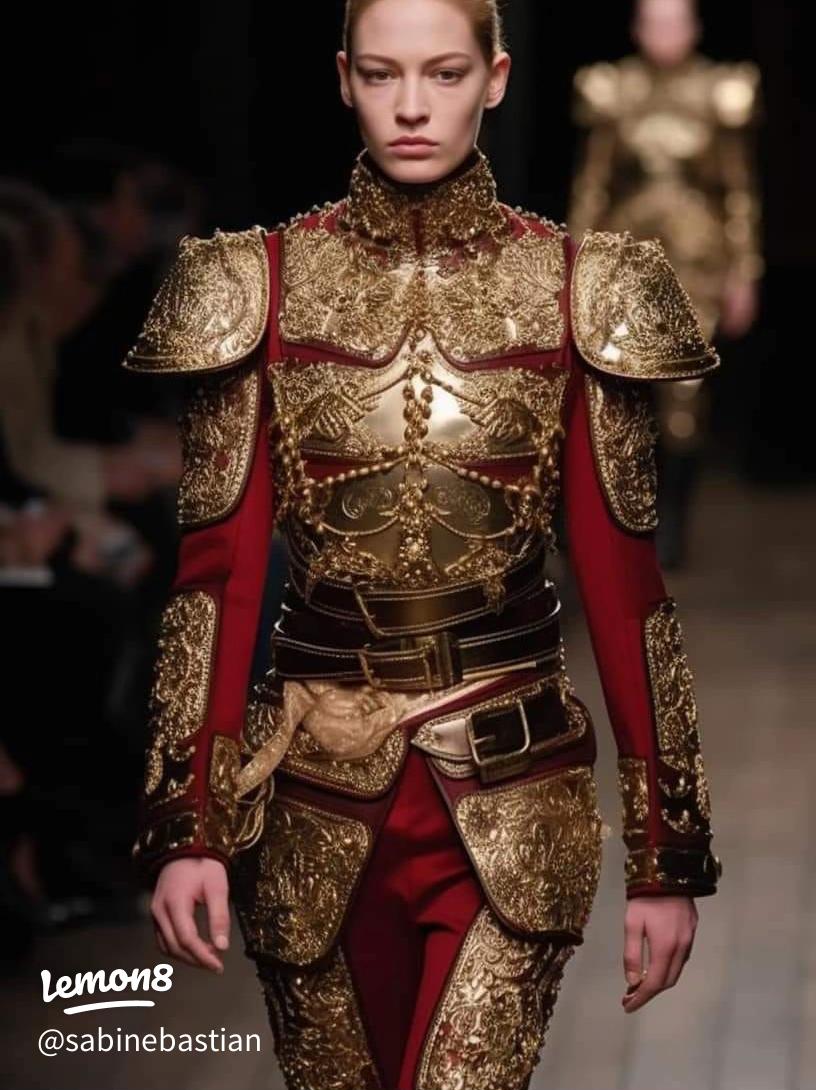
Editor’s note: The images accompanying this article illustrate cosplay, fantasy costume, warrior styling, sculptural dress, and character-based design. They are not presented as entries from a specific runway or competition unless separately identified by the original creator, photographer, or rights holder. Event formats, deadlines, rules, and eligibility requirements can change. Consult each event’s official website before applying.