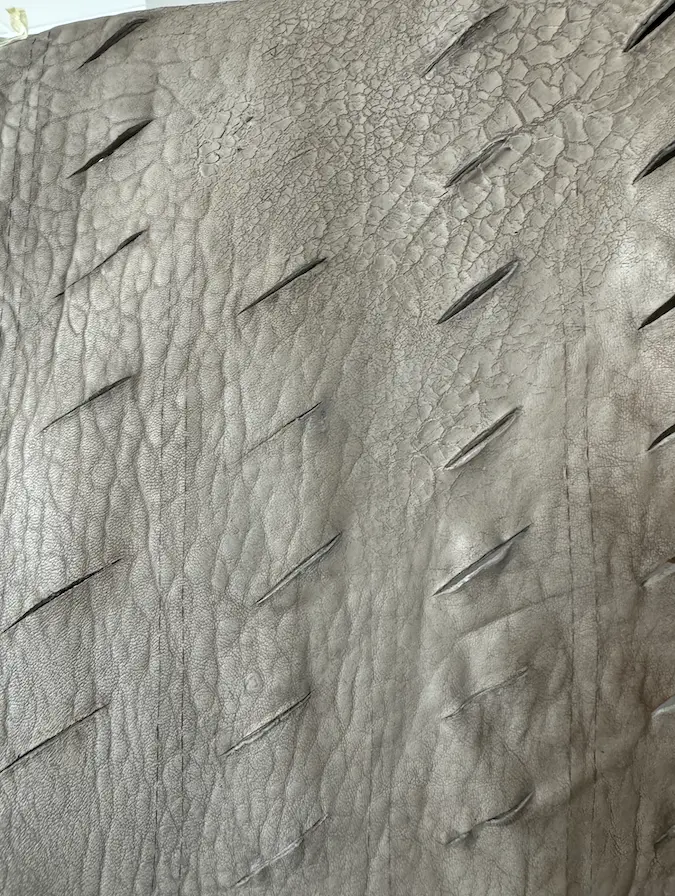


Hamnet — Best Costume Design
In Hamnet, costume design does not announce itself. It listens. It waits. It absorbs loss. Malgosia Turzanska approaches Chloé Zhao’s adaptation of Maggie O’Farrell’s novel with a quiet radicalism: clothing as memory, fabric as emotional residue, dress as the body’s way of continuing after language fails.
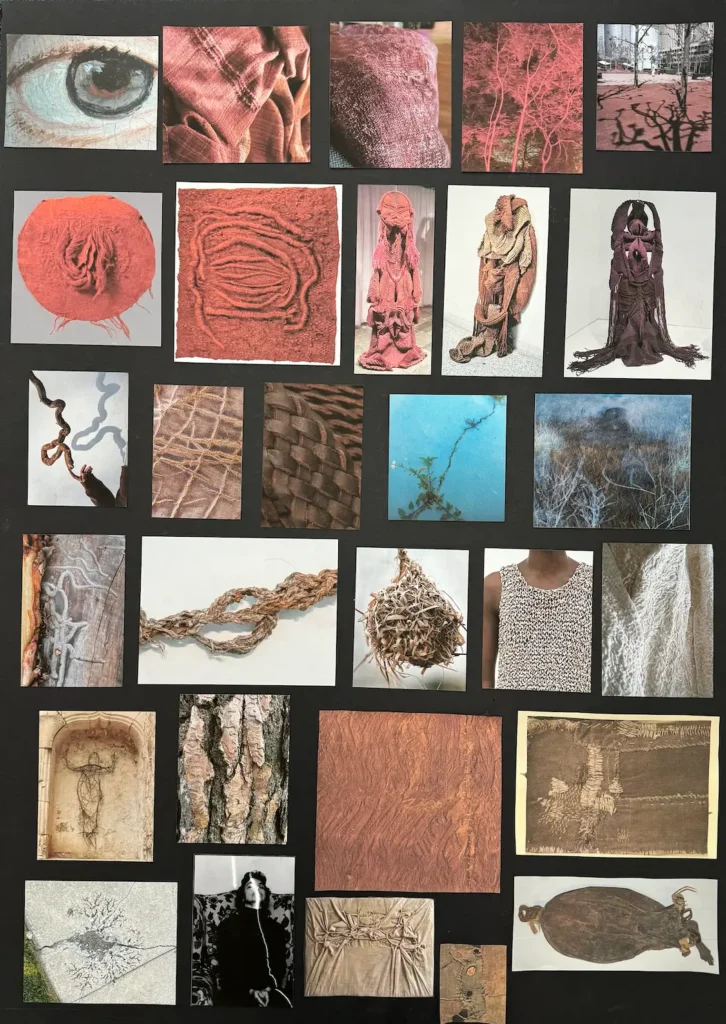
Set in late-16th-century England, Hamnet resists the usual iconography of Shakespearean period drama. There are no ornamental silhouettes meant to impress, no costumes that signal prestige before meaning. Instead, Turzanska builds a tactile, restrained world in which garments are worn into being—creased by labor, darkened by grief, softened by love. The result is costume design that functions less as historical recreation and more as emotional cartography.
The clothes had to feel like they belonged to the land, to the body, and to time passing—especially after loss.

A Domestic History, Worn
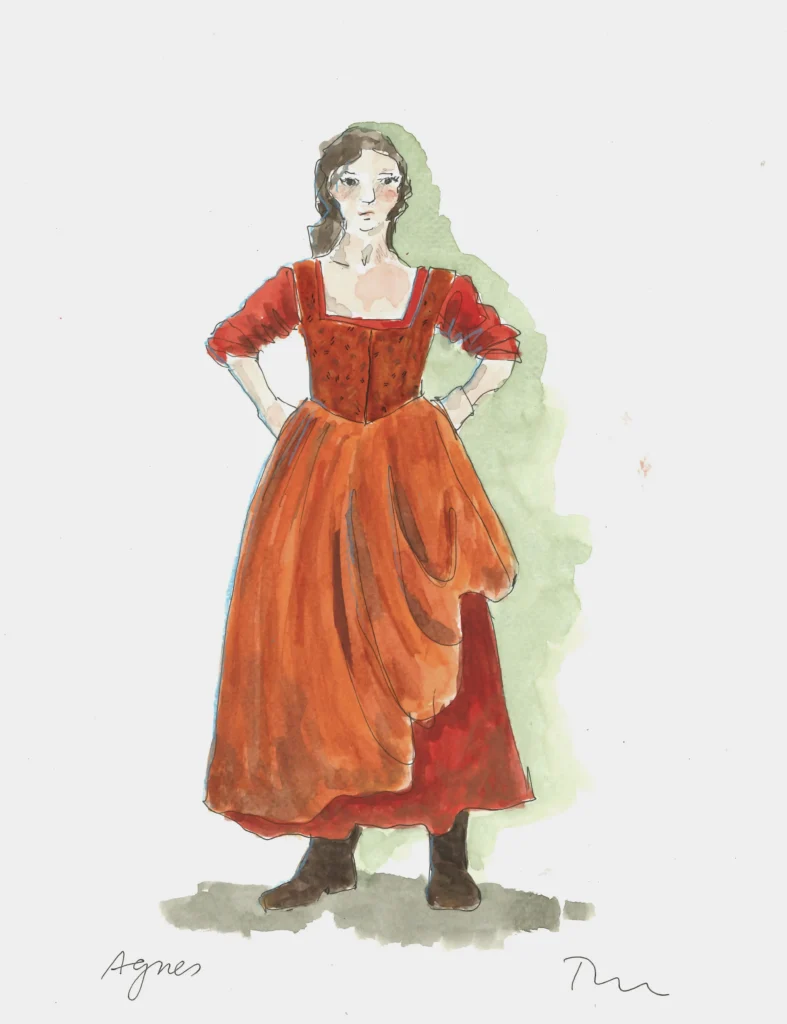
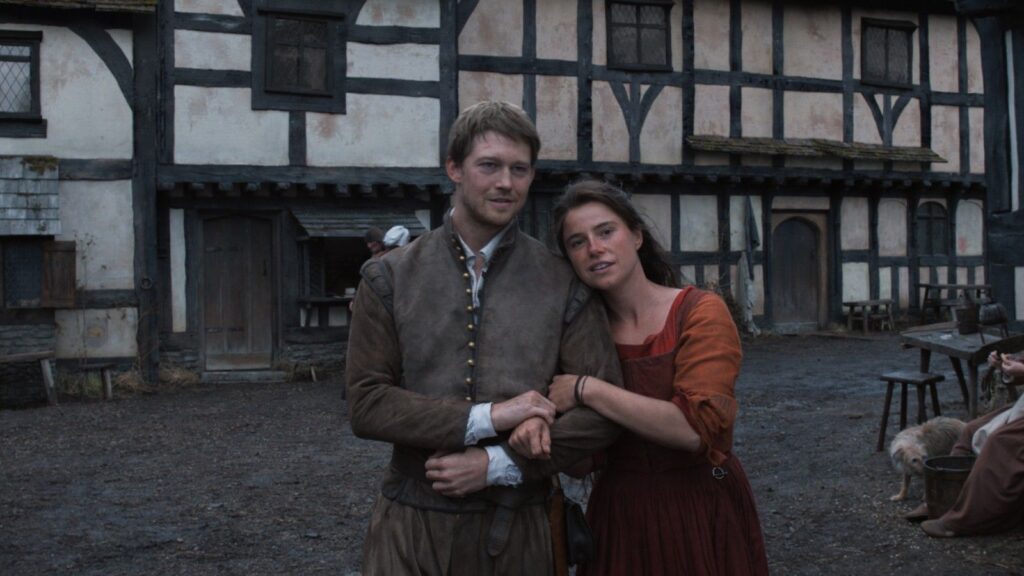
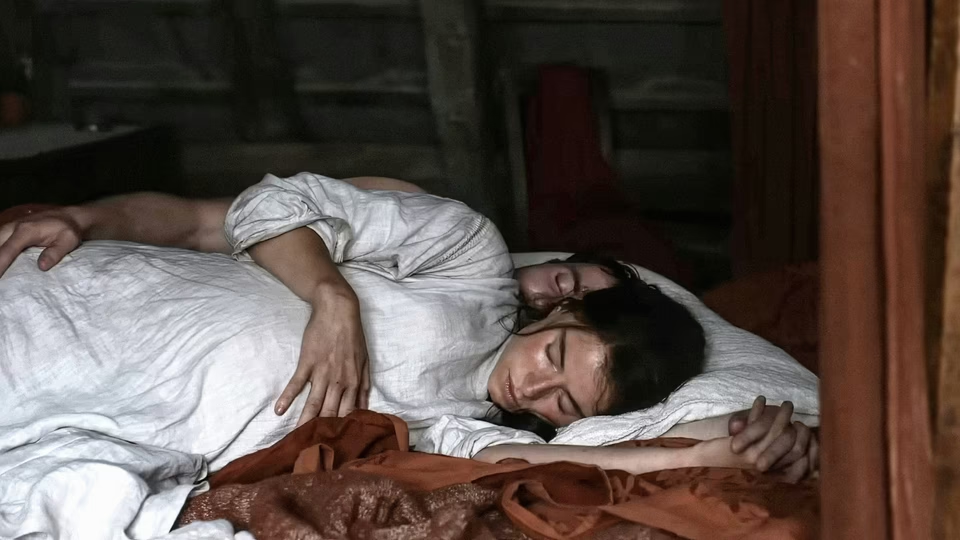
At the center of Hamnet is Agnes Hathaway, played by Jessie Buckley. Agnes exists outside the social structures that surround her—intuitive, feral, deeply rooted in the natural world. Turzanska dresses her accordingly, privileging natural fibers, softened silhouettes, and hand-worn textures that feel closer to earth than institution.
Agnes’s clothing moves with her body, never against it. Garments are layered for function rather than status, echoing her knowledge of herbs, animals, and cycles of life and death. After Hamnet’s death, her clothes do not change dramatically—but they withdraw. Color dulls. Weight increases. The body appears more contained, as if grief has settled into the fabric itself.
Caption — Agnes Hathaway
Agnes’s costumes rely on natural fibers, softened construction, and restrained color—allowing grief to register through weight, wear, and silence rather than spectacle.
William Shakespeare: Absence Made Visible
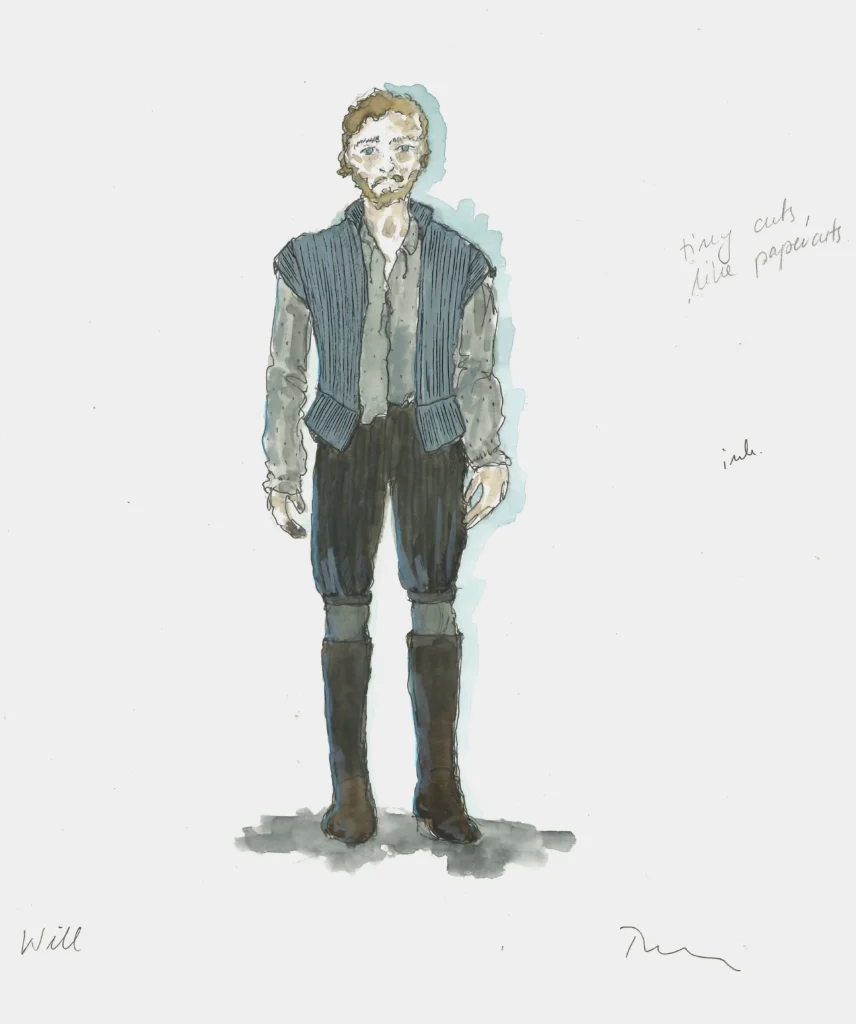
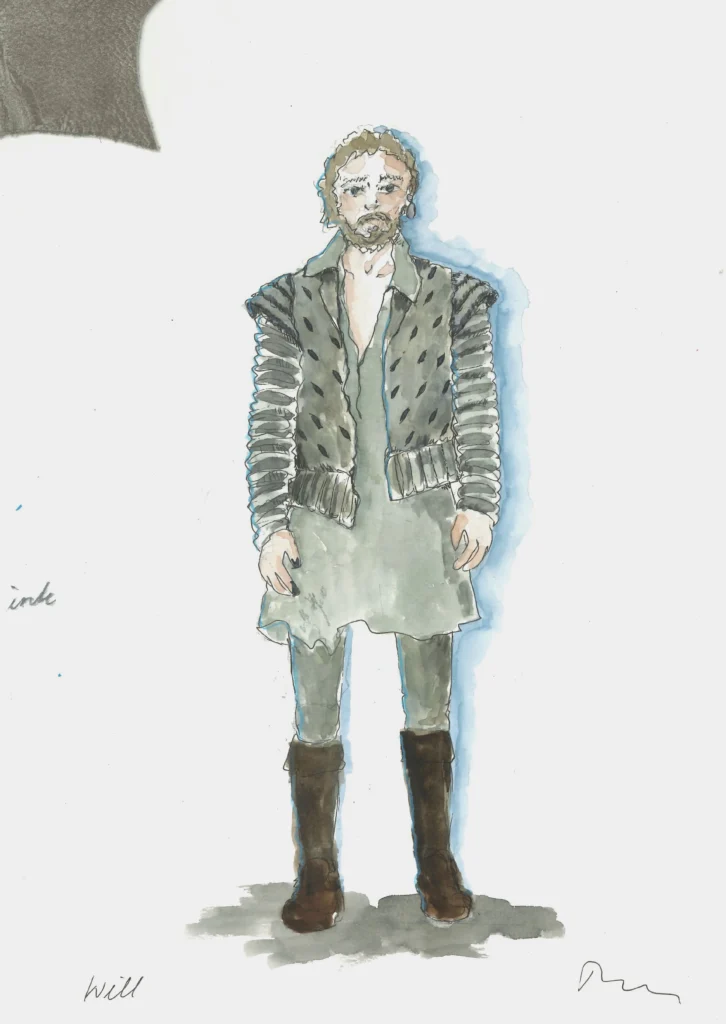
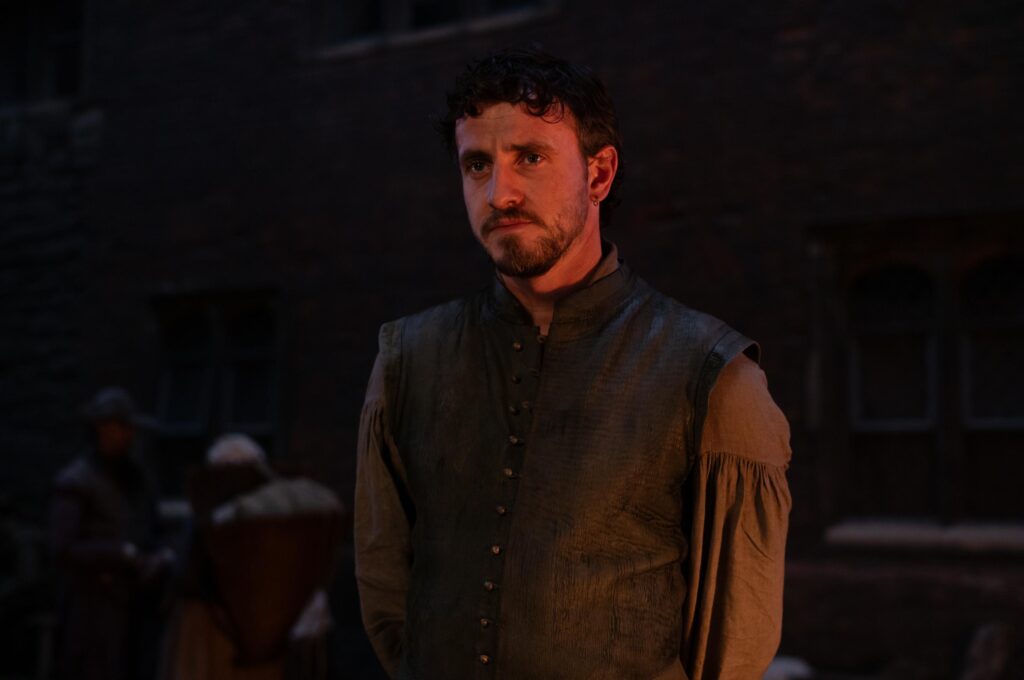
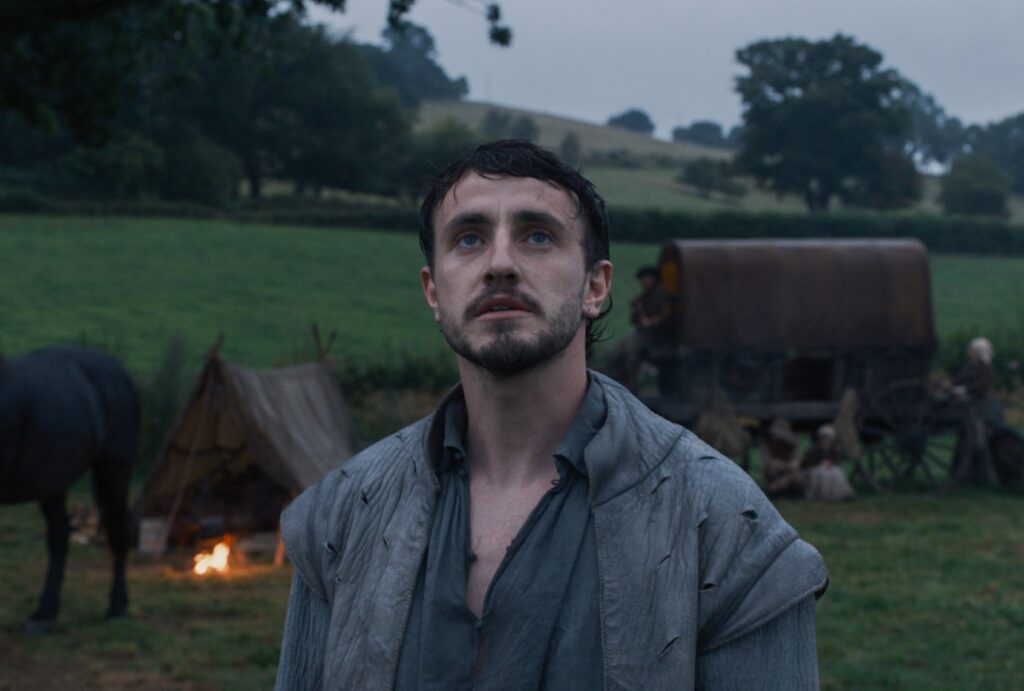
William Shakespeare, played by Paul Mescal, is often physically absent from the family’s life—pulled toward London, toward ambition, toward language. Turzanska reflects this absence through subtle contrasts. His clothing is slightly more structured, more formalized, but never indulgent. He carries the marks of travel rather than rootedness.
As William drifts further from home, his costumes do not elevate; they separate. The distance between husband and wife is not staged through dialogue alone—it is embedded in fabric choice, fit, and repetition.
Childhood, Cloth, and Fragility
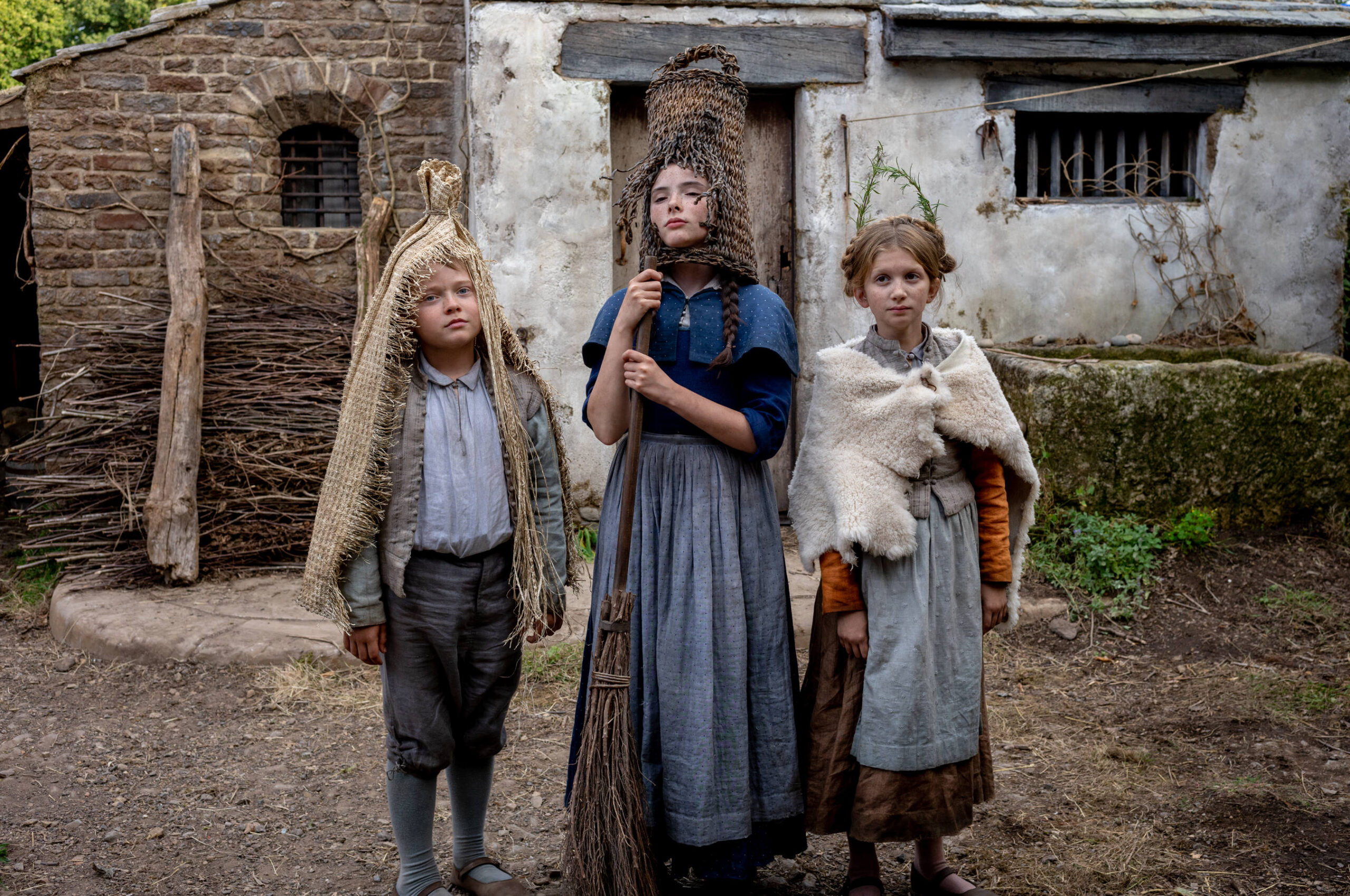
The costumes for the children—Hamnet, Judith, and Susanna—are among the film’s most devastating elements. Turzanska avoids sentimentalization. The children’s clothing is practical, repetitive, often re-worn. These garments feel shared, handed down, lived in quickly.
When illness enters the home, the clothing does not dramatize the moment. It bears it.
Caption — Children’s Costumes
Children’s garments are deliberately repetitive and worn, emphasizing vulnerability, interchangeability, and the fragility of life rather than innocence.
Hamnet’s death is not marked by a single costume moment, but by the sudden stillness of familiar cloth—a body no longer animating what once moved.
Period Without Ornament
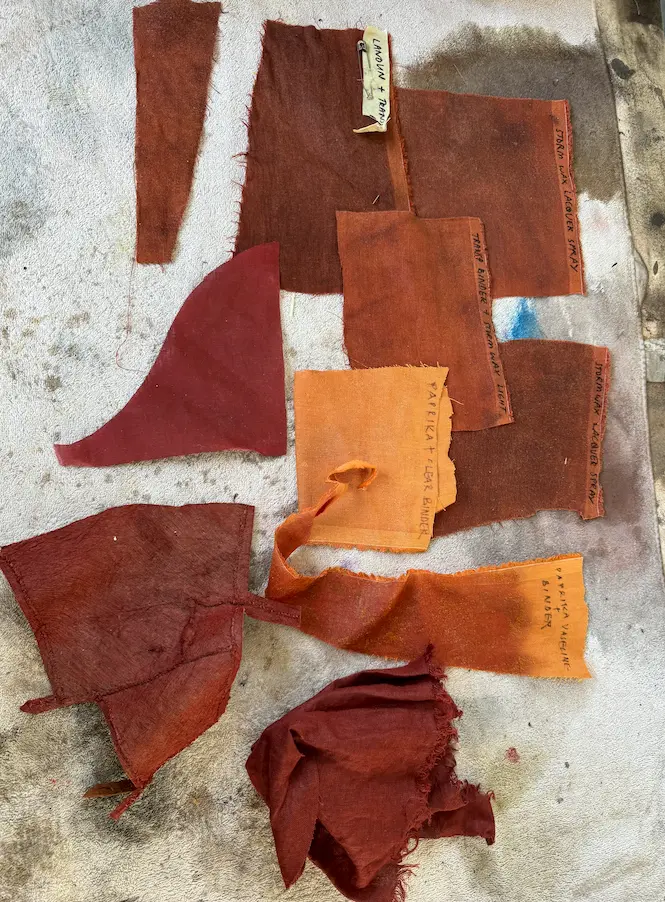
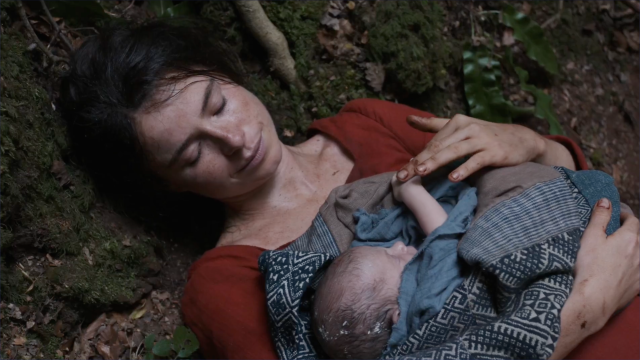
Though meticulously researched, Hamnet resists the stiffness often associated with period accuracy. From the earliest conversations with director Chloé Zhao, Malgosia Turzanska approached the film not through finished sketches or rigid palettes, but through the physical reality of the body. When the two first met, there was no script—only Maggie O’Farrell’s novel and a shared language of sensation. They spoke openly about blood: menstrual blood, pulsing blood, drying blood, scabbed blood—how it darkens, oxidizes, stains, and lingers. Those distinctions quietly inform the red tones worn by Agnes, grounding them in biology rather than symbolism.
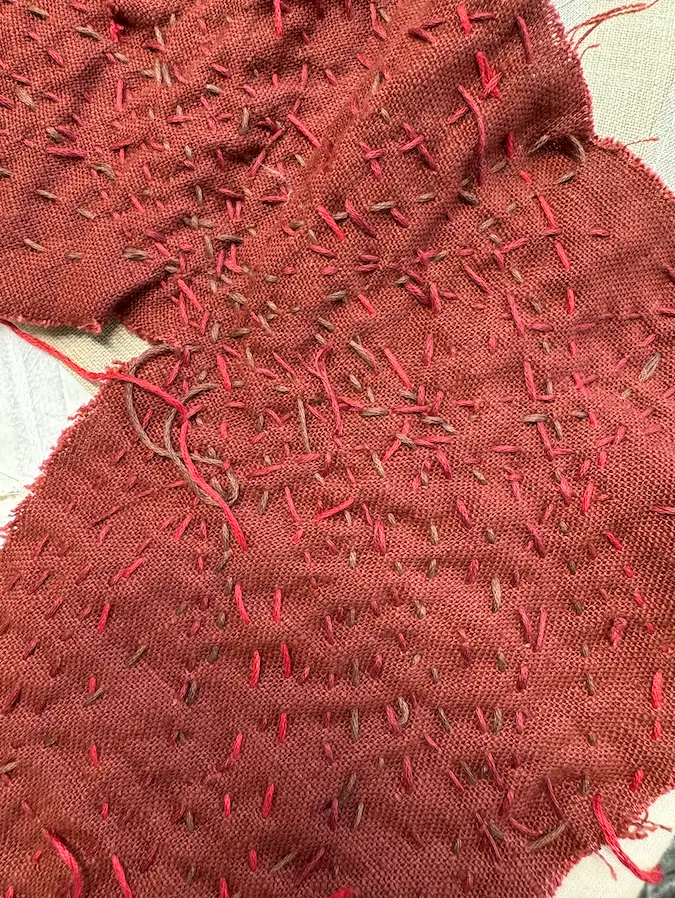
Those conversations shaped the red tones worn by Jessie Buckley’s Agnes Hathaway. Rather than theatrical crimson, the palette moves through bruised rusts, softened oxbloods, and brown-leaning reds—colors drawn from lived experience rather than symbolism. The reds are never decorative. They appear absorbed into the fabric, weathered by time and touch, carrying the physical memory of childbirth, injury, and loss.
There is a deliberate resistance to courtly elegance. Even moments of ritual—birth, burial, performance—remain rooted in the domestic. Clothing belongs to hands that work, bodies that kneel, and families that endure loss not once, but repeatedly.
Caption — Period Language
Rather than ornamental Tudor silhouettes, the film favors lived-in construction—period accuracy filtered through domestic realism.
Theatrical Memory and Transformation
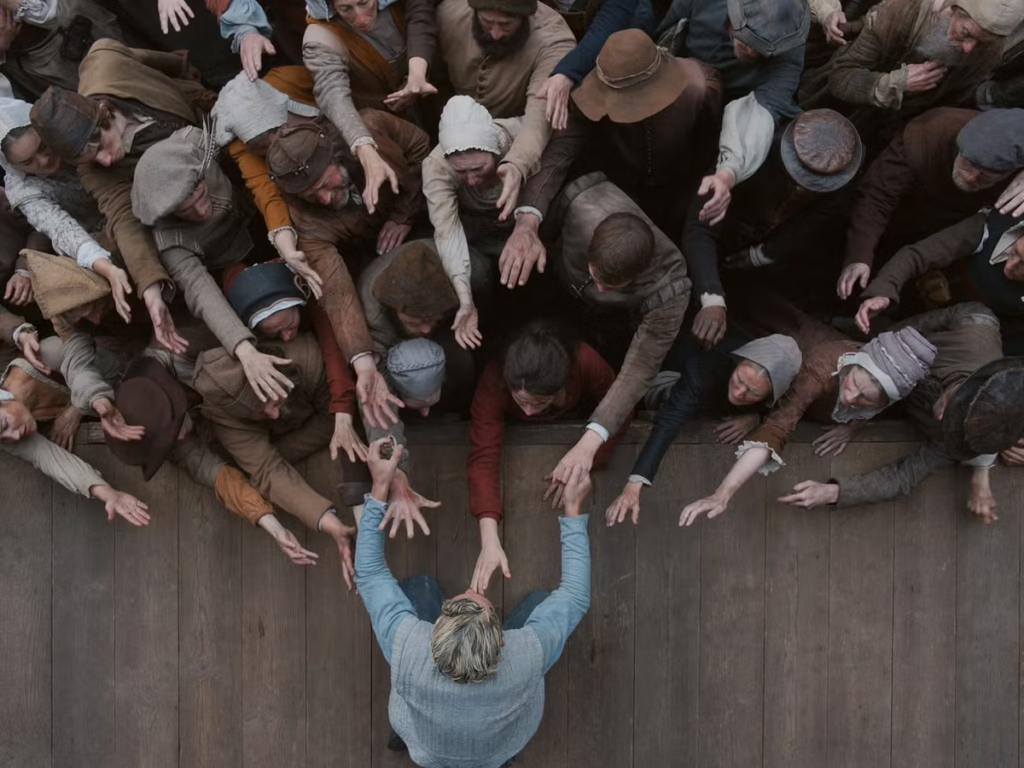
When Agnes finally witnesses Hamlet performed in London, the film enters a liminal space between life and art. Here, costume becomes symbolic without abandoning restraint. The theatrical garments do not overwhelm the earlier world; they echo it—transformed, but recognizable.
The play within the film does not eclipse Hamnet’s life. It carries it.
Costume becomes the bridge between what is lost and what survives.
A Career of Precision, Not Display
Turzanska’s career—spanning Stranger Things, The Green Knight, X, Pearl, and Train Dreams—has been defined by her ability to move between genres without sacrificing integrity. In Hamnet, she delivers her most restrained work to date, proving that costume design can be at its most powerful when it refuses excess.
Her Oscar-nominated work here is not loud. It does not ask to be admired. It asks to be felt.
Clothing as Continuance
In Hamnet, grief does not end. It changes form. Malgosia Turzanska’s costumes honor that truth by allowing fabric to hold what characters cannot speak. These garments remember. They wait. They endure.
In a film about a child whose name survives through art, costume becomes the quiet witness—carrying life forward, thread by thread.
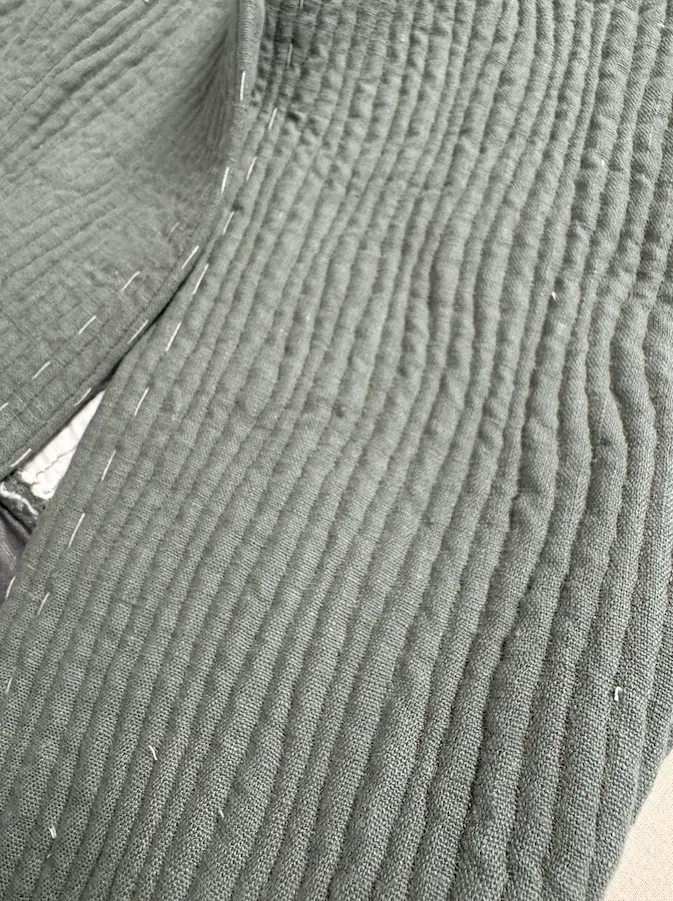
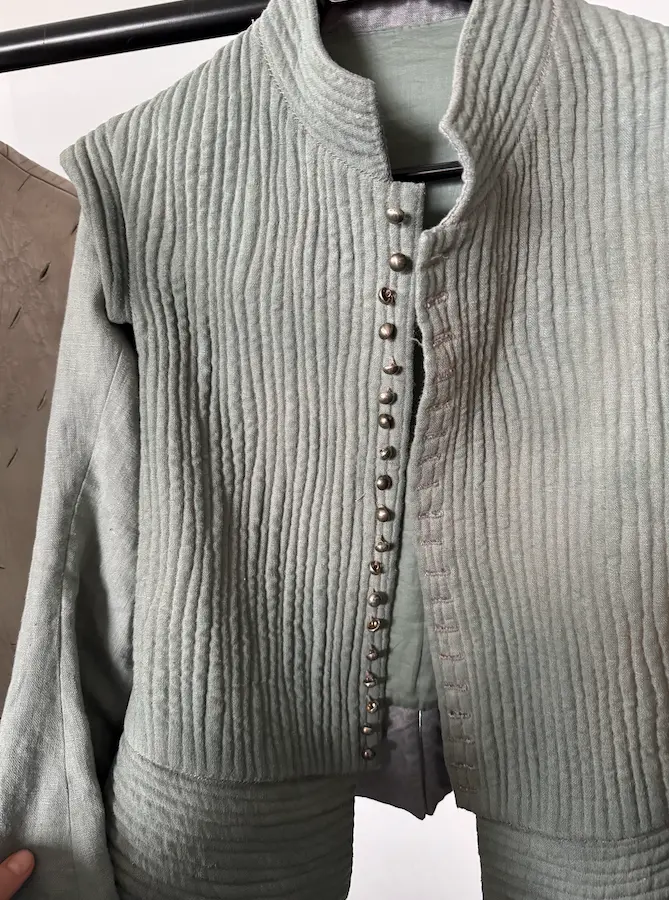
Turzanska’s Costume Construction