

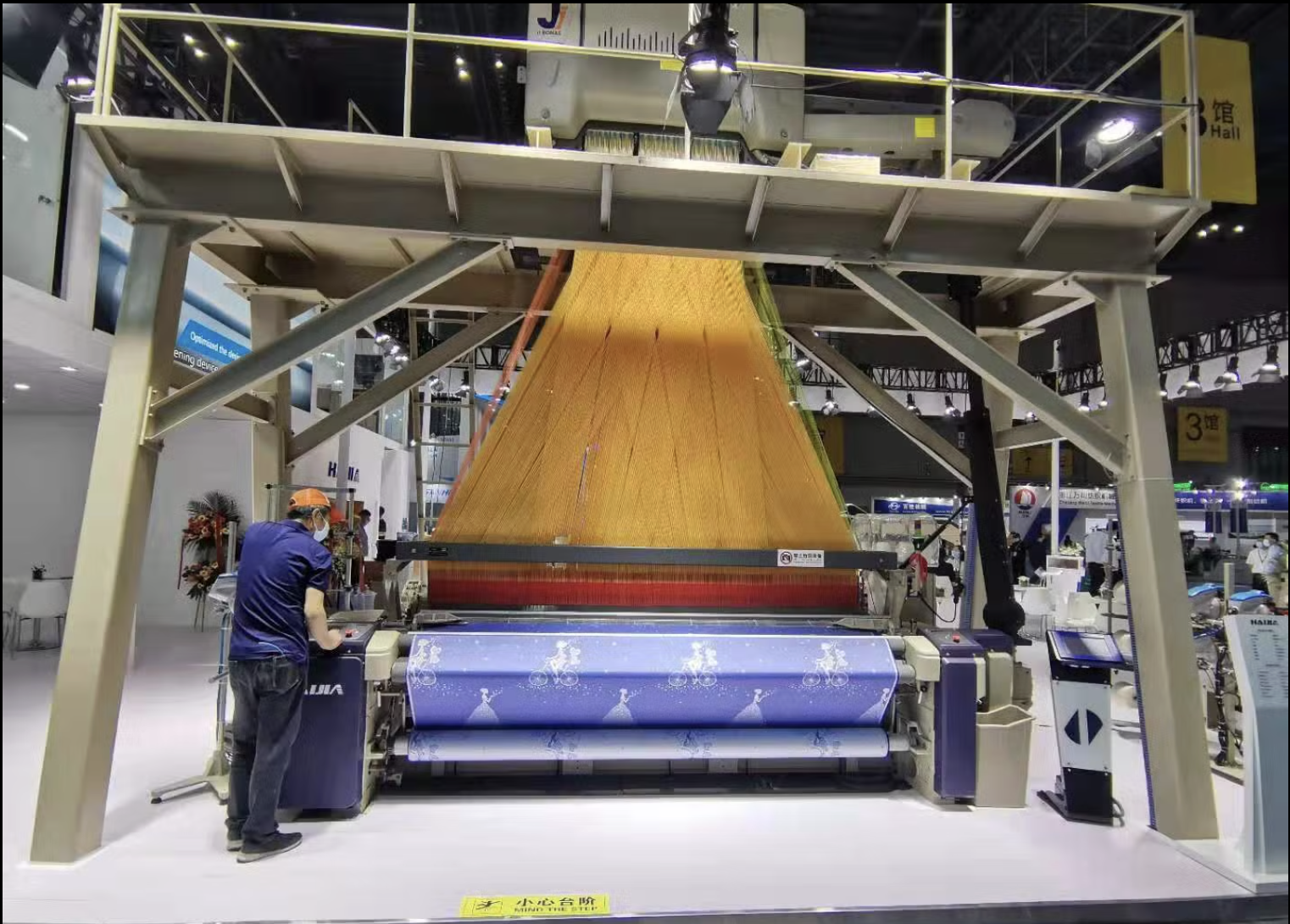


As global textile manufacturers face rising energy costs, water scarcity, and tightening environmental regulations, sustainability and operational efficiency have become central priorities in equipment investment strategies.
Across major production regions, mills are increasingly adopting energy-efficient drive systems and water-saving technologies designed to reduce environmental impact while maintaining high-speed output. These developments reflect a broader industry shift toward cleaner, more resilient manufacturing models.
Among the companies advancing this transition is Qingdao Upward, which has focused on developing high-performance water-jet and air-jet looms optimized for sustainable operation.
Responding to Environmental and Cost Pressures
Textile production remains one of the most resource-intensive segments of global manufacturing. Weaving operations in particular consume significant amounts of electricity and water, especially in high-volume facilities.
In response, manufacturers have prioritized technologies that address:
- Rising utility costs
- Water usage restrictions
- Carbon reduction targets
- Corporate sustainability reporting
- Regulatory compliance
Modern weaving equipment is now expected to deliver both productivity gains and measurable environmental benefits.
Energy-Efficient Drive Systems
One of the most significant advancements in weaving technology has been the adoption of energy-optimized drive systems.
New-generation looms increasingly feature:
- Servo-driven main motors
- Variable-frequency drives
- Regenerative braking systems
- Intelligent power management software
- Low-friction mechanical components
These systems reduce unnecessary power consumption during acceleration, deceleration, and idle periods. By optimizing energy use at every stage of operation, mills are able to lower electricity demand without sacrificing production speed.
For high-speed air-jet and water-jet weaving, these improvements translate into substantial long-term cost savings.
Water-Saving Weaving Technologies
Water management has become an equally critical concern, particularly in regions facing resource limitations and stricter discharge regulations.
Water-jet looms traditionally require continuous water circulation for yarn propulsion. Recent innovations have focused on minimizing this requirement through:
- Closed-loop water recycling systems
- Advanced filtration and purification units
- Precision nozzle engineering
- Reduced flow-rate designs
- Automated monitoring systems
These upgrades significantly reduce water consumption while maintaining consistent yarn insertion performance.
Manufacturers have also improved wastewater handling systems, enabling reuse and safer discharge.
High-Speed Performance with Reduced Resource Use
Sustainability initiatives in weaving machinery are closely linked to productivity objectives.
Modern air-jet and water-jet looms are engineered to achieve:
- Higher operating speeds
- Improved yarn stability
- Reduced downtime
- Lower defect rates
- Extended maintenance intervals
By improving machine reliability and precision, manufacturers reduce waste, reprocessing, and material loss—key contributors to environmental impact.
The integration of energy and water optimization into high-speed platforms demonstrates how efficiency and sustainability now operate as complementary goals rather than competing priorities.
Qingdao Upward’s Approach to Sustainable Loom Design
Qingdao Upward has focused its development strategy on combining high-speed weaving capability with resource-efficient engineering.
Its latest loom platforms emphasize:
- Low-energy motor systems
- Optimized air and water delivery mechanisms
- Modular recycling components
- Digital performance monitoring
- Simplified maintenance architecture
These features enable mills to track consumption patterns, identify inefficiencies, and adjust production parameters in real time.
By embedding sustainability metrics into machine control systems, manufacturers gain greater visibility into environmental performance alongside traditional output indicators.
Digital Monitoring and Process Optimization
Data-driven production management has become an essential element of sustainable manufacturing.
Advanced weaving systems now incorporate:
- Real-time energy monitoring
- Water usage analytics
- Predictive maintenance alerts
- Remote diagnostics
- Integrated reporting tools
These capabilities allow plant managers to identify excessive consumption, detect mechanical inefficiencies, and implement corrective measures before problems escalate.
Such digital oversight supports continuous improvement strategies and simplifies compliance documentation.
Alignment with Global Sustainability Standards
The textile industry’s investment in efficient machinery also reflects growing alignment with international sustainability frameworks and certification requirements.
Many brands and sourcing partners now require suppliers to demonstrate:
- Reduced carbon emissions
- Responsible water management
- Verified energy performance
- Transparent reporting systems
- Continuous improvement plans
Energy-efficient and water-saving looms play a critical role in helping mills meet these expectations and remain competitive in global supply chains.
Market Implications for Textile Producers
The shift toward sustainable weaving technology is reshaping capital investment decisions across the industry.
Producers increasingly evaluate machinery based on:
- Total cost of ownership
- Environmental impact metrics
- Long-term compliance risk
- Operational resilience
- Brand and customer requirements
While advanced systems often require higher upfront investment, their long-term savings and regulatory advantages are becoming decisive factors in purchasing decisions.
Industry Outlook
As climate policies, investor scrutiny, and consumer expectations continue to intensify, sustainability-driven equipment design is expected to accelerate.
Future developments are likely to focus on:
- Further reductions in energy intensity
- Near-zero wastewater discharge systems
- AI-driven resource optimization
- Integration with renewable energy sources
- Expanded lifecycle tracking
Weaving technology will remain at the center of this transformation, serving as a foundation for responsible textile production.
Conclusion
Sustainability and efficiency have become defining forces in modern textile manufacturing. Through energy-efficient drive systems and advanced water-saving technologies, manufacturers are redefining how high-speed weaving operations balance productivity with environmental responsibility.
Companies such as Qingdao Upward illustrate how machinery innovation can support both commercial performance and sustainability objectives. As regulatory and market pressures continue to evolve, resource-efficient weaving platforms are positioned to play an increasingly central role in the future of global textile production.