

Avatar: Fire and Ash — Best Costume Design
Costume design at its highest level does more than dress characters—it defines civilizations. In Avatar: Fire and Ash, Deborah L. Scott returns to Pandora not to repeat what audiences already know, but to expand it. The result is costume work that operates simultaneously as anthropology, sculpture, performance tool, and digital architecture.
Scott’s career has long been marked by moments when cinema pivots forward. From E.T. the Extra-Terrestrial and Back to the Future to Titanic—which earned her an Academy Award®—her designs have repeatedly entered the cultural bloodstream. With Avatar, she helped establish a new visual language for science fiction grounded in human tradition. Fire and Ash takes that language further, introducing new Na’vi clans, environments, and belief systems through costume that is felt before it is understood.
Rather than linger on legacy, Scott moves decisively into the present. Fire and Ash is not a retrospective achievement—it is an active redefinition of what costume design means in the era of virtual filmmaking.
Your job is to give the audience the visual language that describes that character. That never changes—no matter the genre.
Craft Before Code
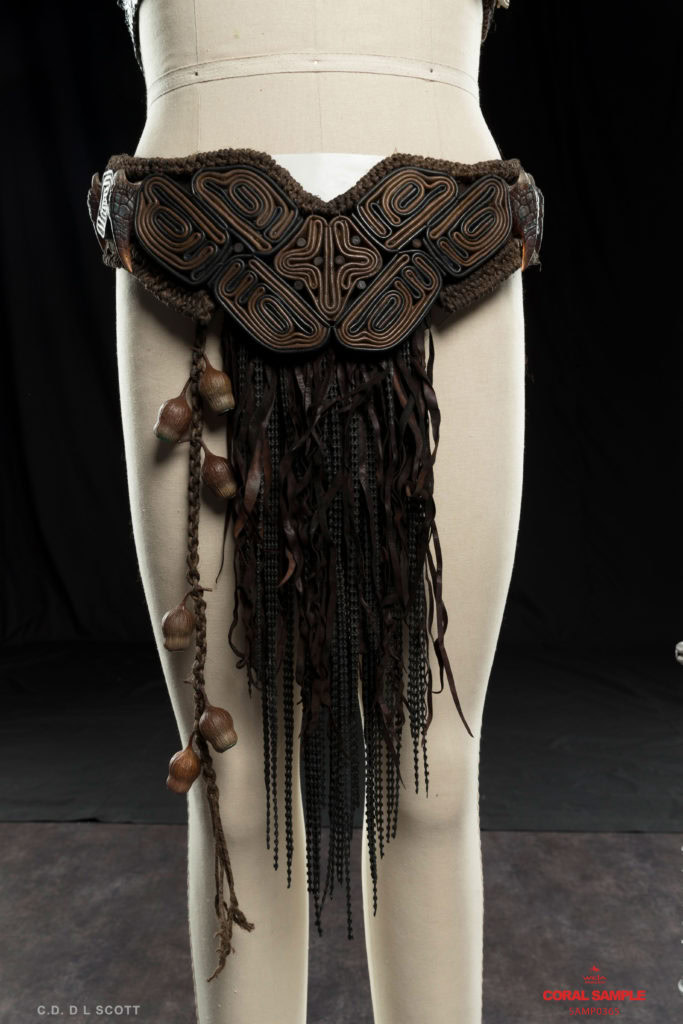
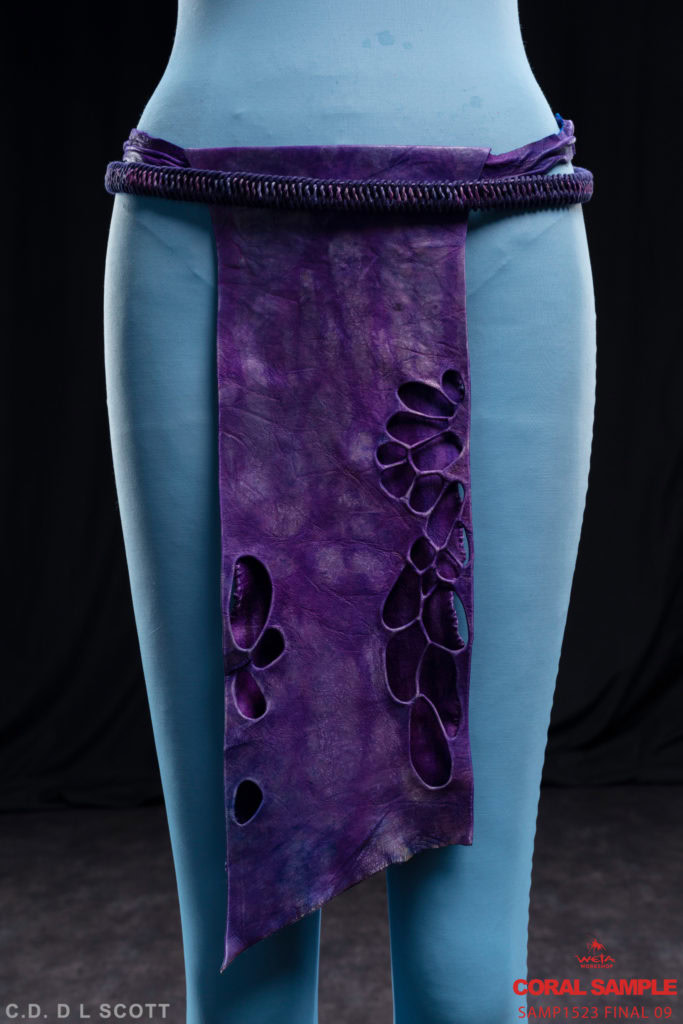
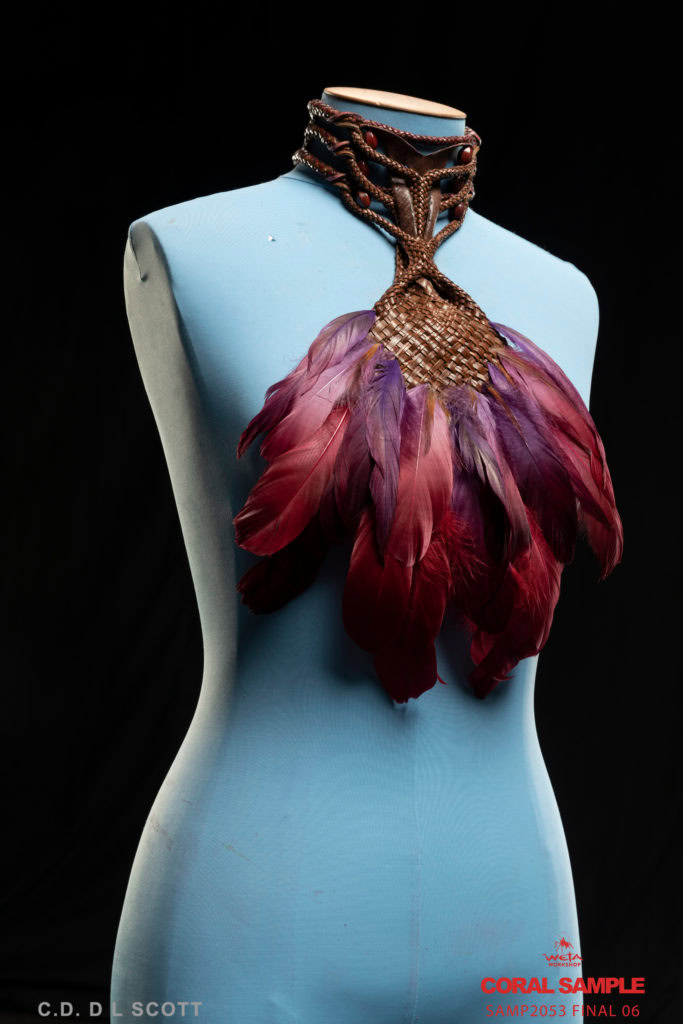
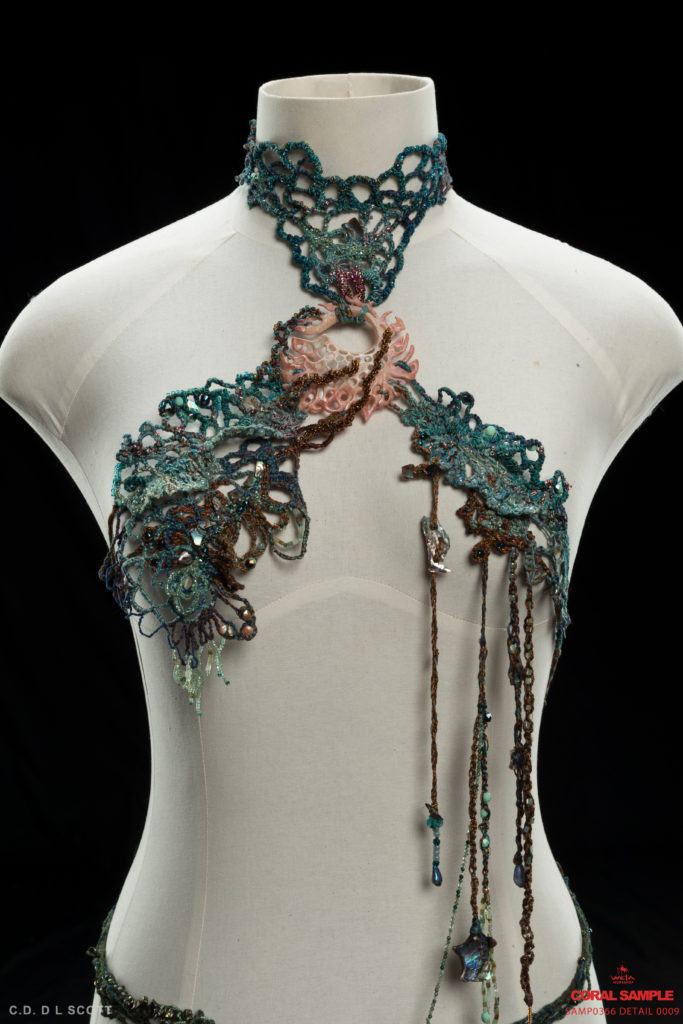
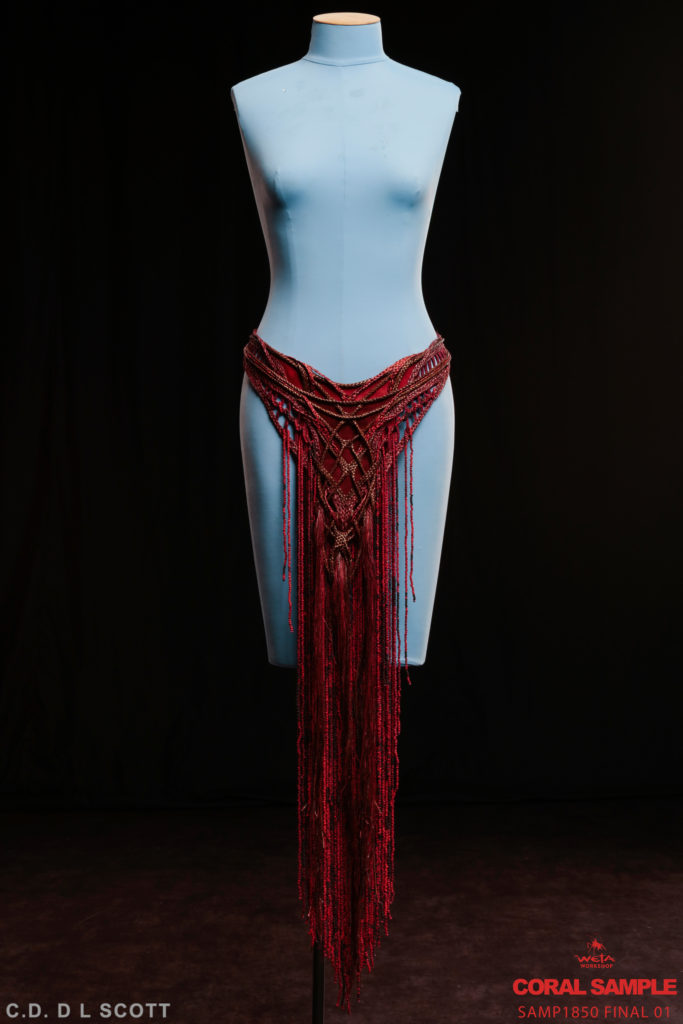
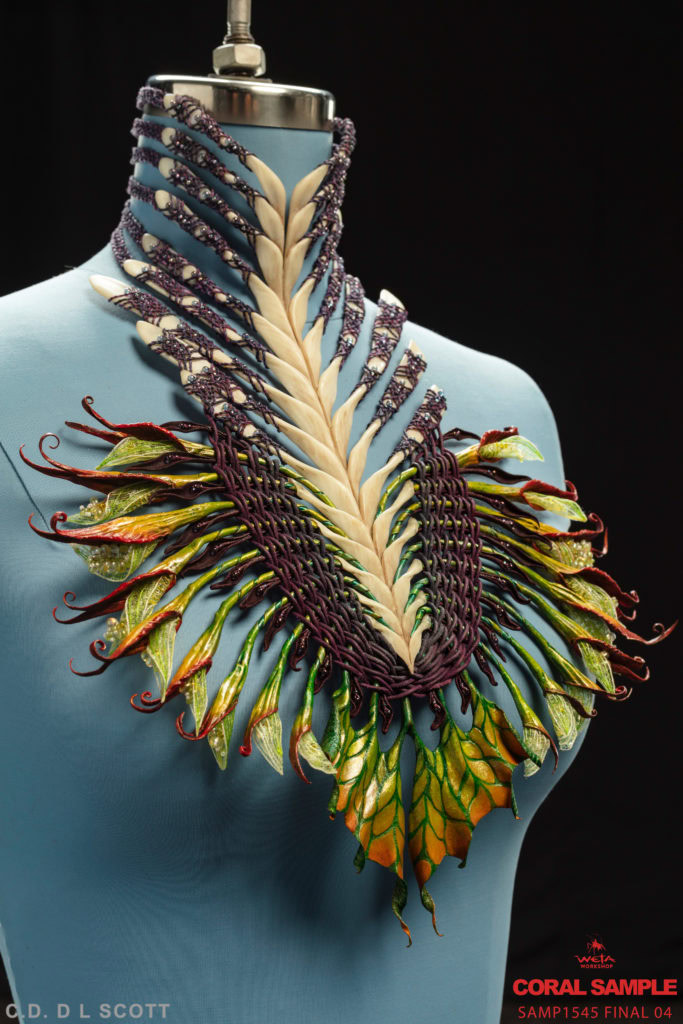
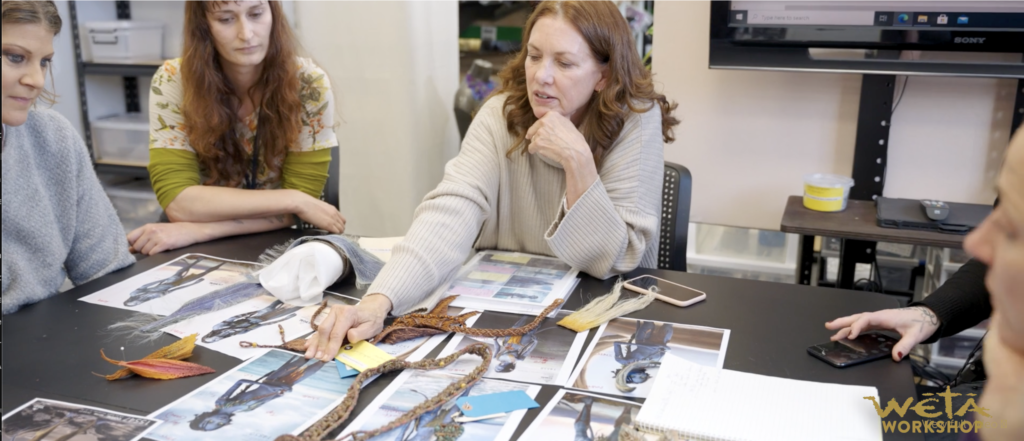
Every costume in Fire and Ash began as a physical object. Under Scott’s guidance, Wētā Workshop created more than 2,000 hand-built costume elements specifically for the film, part of over 3,000 total pieces across the Avatar sequels. These garments were constructed using traditional techniques—flax weaving, leather tooling, wood carving, embroidery, beadwork, and found-object assembly—methods chosen not for nostalgia, but for narrative logic.
The Na’vi cultures introduced in Fire and Ash are defined by their environments. Materials are sourced, altered, repaired, and worn in ways that reflect belief systems and survival histories. Ornamentation carries meaning. Wear patterns signal status, ritual, and conflict. Nothing is decorative without purpose.
Caption — Craft Techniques
Traditional handcraft anchors the Na’vi to their environments: flax weaving, leather tooling, wood carving, embroidery, and beadwork form the physical foundation of every costume before digital translation.
Scott’s approach resists spectacle for its own sake. Even within one of the most technologically advanced productions ever mounted, the costumes insist on intimacy. They are made to be touched—by performers, artisans, and eventually, by light.

From Workroom to Pandora
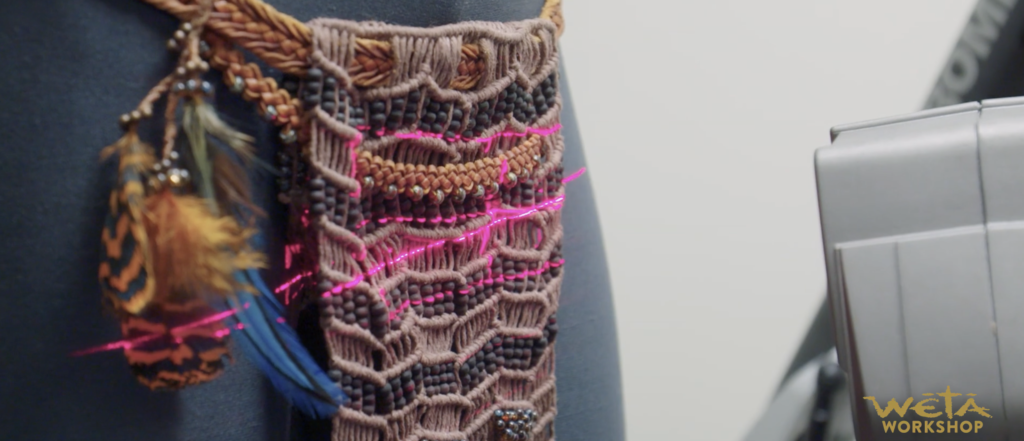
Once completed, each costume entered a rigorous digital scanning pipeline. High-resolution scans captured surface texture, fiber irregularities, construction logic, and aging—details essential to preserving the integrity of the original garments when transferred to digital Na’vi bodies.
Motion tests, water simulations, and performance capture ensured that weight, resistance, and movement behaved as real materials would, even when worn by nine-foot-tall, blue-skinned characters. The physical costume is never seen on screen, yet its presence is unmistakable.
Caption — Scanning Pipeline
Physical costumes were digitally scanned at high resolution to preserve texture, construction, and wear, forming the basis for performance-capture garments seen on screen.
Scott views this process not as a departure from costume history, but as its expansion. The discipline now includes virtual garments that retain the soul of their handmade origins.
We’re doing an incredibly technological film, but everything starts as something handmade—one-of-a-kind, found, made, worn.
World-Building Worn on the Body
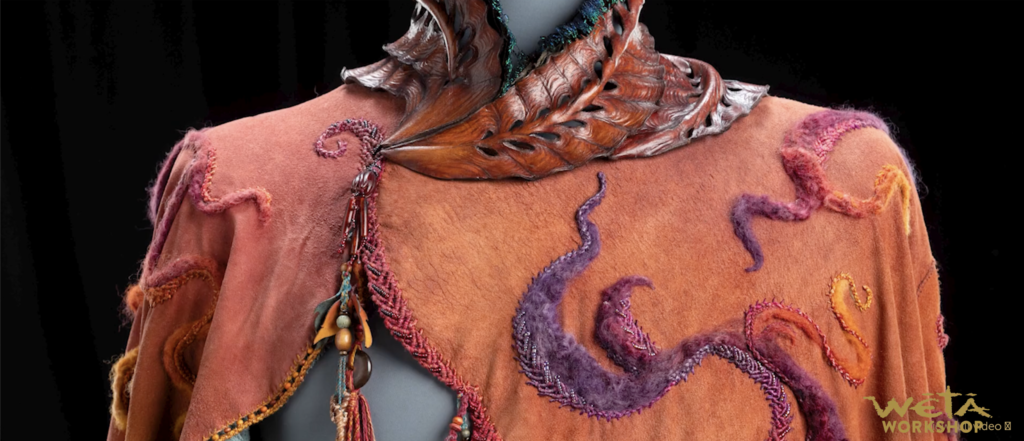
In Fire and Ash, costume becomes a narrative engine. New clans are immediately legible through silhouette and material choice. Cultural distinctions are communicated without exposition. The audience understands hierarchy, ritual, and worldview through what characters wear—and how those garments move, age, and respond to their world.
This clarity is the result of deep collaboration. Scott’s work aligns seamlessly with production design, props, and visual effects, ensuring that Pandora feels cohesive rather than constructed. Costume does not decorate the world—it completes it.
Caption — Wētā Workshop Stats
Wētā Workshop developed more than 18,500 designs across the Avatar sequels, with over 2,000 physical costume elements created specifically for Avatar: Fire and Ash.
Leadership at Scale
Behind the screen, Fire and Ash required Scott to lead at extraordinary scale—overseeing artisans, designers, and digital teams across continents. For Scott, collaboration is not a compromise but a multiplier. Control is shared. Trust is essential. The best ideas emerge collectively.
Sometimes your best work comes from working with another person. That kind of collaboration can be magical.
A Living Achievement
As Fire and Ash enters the Oscar conversation, Deborah L. Scott’s work stands not as a summation of her career, but as proof of its continued evolution. Recent milestones—the anniversaries of E.T. and Titanic, and the expanding Avatar saga—underscore her longevity, but it is the present work that matters most.
In Avatar: Fire and Ash, costume design becomes both ancient and futuristic, tactile and virtual, personal and monumental. Scott does not simply design for Pandora—she gives it memory, culture, and skin.