Frankenstein — Best Costume Design
In Guillermo del Toro’s Frankenstein, death is everywhere—but color, life, and longing are everywhere too. Costume designer Kate Hawley approaches Mary Shelley’s foundational myth not as gothic spectacle, but as an anatomy of obsession, grief, and creation. The result is a world where clothing carries memory, where color circulates like blood, and where garments do not merely clothe bodies—they reveal the cost of bringing life into being.
Del Toro often says his films are “nutritional.” Hawley’s costumes are a vital part of that nourishment. A luminous red dress is never just red. A coat lifted from a graveyard is never just protection from the cold. Every choice is metabolized by the story.
Guillermo illustrates what it’s like to chase the muse—to try and grasp that ephemeral thing.
The Mother as Origin
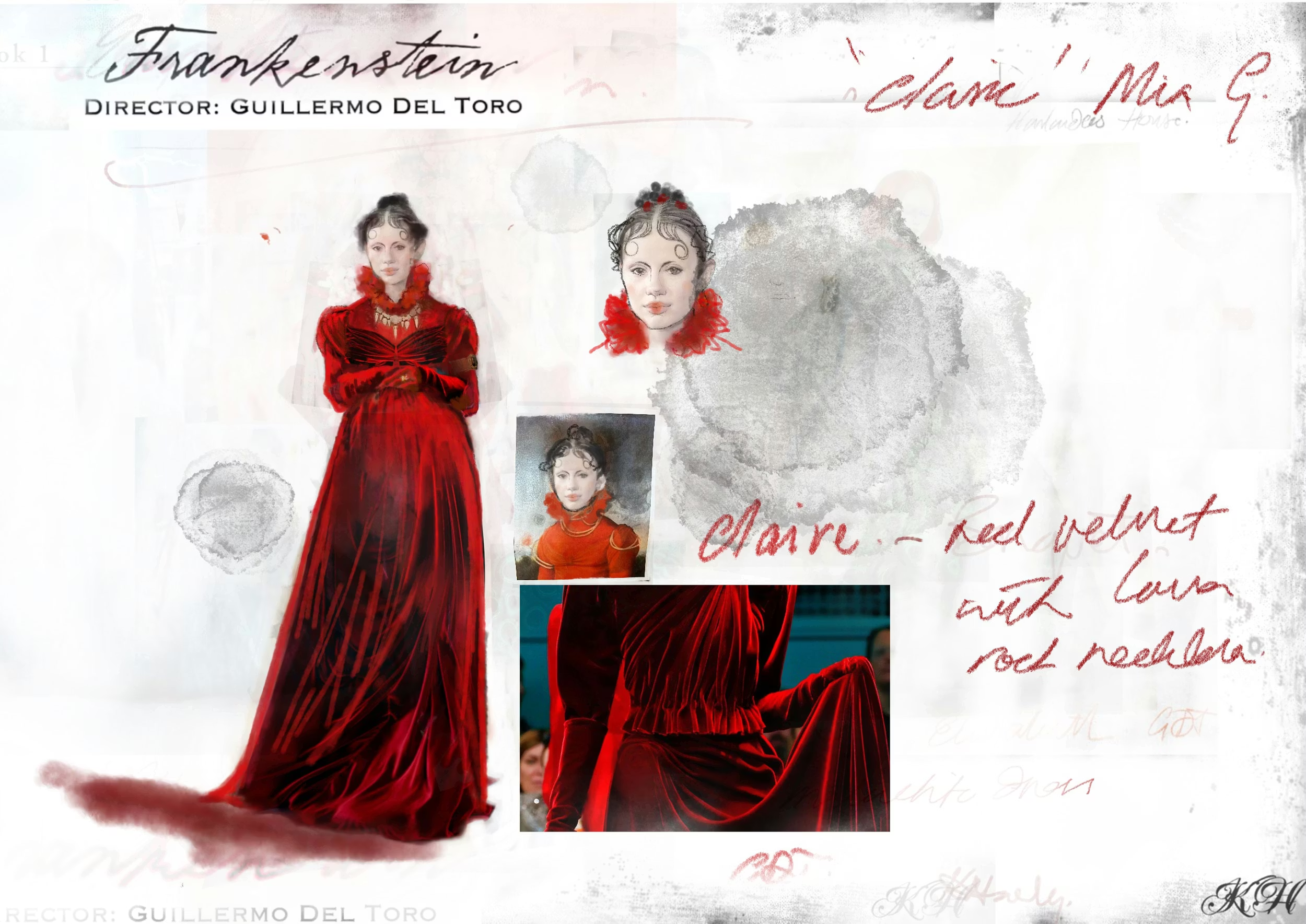
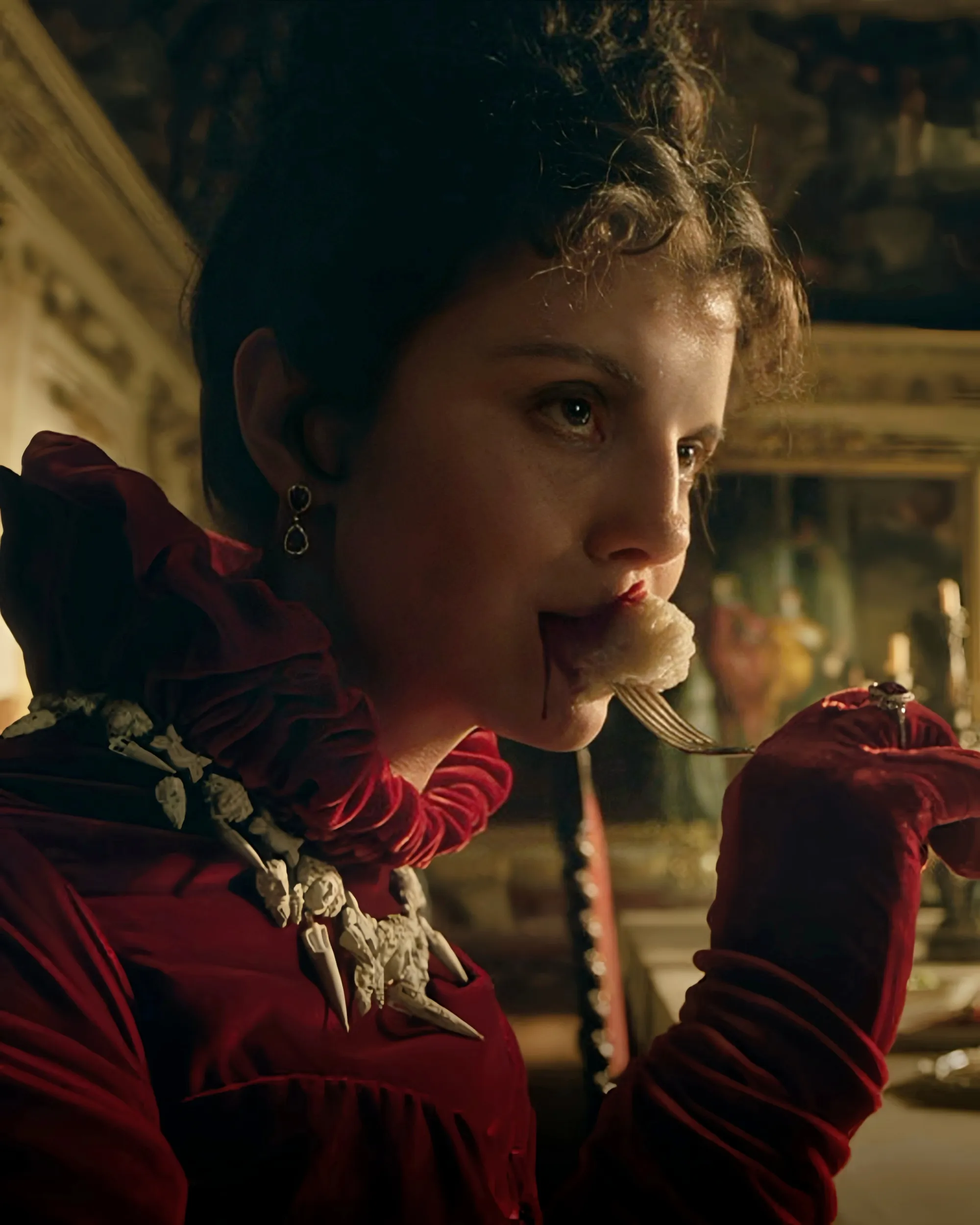
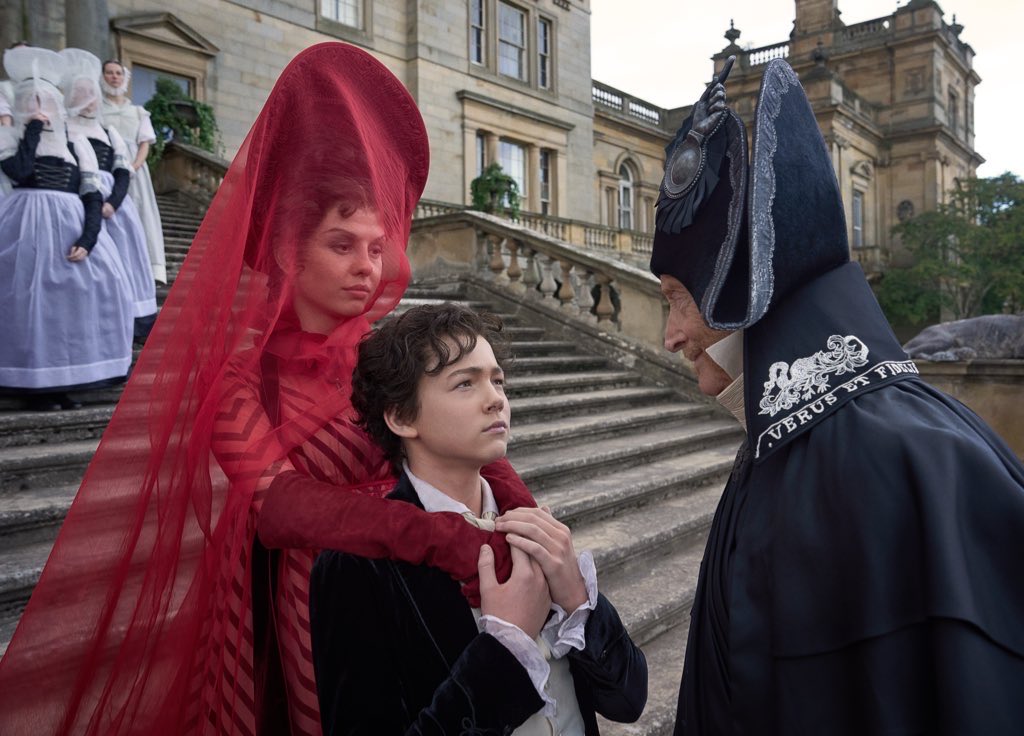
The film begins with Claire Frankenstein (Mia Goth) in a blood-red dress that establishes the visual thesis of the film. It is maternal, violent, seductive, and prophetic. When Claire dies, her color does not. It travels through the film—into Victor’s gloves, into Elizabeth’s garments, into the final image—binding creation and destruction together.
Caption — Color Motif
Blood-red first appears on Claire Frankenstein and recurs throughout the film as an echo of birth, loss, and obsession—circling back at the end to complete the narrative loop.
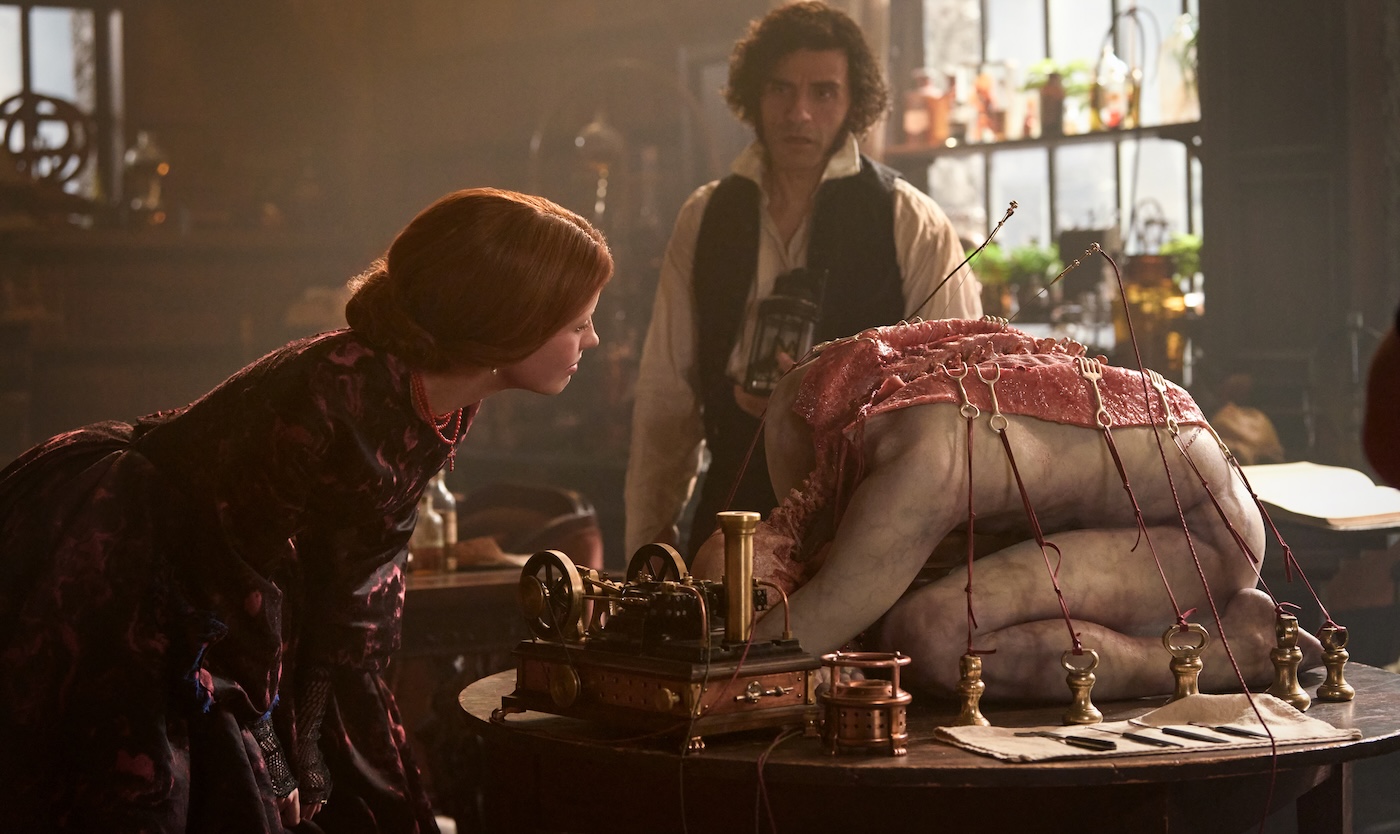
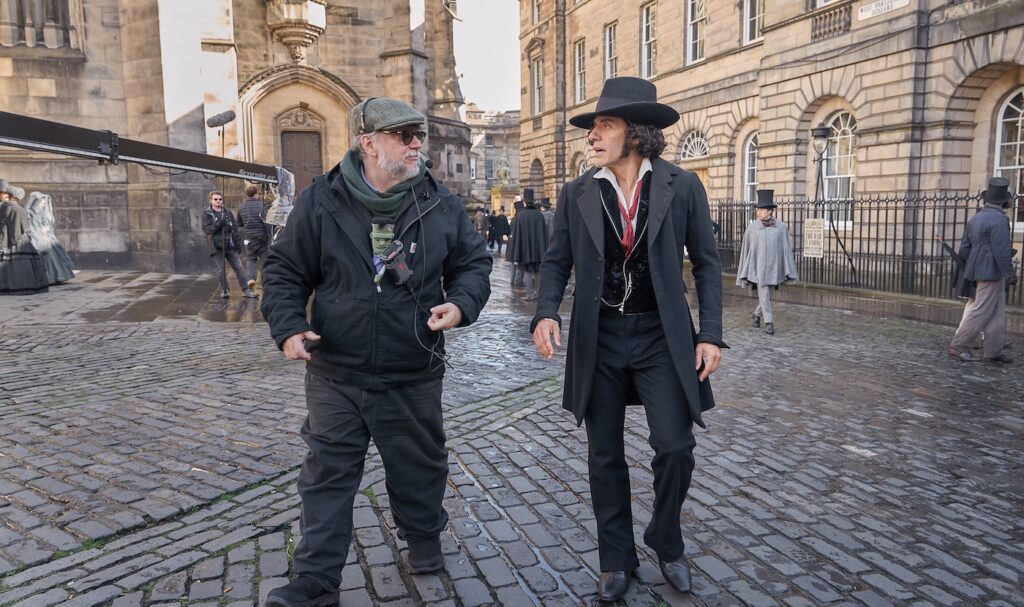
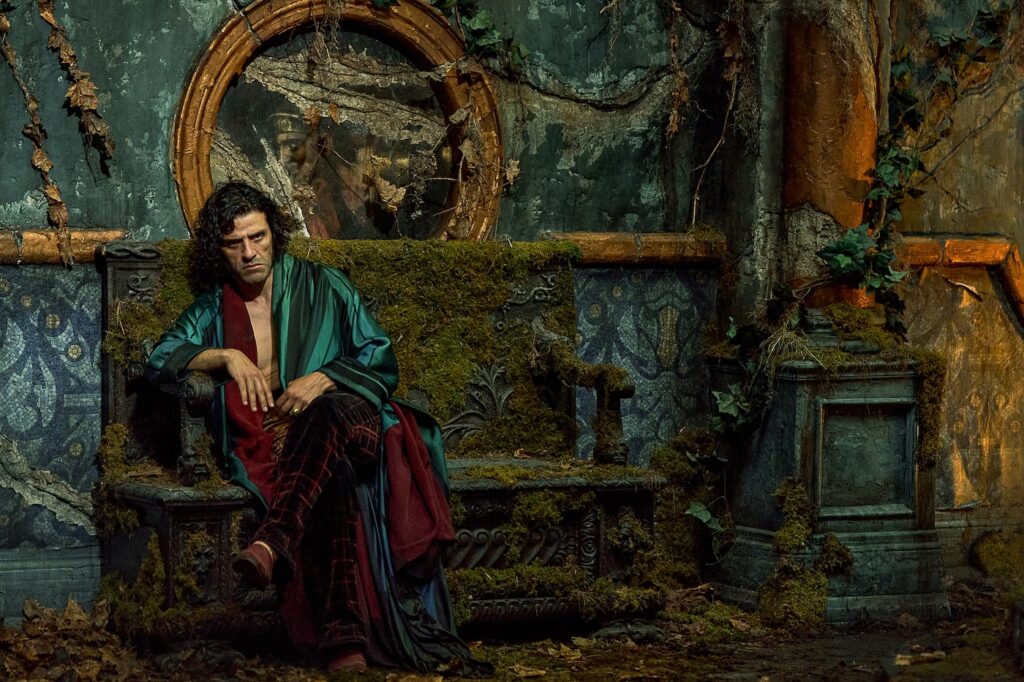
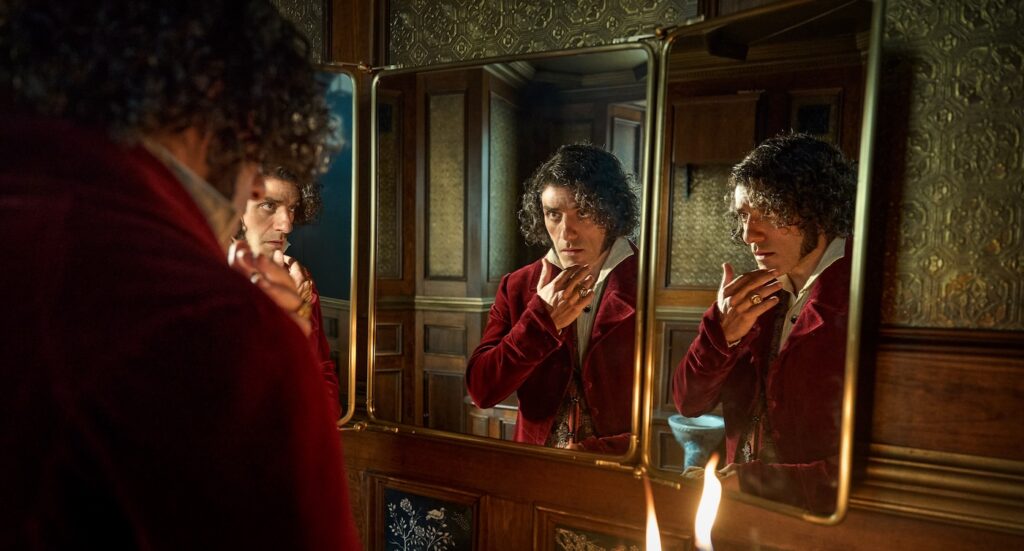
Victor Frankenstein grows up carrying his mother’s death, and Hawley dresses him accordingly—not as a sober scientist, but as a volatile artist. His eccentric hats, crumpled robes, and irreverent layering suggest brilliance unmoored from responsibility. He wears beauty carelessly.
Irreverently worn and beautifully disheveled—that became his language.
Dressing the Muse
Oscar Isaac’s Victor moves with restless, almost childlike physicality, and Hawley lets the clothes move with him. Continuity is deliberately loosened. Jackets remain rumpled. Collars slip. The costume department resists correcting him between takes. This refusal to “fix” the silhouette becomes character.
Victor is not a man of order; he is a man chasing inspiration.
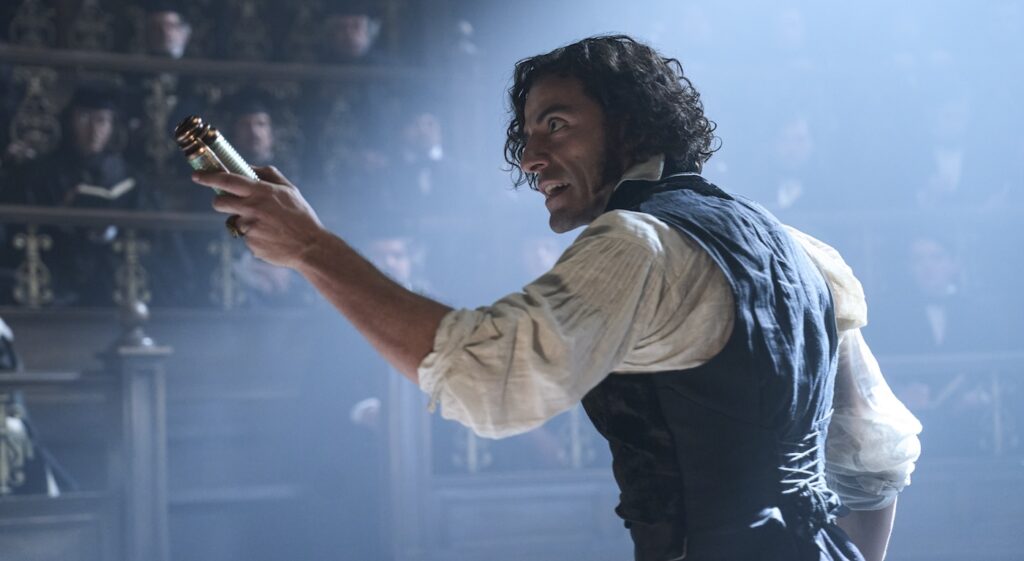
Caption — Victor Frankenstein
Victor’s costumes reject restraint: French bohemian hats, layered robes, and crumpled tailoring signal an artist overtaken by obsession rather than a scientist bound by rules.
Rock-and-roll references—David Bowie’s Thin White Duke among them—bleed into the character, filtered through del Toro’s gothic lens. The Enlightenment is fading. The Industrial Revolution is stirring. Medicine, art, and hubris collide.
Color Without Black
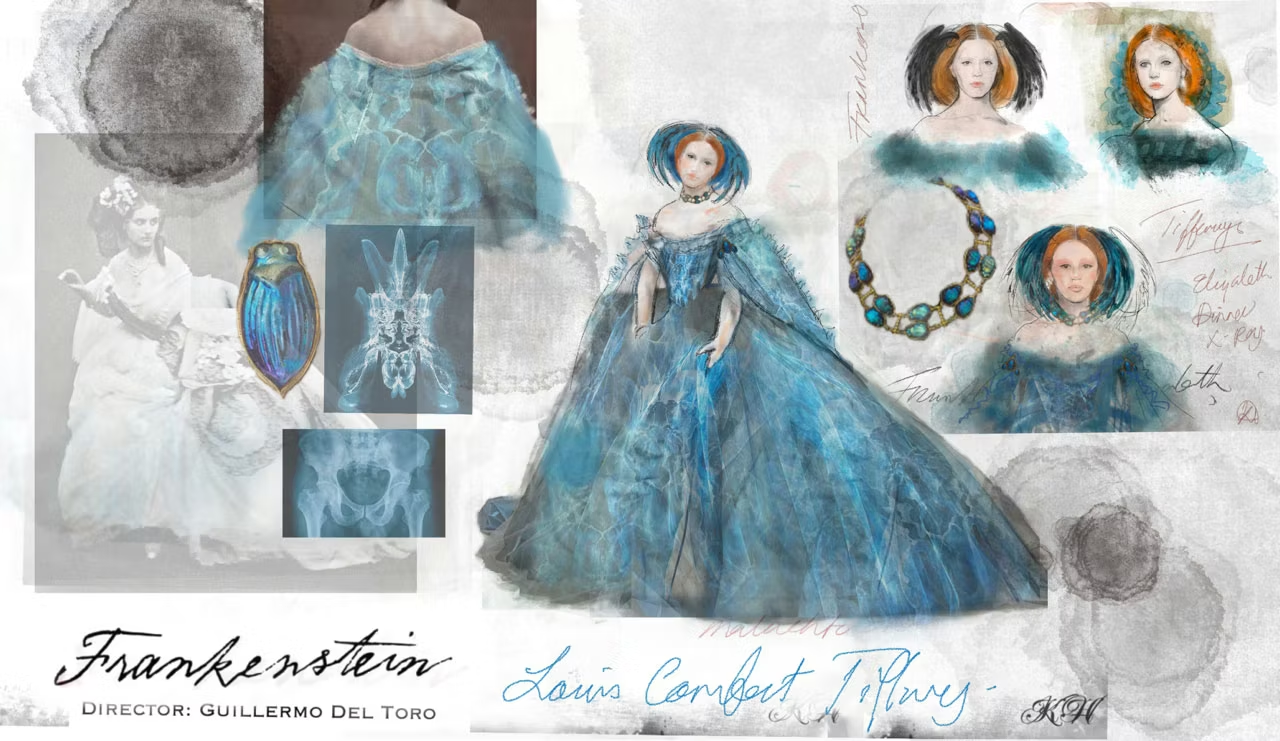
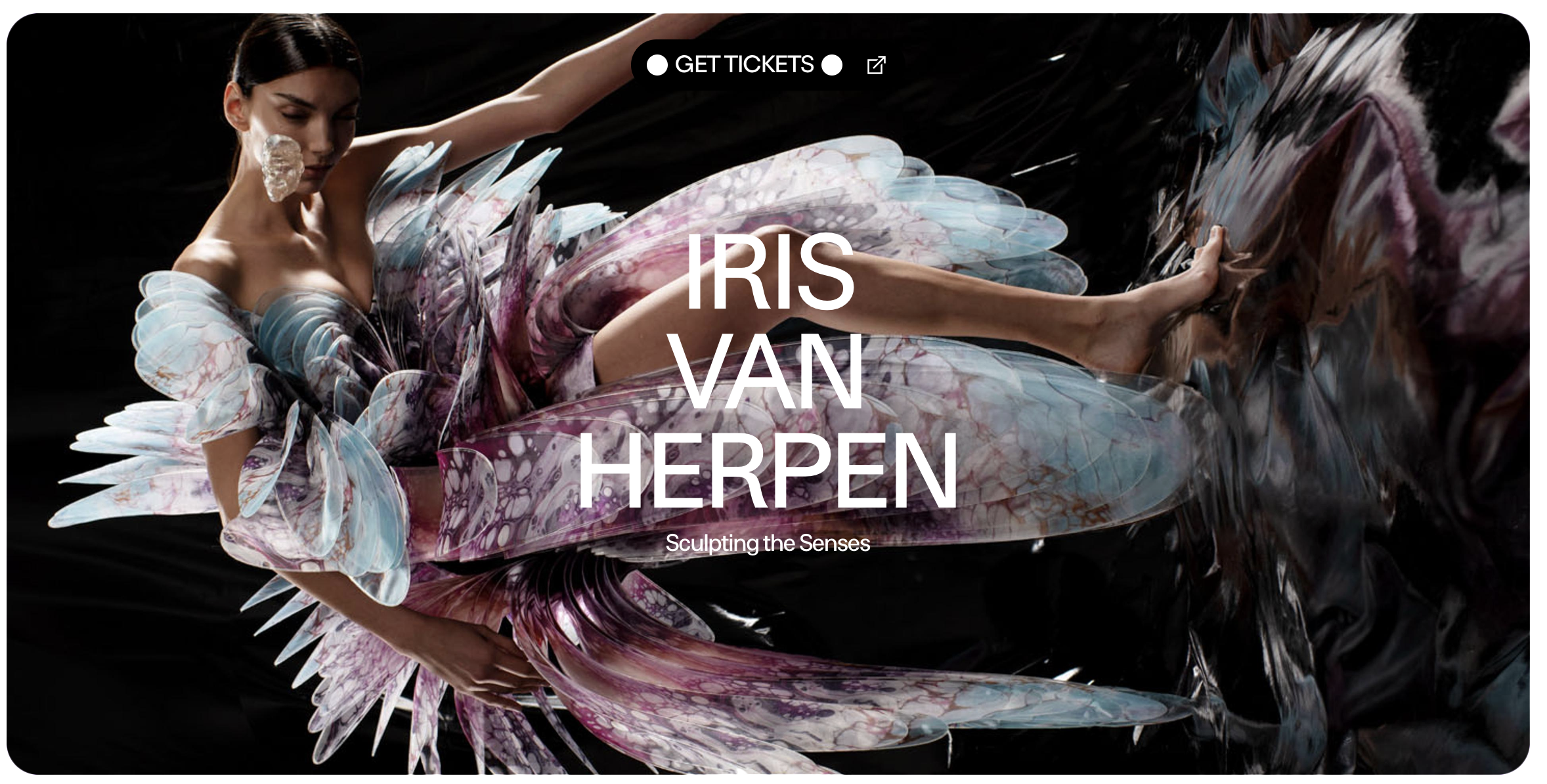
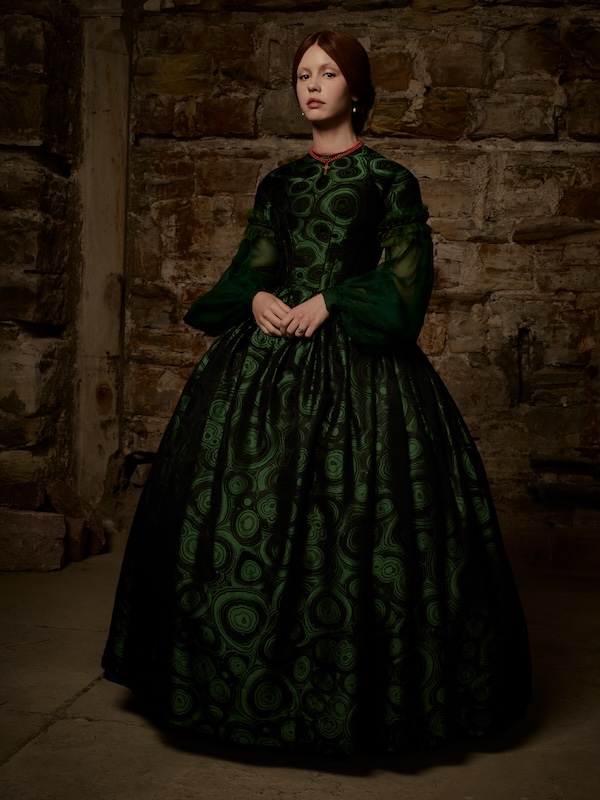
Though the film is gothic, del Toro explicitly avoided a black, Dickensian palette. Hawley instead worked with deep reds, greens, blues, purples, and layered translucencies inspired by Louis Comfort Tiffany and the Art Nouveau movement. Color is rich but shadowed, luminous yet melancholic.
Caption — Painterly Palette
Influenced by Louis Comfort Tiffany and Art Nouveau, the palette layers color with darkness—purples into greens, blues into shadow—to maintain mood without visual austerity.
The result is a world where color breathes. Life persists even as death looms.
Elizabeth: The Luminous Other
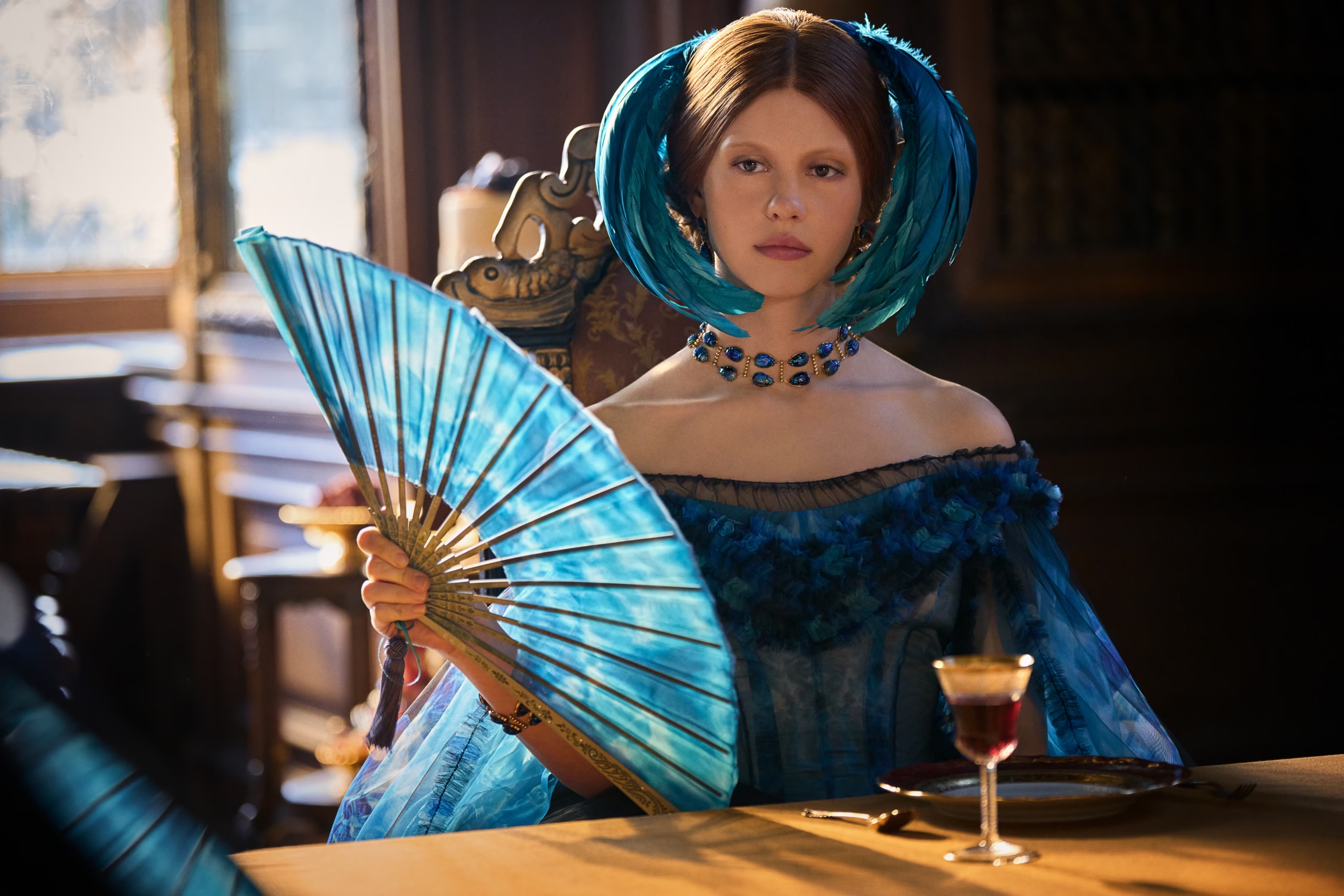
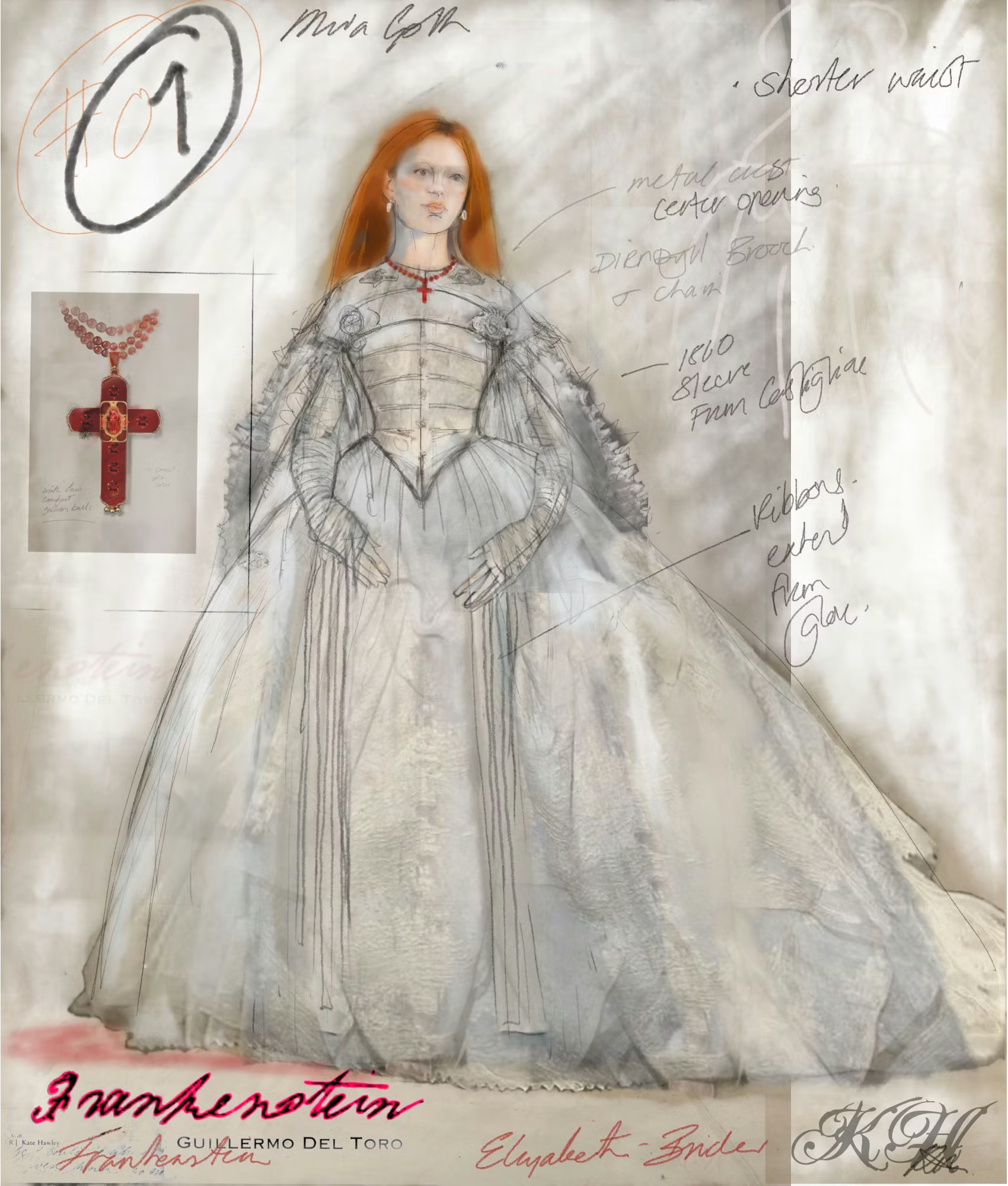
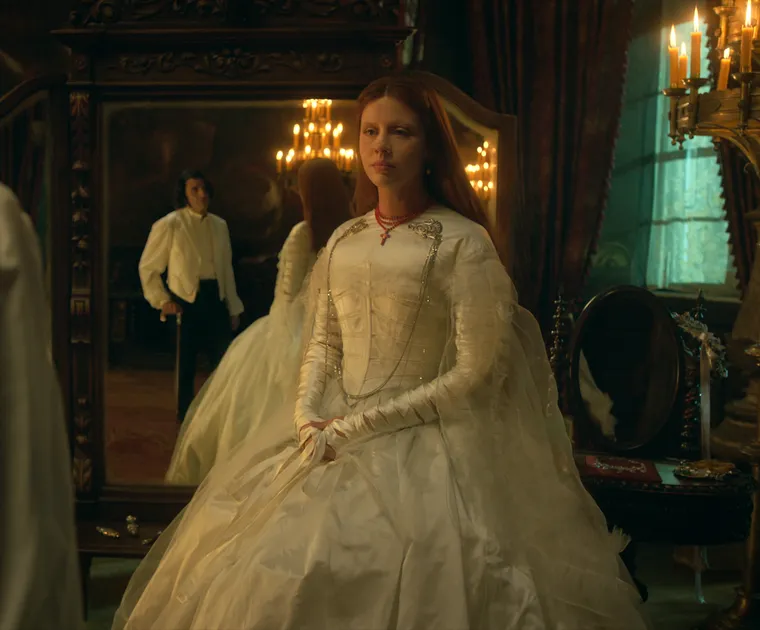
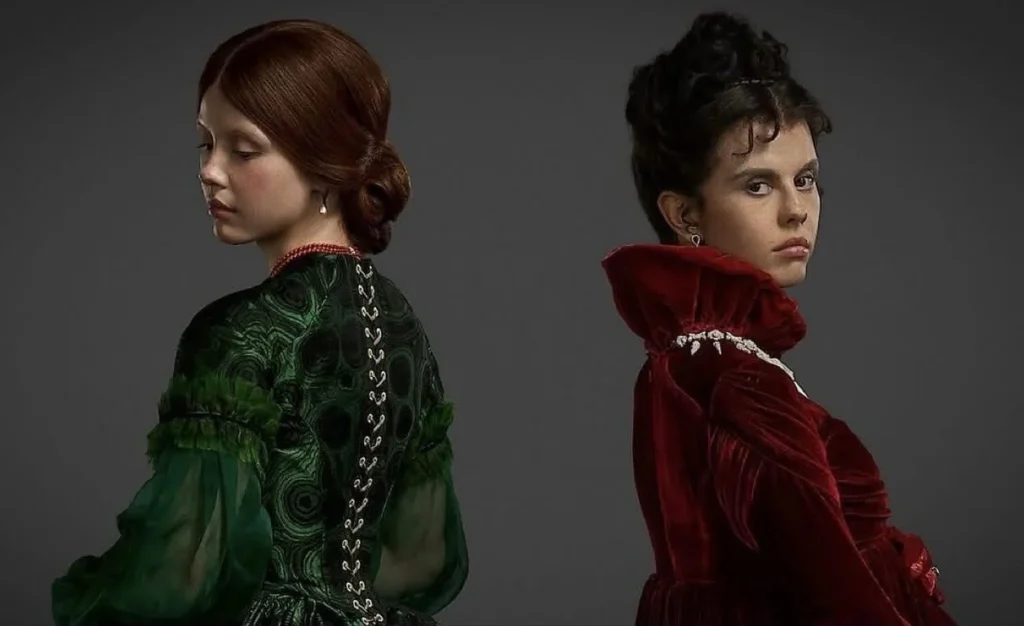
Elizabeth Lavenza (also Mia Goth) exists outside societal norms—an almost mythic presence. Hawley gives her an ephemeral quality through light-reflective fabrics, skeletal corsetry, and colors that suggest X-rays and translucence rather than flesh.
She is aligned with nature, with empathy, and ultimately with the Creature himself. Animals do not recoil from the Creature; neither does Elizabeth.
Caption — Elizabeth Lavenza
Elizabeth’s costumes emphasize translucence and structure—corsetry echoing skeletal forms—to align her with empathy, nature, and the Creature rather than society.
Her wedding dress, with sleeves and construction that rhyme visually with the Creature’s bandages, quietly references Bride of Frankenstein (1935), closing another historical circle.
The Creature and the Second Skin
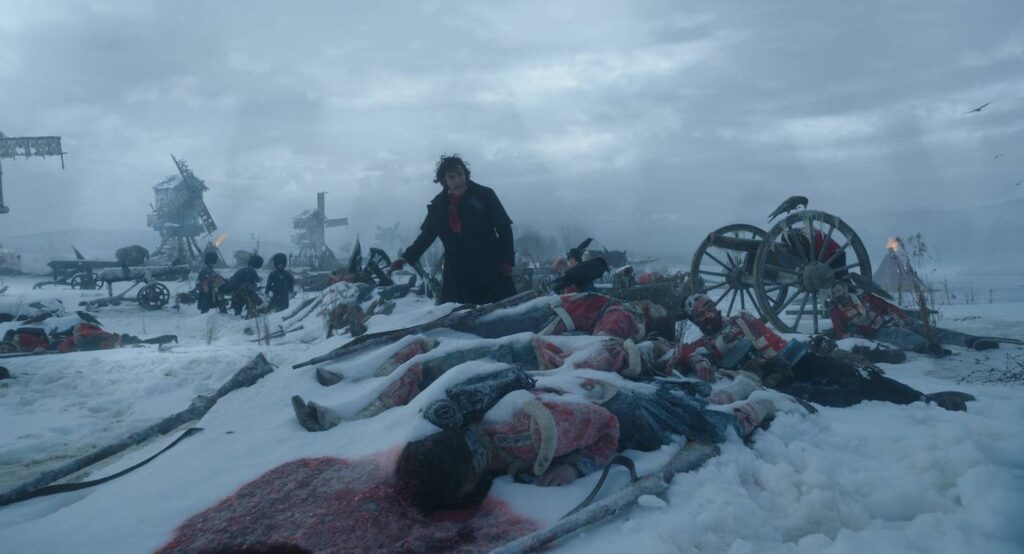
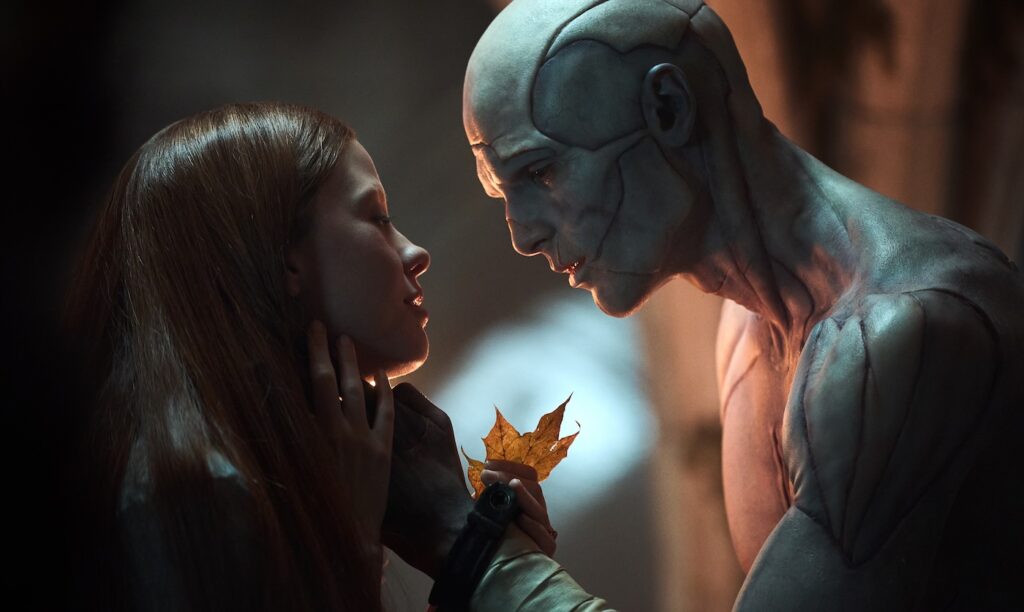
Jacob Elordi’s Creature begins wrapped in decaying bandages—funereal, fragile, unfinished. When he later takes a coat from a fallen soldier, he is not simply dressing himself; he is putting on another man’s memory.
Hawley studied images of mummification, how cloth molds to bone as flesh disappears. The Creature’s silhouette evolves as he grows—larger, heavier, more powerful—until clothing becomes an extension of his body.
Caption — The Creature’s Silhouette
The Creature’s costume evolves from bandaged shroud to scavenged outerwear, each layer acting as a second skin shaped by memory, loss, and growth.
Is he man or beast? Hawley keeps the answer deliberately unstable, especially when he appears at a distance—outlined against ice, sun, and sky.
Echoes, Circles, and Mirrors
Visual motifs repeat throughout the film: circular architecture, mirrored imagery, Medusa forms, bonnets, crucifixes. Victor and the Creature echo each other. Claire and Elizabeth echo each other. Creation and abandonment repeat.
We’re echoing each other all the time—between departments, between characters.
Costume, production design, and score move together like a composition, each reinforcing the other.
A Contemporary Gothic Achievement
In Frankenstein, Kate Hawley delivers costume design that is not decorative but philosophical. It wrestles with the ethics of creation, the permanence of grief, and the cost of genius. These garments do not simply belong to the past—they interrogate it.
Hawley’s work proves that gothic cinema need not be drained of color to be serious, nor stripped of beauty to be profound. In this Frankenstein, life and death are inseparable, and costume is the connective tissue between them.