

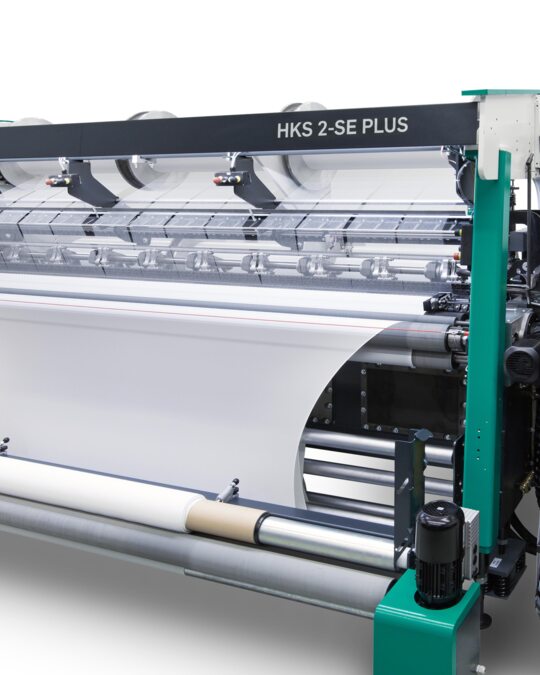


In response to rising demands for flexibility and cost efficiency in textile manufacturing, KARL MAYER introduced the RE 6 EL Raschel machine as a new generation platform for elastic fabric production.
Designed to address shorter production runs, frequent pattern changes, and increasing cost pressures, the RE 6 EL combined proven performance with optimized manufacturing economics. The machine was positioned as an evolution of the established RSE 6 EL, offering comparable output while benefiting from locally optimized production structures.
Responding to Changing Production Requirements
Textile manufacturers have increasingly been required to adapt rapidly to shifting market trends, customized orders, and compressed delivery timelines. These conditions have driven demand for equipment capable of combining operational flexibility with long-term reliability.
The RE 6 EL was developed to meet these requirements by retaining the core technical strengths of its predecessor while improving overall cost efficiency.
By leveraging localized supply chains and streamlined production processes, KARL MAYER reduced manufacturing costs without compromising performance standards.
Design Flexibility and Pattern Control
The RE 6 EL was engineered to support rapid design changes and complex fabric structures.
Key technical features included:
- Working widths of 170 inches and optional 130 inches
- Standard gauge E 32, with optional E 28 configuration
- Six electronically controlled guide bars
- Maximum cumulative shogging distance of 2 inches
- Maximum underlap distance of 15 needles
These specifications enabled the production of intricate elastic fabrics with diverse textures and structures.
All guide bars were electronically controlled, allowing for fast and precise pattern adjustments. This capability supported frequent style changes without extended downtime.
Advanced Warp Handling and Production Adaptability
The machine incorporated a warp beam support system aligned with the technical standards of the RSE 6 EL.
This system allowed warp beams of varying diameters to be positioned in multiple configurations, enabling manufacturers to adapt to different yarn capacities and production volumes.
As a result, operators could optimize machine setup based on specific material requirements and output targets.
Digital Control and Operating Efficiency
The RE 6 EL was equipped with KARL MAYER’s KAMCOS® 2 control platform, providing centralized digital management of machine functions.
This system enabled:
- Precise machine configuration
- Real-time performance monitoring
- Accurate electronic pattern control
- Simplified operational workflows
The interface was designed to enhance usability, allowing technicians to manage complex production parameters efficiently.
Performance and Production Stability
Built on the established RSE 6 EL platform, the RE 6 EL maintained a reputation for stable operation and consistent fabric quality.
Depending on yarn selection and lapping patterns, the machine achieved working speeds of up to 1,400 rpm.
Optimized component sourcing and manufacturing processes contributed to reduced operating costs while preserving mechanical durability and production accuracy.
Application Versatility Across Market Segments
Due to its technical performance and adaptability, the RE 6 EL supported a wide range of textile applications.
Lingerie and Swimwear
The machine enabled the production of high-quality elastic fabrics for underwear and swimwear, combining comfort, stretch, and visual appeal.
Outerwear
Manufacturers utilized the RE 6 EL to create structured and textured fabrics for fashion-forward outerwear collections.
Functional and Performance Textiles
The platform supported the development of performance fabrics used in shapewear, corsetry, and casual apparel, where elasticity and durability were critical.
Home Textiles
The machine was also applied in the production of decorative and functional home textile fabrics, including specialty interior materials.
Cost Optimization Without Performance Trade-Offs
A central objective of the RE 6 EL program was to balance investment cost with operational capability.
Through localized production and streamlined supply chains, KARL MAYER positioned the machine as a cost-optimized alternative to earlier models while maintaining identical performance benchmarks.
This approach aimed to reduce total cost of ownership for manufacturers facing margin pressure and increasing competition.
Industry Context and Market Positioning
The introduction of the RE 6 EL reflected broader shifts within the warp knitting sector toward:
- Smaller batch production
- Faster product development cycles
- Increased customization
- Digitalized machine control
- Resource-efficient manufacturing
As fashion, technical textile, and home furnishing markets continued to evolve, equipment platforms capable of rapid adaptation became essential components of modern production strategies.
Conclusion
With the launch of the RE 6 EL, KARL MAYER expanded its Raschel machine portfolio with a system designed for today’s flexible manufacturing environment. By combining proven mechanical performance, advanced digital control, and optimized production economics, the machine addressed key challenges facing elastic fabric producers.
The RE 6 EL demonstrated how established warp knitting technologies could be refined to meet contemporary demands for efficiency, adaptability, and long-term operational sustainability.