

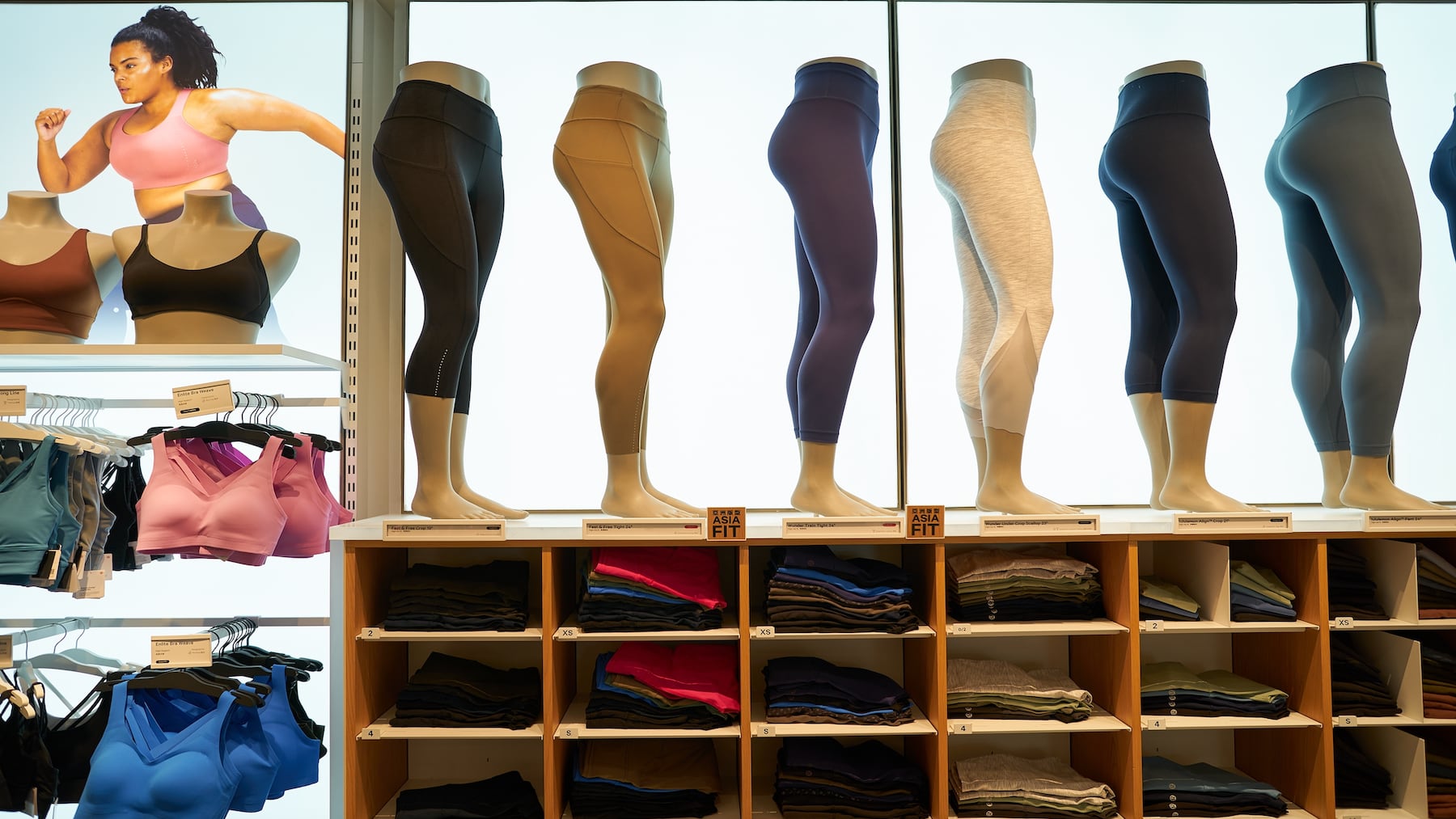
Lululemon’s latest leggings controversy highlights the risks fashion companies face when quality slips and messaging misses the mark
By Garment District News — Business, Retail & Brand Strategy
In today’s competitive apparel market, fashion brands cannot afford to lose customer trust — yet some manage to do exactly that when product failures collide with poor communication. The latest controversy surrounding Lululemon’s leggings illustrates how quickly brand loyalty can erode when consumers feel blamed rather than supported.
The activewear giant is facing renewed backlash after customers reported that its $108 “Get Low” leggings were see-through during wear. Complaints led to a temporary halt in online sales across North America in 2026, marking another high-profile quality issue for a company that has built its reputation on premium performance apparel.
The Messaging Mistake: Blaming the Consumer
Public frustration intensified after a brand director suggested that customers experiencing transparency issues should purchase a larger size and wear nude-colored underwear to mitigate the problem.
For many consumers, the message landed poorly. Instead of acknowledging potential product flaws, the response appeared to shift responsibility onto buyers — a perception that can be particularly damaging for premium brands charging luxury-level prices.
In an era of social media amplification, even small missteps in tone can trigger outsized reputational impact.
A Pattern of Product Challenges
The 2026 incident did not occur in isolation. It follows a series of similar challenges:
- 2024: The “Breezethrough” leggings line faced criticism over performance concerns.
- 2026: The “Get Low” recall and sales pause due to transparency complaints.
- 2013: The company’s widely publicized see-through yoga pants crisis that led to product recalls and executive changes.
Recurring issues create a narrative risk: customers begin to question whether problems reflect isolated errors or systemic quality control weaknesses.
Company founder Chip Wilson publicly criticized the situation, describing it as a “new low” and pointing to operational shortcomings — comments that further amplified attention around the controversy.
The Cost of Losing Trust
For fashion brands, customer trust is often more valuable than any single product line. When that trust is compromised, consequences extend beyond returns or refunds.
Potential impacts include:
- Brand perception damage
- Reduced repeat purchases
- Increased customer acquisition costs
- Social media reputational risk
- Investor concern and stock volatility
Following the news, Lululemon shares reportedly fell by as much as 4.3 percent, demonstrating how quickly product controversies can influence financial performance.
The Growth Dilemma: Expansion vs. Quality
Lululemon’s situation reflects a broader challenge faced by fast-growing fashion companies. As brands expand product categories, scale production, and accelerate development timelines, maintaining consistent quality becomes more complex.
Competitive pressure compounds the problem. With more activewear brands entering the premium segment, consumers have alternatives if confidence declines.
Rapid growth can expose weaknesses in:
- Fabric sourcing and testing
- Manufacturing consistency
- Product development timelines
- Quality assurance processes
- Supply chain coordination
Brands that fail to strengthen operational systems alongside growth risk customer dissatisfaction.
Premium Pricing Raises Expectations
Customers paying premium prices expect premium performance. In activewear, claims such as durability, opacity, and support are core value propositions — not optional features.
When performance fails to match marketing promises, disappointment can be particularly strong because customers perceive a gap between price and value.
This gap is where loyalty begins to break down.
What Brands Should Learn
The controversy offers important lessons for fashion companies navigating growth:
Own the Problem Quickly
Customers respond better to transparency and accountability than deflection.
Invest in Product Testing
Performance claims must be validated under real-world conditions.
Align Messaging with Customer Experience
Communication should reinforce trust, not shift responsibility.
Strengthen Quality Systems During Expansion
Operational discipline must grow alongside brand scale.
Protect Loyalty as a Strategic Asset
Retention is often more valuable than rapid expansion.
The Competitive Reality: Customers Have Options
The apparel market today is more crowded than ever. Emerging brands, direct-to-consumer startups, and established competitors are all competing for the same consumer attention.
When customers feel disappointed or dismissed, switching brands has never been easier.
The Bigger Lesson: Trust Is Hard to Build — Easy to Lose
Fashion companies invest years building brand equity through design, marketing, and community engagement. Yet product failures combined with misaligned messaging can undermine that investment quickly.
In a market defined by choice and transparency, brands cannot afford to blame the customer. The companies that succeed will be those that treat trust — not just growth — as their most valuable asset.