
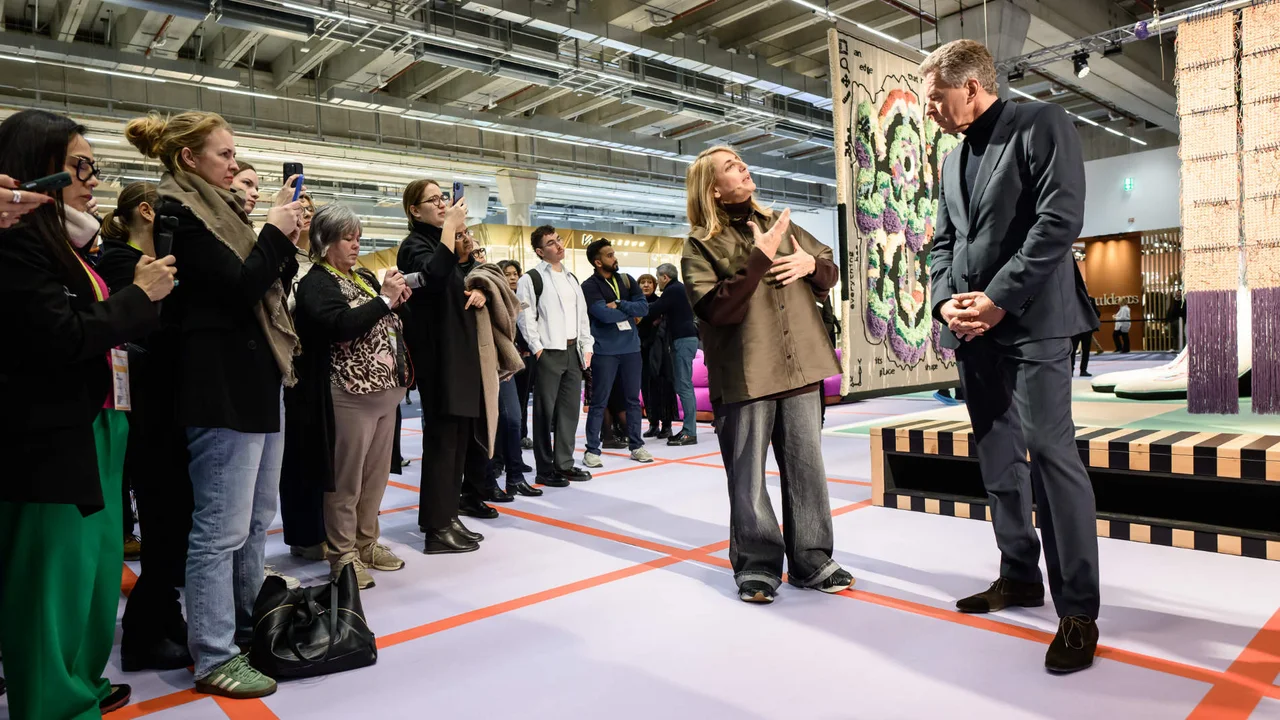
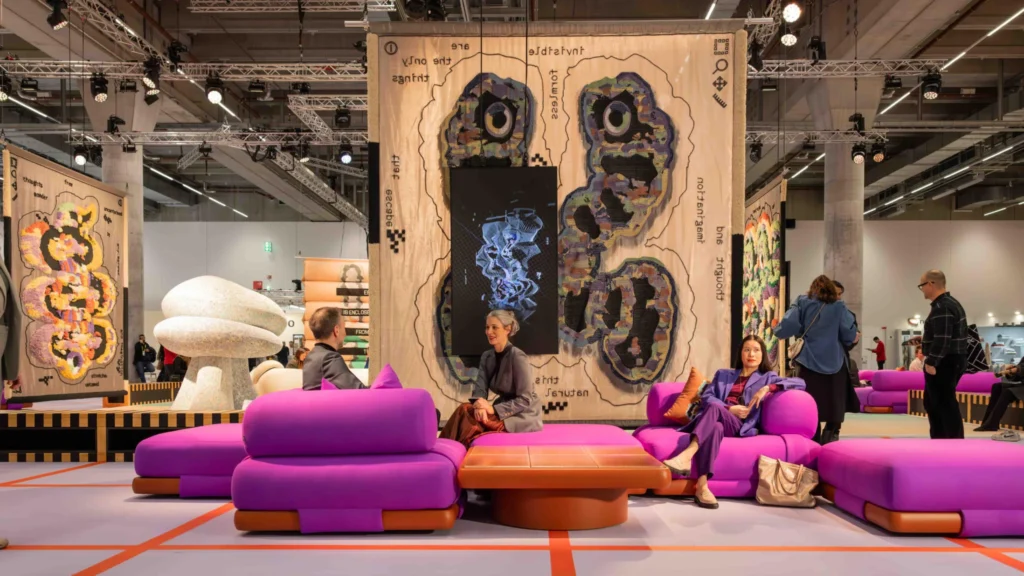
At Heimtextil 2026, Patricia Urquiola transformed textiles from static surfaces into living participants. Her immersive installation, among-all, unveiled in Hall 3.0, positioned home textiles not as background elements, but as responsive systems shaped by human presence, material intelligence, and circular design thinking.
Designed exclusively for Heimtextil, among-all dissolves the boundaries between material and digital space. Artificial intelligence plays an active role, reacting to movement and interaction, while handcrafted textiles ground the experience in tactile reality. The result is an environment where technology amplifies craftsmanship rather than replacing it, inviting visitors into a dialogue between body, material, and machine.
An Interior That Responds
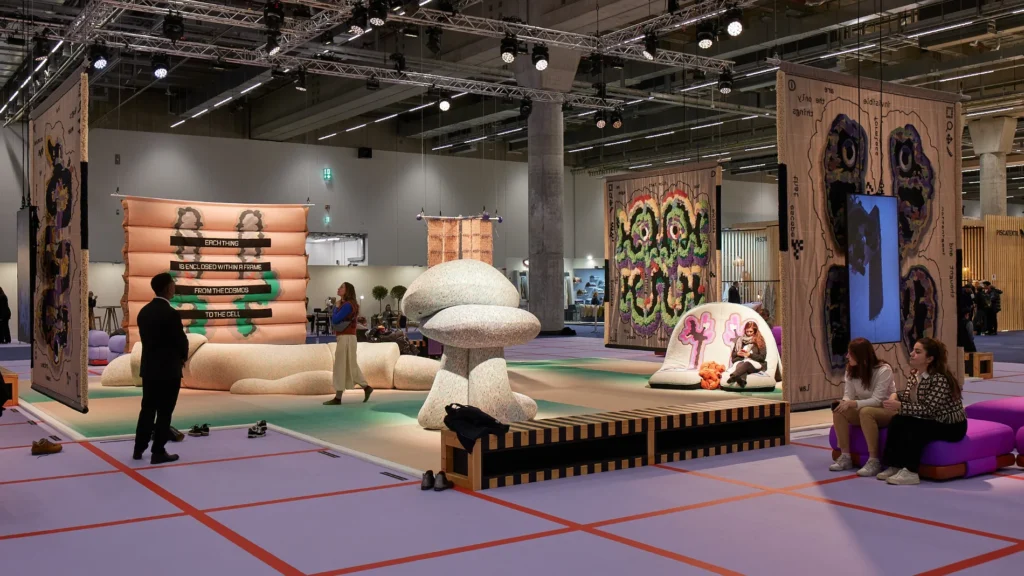
Rather than presenting textiles as finished products, Urquiola’s installation functions as an experiential interior landscape. Every surface is deliberately constructed — woven, sewn, felted, or shaped by hand — and brought into motion through a responsive AI system that translates human movement into evolving digital environments.
The installation reimagines how home goods can behave:
not passive décor, but adaptive companions within interior spaces.
In among-all, craftsmanship becomes exploratory and experimental, while technology remains intuitive and human-centered. Visitors don’t simply observe the installation — they activate it, becoming part of its continuous transformation.
From Waste to Wonder: Circular Materials in Motion
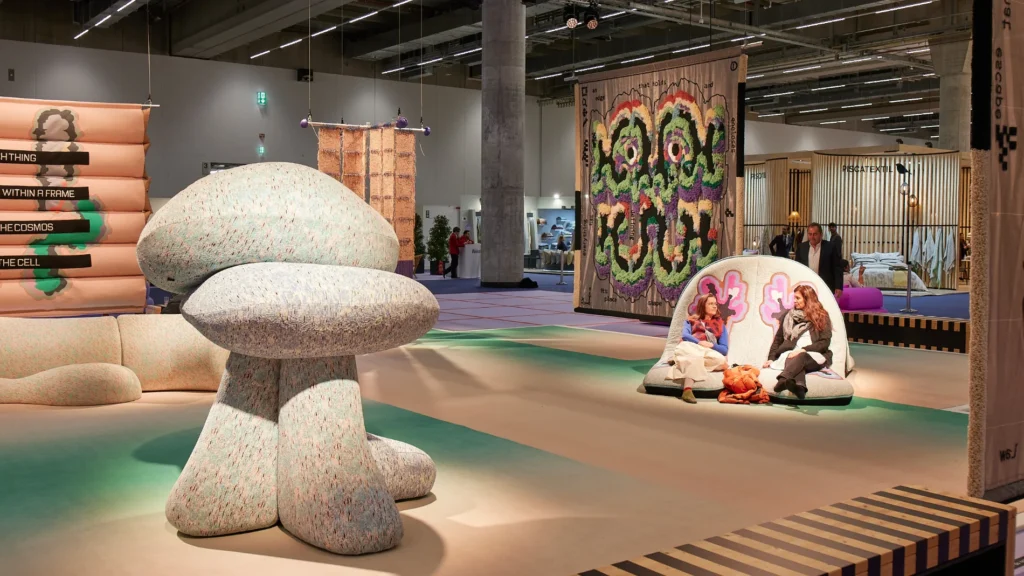
Sustainability is not an abstract concept here — it is physically embedded in the space. Urquiola curated a material palette that showcases how discarded and bio-based materials can form emotionally rich interiors.
The installation brings together:
- Recycled Econyl® nylon from Aquafil
- Bio-based surfaces derived from citrus skins by Ohoskin
- Textile offcuts from 13RUGS by rohi
- 3D-printed structural elements by Caracol
- Refined textile surfaces from cc-tapis
These materials converge into a layered environment of texture, color, and structure, demonstrating how circular design can be both technically advanced and sensorially compelling. Textile remnants become architectural features; waste is elevated into experience.
Design at the Intersection of Craft and Code
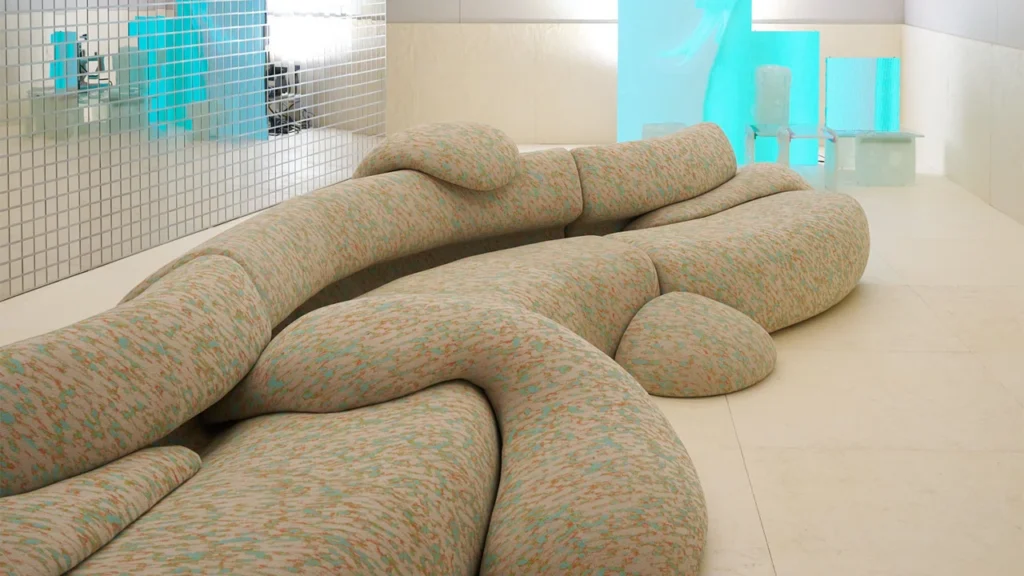
What sets among-all apart is its balance. While AI drives the digital responsiveness of the space, the physical elements remain unmistakably human. Stitches are visible. Fibers are felt. Imperfections are embraced.
This coexistence reframes the future of home textiles:
technology as collaborator, not controller.
Urquiola’s approach suggests that the next evolution of interior design will not come from abandoning tradition, but from integrating it with intelligent systems that respect material heritage while enabling new forms of expression.
A Living Conversation, Continued
among-all builds on Urquiola’s 2025 installation, among-us, which explored open, flowing textile environments through projection and movement. The 2026 iteration advances that narrative, expanding its scope to include AI, circular material cycles, and participatory design — all while keeping the human experience at the center.
The installation is not a conclusion, but a chapter in an ongoing exploration of how textiles shape — and respond to — the way we live.
Guided tours throughout Heimtextil 2026 allow visitors to experience the installation up close, offering insight into a future where home goods are intelligent, sustainable, and deeply connected to human behavior.
Why This Matters for Home Goods & Interior Textiles
- Textiles are evolving into interactive interior systems
- Circular materials are moving from concept to market-ready design
- AI is becoming a creative partner, not just a production tool
- Craft remains essential in an increasingly digital design economy