


When guests arrived at Rathaus Schöneberg, the forecourt was still echoing with the last movements of the weekly flea market—vendors packing crates, textiles folded back into bags, buttons clinking into jars. It was an unintentional overture to the show that followed, and a perfect one. This is the terrain where Lou de Bètoly sources her materials and ideas: places where objects carry memory, wear, and possibility.
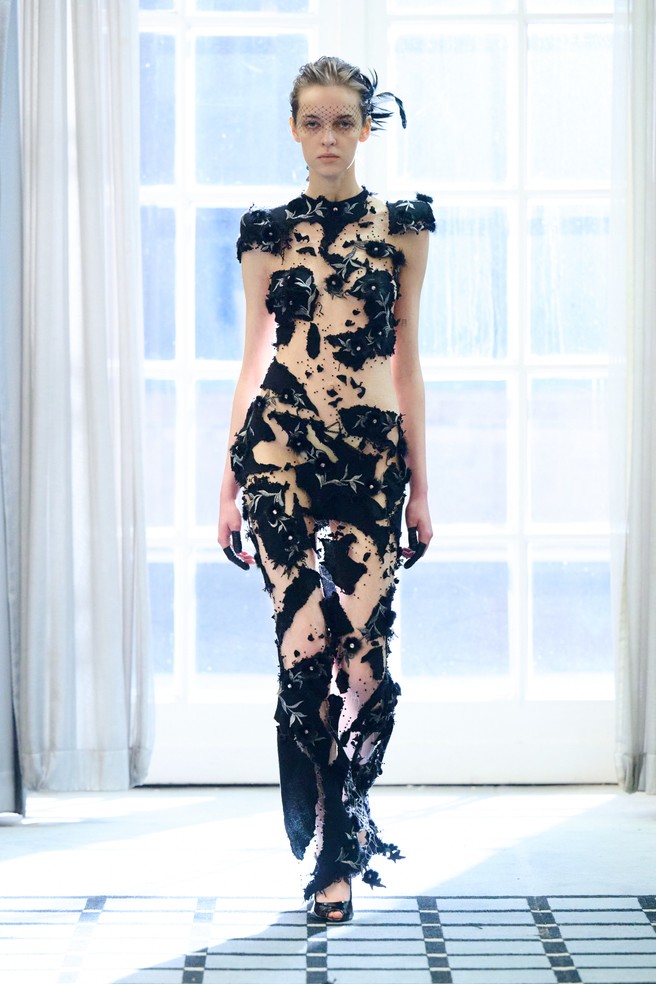
Her collection unfolded as a study in deliberate deconstruction and reconstruction. Bras—once hidden, once utilitarian—became architectural foundations for dresses, tops, and leggings. Thousands of buttons were reassembled into surfaces that read as both armor and ornament. Leftover yarns were coaxed into fringes that moved with the body, while vintage bags were dismantled and reborn as sculptural tops and skirts. Each look felt less like a garment and more like a process made visible.
What distinguished the work was not novelty, but discipline. De Bètoly’s savoir-faire lies in her refusal to shortcut the labor of making. By sourcing from markets and reworking what already exists, she closes a circle between trade and craftsmanship—one that resists the linear churn of production and waste. The clothes do not erase their origins; they honor them.
Asked why she began her label, de Bètoly is precise and unapologetic. “With Lou de Bètoly, I wanted to focus on craftsmanship and keep it alive as a vital part of contemporary creation,” she explains. “It’s about more than just making garments—it’s about preserving techniques, honoring the handmade, and showing that craft still has a place in the future of fashion.”
That ethos places her practice somewhere between applied art, design, and fine art. For de Bètoly, being a designer means questioning the process itself—how materials are sourced, how skills are transmitted, and how freedom can exist without excess. The label emerged, she says, from a desire to break away from the dead end of commercial repetition and overproduction, and instead offer something more personal, more intentional, more human.
Seen in the context of Rathaus Schöneberg—history embedded in stone, markets dissolving and reforming outside—the collection felt grounded rather than performative. It suggested a future for fashion that does not discard the past, but rethreads it: one button, one stitch, one reclaimed object at a time.