

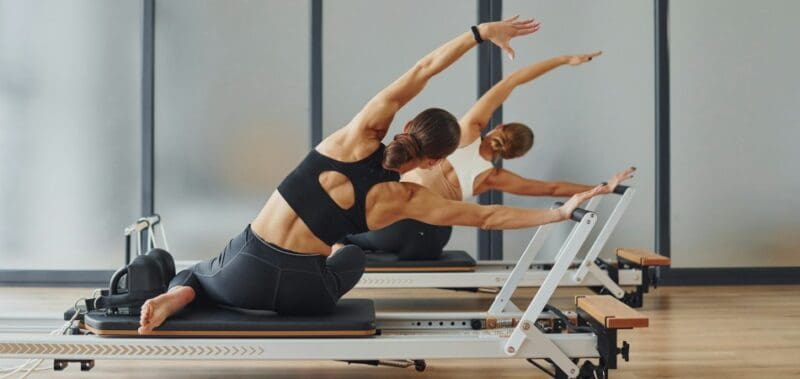
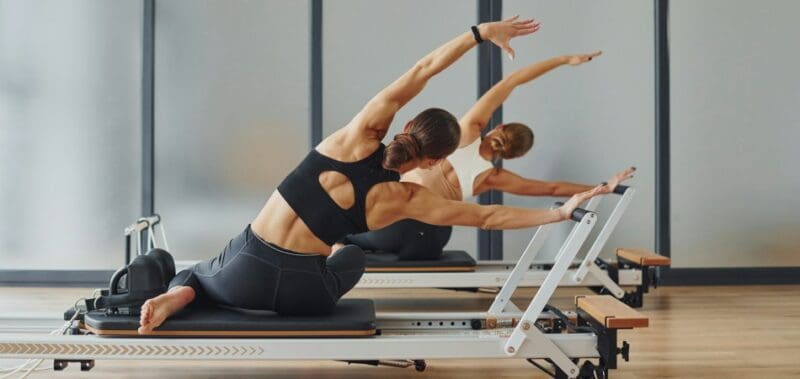
Designed almost a century ago when Joseph Pilates repurposed bedsprings to create resistance-based rehabilitation exercises for injured soldiers, today Reformer Pilates is a global fitness phenomenon, drawing everyone from beginners to elite athletes.
But Pilates is not “fast fitness.” Blending strength, technique, and mindful movement, Pilates is designed for long-term wellness. It’s as much about mental balance as it is about physical posture.
For a wellness practice that works with the body’s intelligence, it’s worth considering that what you wear matters. More than you might think.
Looks Great, But …
Most activewear looks amazing. But when you look at what it’s made of, you’ll find much of it is made of synthetic fabric. That means it’s made from petrochemicals and is, essentially, plastic. These fabrics are marketed as “technical” and promise to optimise performance. But there’s a fibre that does everything these fabrics were created to replace, and has been doing it for hundreds of years. Wool.
Here are three reasons why wool and Pilates make such a great match.
1. Dynamic Support of Body Temperature
During Pilates, your move through exercises, hold positions, and rest. Over the course of the session, your body temperature rises and falls.
Thanks to a phenomenon known as heat of sorption, wool supports your body temperature in a way synthetics can’t. How this works is, wool generates a small but meaningful amount of warmth as it absorbs moisture from your body. This stabilises the microclimate between the fabric and your skin as your body cools.
During these rest phases of a practice, wool manages the microclimate so that you cool, but don’t get cold. You won’t feel clammy either, because wool absorbs moisture into its hydrophilic core, which it then releases as vapour. This is called dynamic breathability.
Equally, during the active phases, wool’s same breathability keeps you dry and comfortable.
Ultimately, and perhaps most importantly, while wearing wool you expend less energy regulating your body temperature. Meaning, there’s more energy to focus on what you’re doing. That’s because the wool is managing things for you.
2. Air It Out, and It’s Ready to Go Again
Because of wool’s natural fibre structure, wool resists the bacterial growth that causes odour. That’s what causes synthetic activewear to smell so badly after even a single use.
Hang your wool tops and bottoms to air in between workouts, and wrinkles will release, moisture dissipates, and odour releases. You can air your wool in fresh air, or in a steamy bathroom. Either works!
The bonus is that wool clothes need far less washing than their synthetic equivalents. Research confirms that wool clothing can be worn more times in between washes than clothing of any other fibre type. This saves energy, water, and time.
It also means your gear lasts longer, because there’s less mechanical stress from washing it.
3. Consider the Microplastics
A typical 5 kg wash load of polyester fabric can release up to six million microplastic fibres. These, as you know, enter the water system, where they persist, breaking down into ever smaller particles, polluting water and soil, and entering the bodies of animals and humans.
Wool shed fibres too, but wool is made of protein – the same protein as human hair. In soil and in water, wool biodegrades. Wool returns to the environment as nutrients, not plastics.
Long-term Well-being In and On the Body
Activewear moved fast in the direction of synthetics. But for a practice that aims for long-term well-being in the body, what you wear on your body deserves consideration.
If wellness is your thing, maybe it’s time that the original performance fibre gets a place in your Reformer class.
The post Wool on the Reformer: Why the Original Performance Fibre is a Perfect Fit for Pilates appeared first on International Wool Textile Organisation.