
Garment District News | Cover Feature | Costume Spotlight
I Love Boosters: When Costume Design Steals Fashion Back
Boots Riley’s crime comedy turns clothing into motive, evidence, rebellion, and revenge. With costume design by Shirley Kurata, I Love Boosters becomes a saturated study of fashion theft, authorship, class, and who gets to profit from creativity.
By Garment District News
In I Love Boosters, fashion is not decoration. It is the crime scene.
Boots Riley’s crime comedy follows a group of shoplifters, known as boosters, who take aim at a cutthroat fashion maven after she steals their designs. The premise is surreal, funny, and politically charged, but for anyone who studies fashion, costume design, textiles, labor, or cultural authorship, the film cuts deeper. It asks a question the fashion industry often tries to avoid: when style is taken from the people who created it, who is really stealing?
That question makes Shirley Kurata’s costume design central to the film’s storytelling. The clothes do more than dress the cast. They build the film’s argument about ownership, aspiration, class, visibility, and creative theft.
I Love Boosters is reflexive in the best possible way: costume design imitating fashion, fashion imitating costume design, and street invention being absorbed, copied, polished, priced, and sold back to the very people who created the look in the first place.

Image: Shirley Kurata, costume designer for I Love Boosters.
The Designer Behind the Look
Shirley Kurata
Shirley Kurata is an ideal costume designer for a Boots Riley universe because her work understands that clothing can be witty, political, surreal, emotional, and character-specific all at once. Her visual language often carries a heightened sense of color, proportion, vintage reference, and personality.
In a film like I Love Boosters, where fashion is both plot and provocation, that intelligence becomes essential. The clothes have to reveal who understands fashion as a living language, who uses it as a survival tool, who exploits it as capital, and who tries to control the story of where style comes from.
The Story Behind the Costumes
The costumes in I Love Boosters appear to live inside a feedback loop: fashion borrows from culture, costume borrows from fashion, fashion borrows back from cinema, and the audience begins to desire the look before asking where it came from.
That loop is exactly why the film feels so relevant. Riley’s story centers on stolen designs, which makes every garment morally charged. The boosters understand clothes differently from the fashion maven they target. For them, garments are not merely luxury objects. They are codes, currencies, disguises, trophies, tools, and proof of a system that extracts value from the margins and sells it through the center.
Kurata’s costume design must hold that contradiction. The looks need enough visual pleasure to make the fashion world seductive, enough absurdity to support Riley’s surreal tone, and enough character specificity to keep the clothing from becoming empty spectacle.
In a traditional heist film, the object of desire might be money, diamonds, art, or a vault. In I Love Boosters, the object of desire is style itself. That turns costume into narrative architecture.
“I Love Boosters turns fashion into a crime scene, where every garment asks the same question: who gets to own style, and who gets punished for taking it back?”
Technical Breakdown
Textile
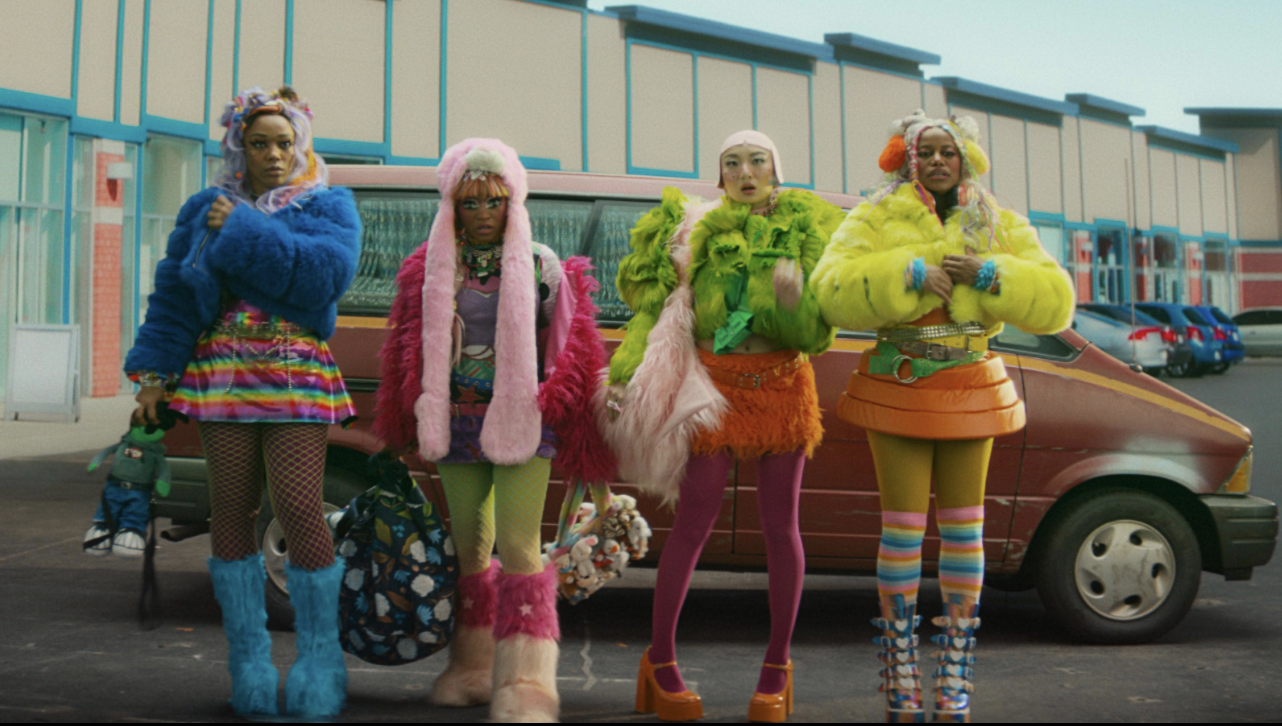
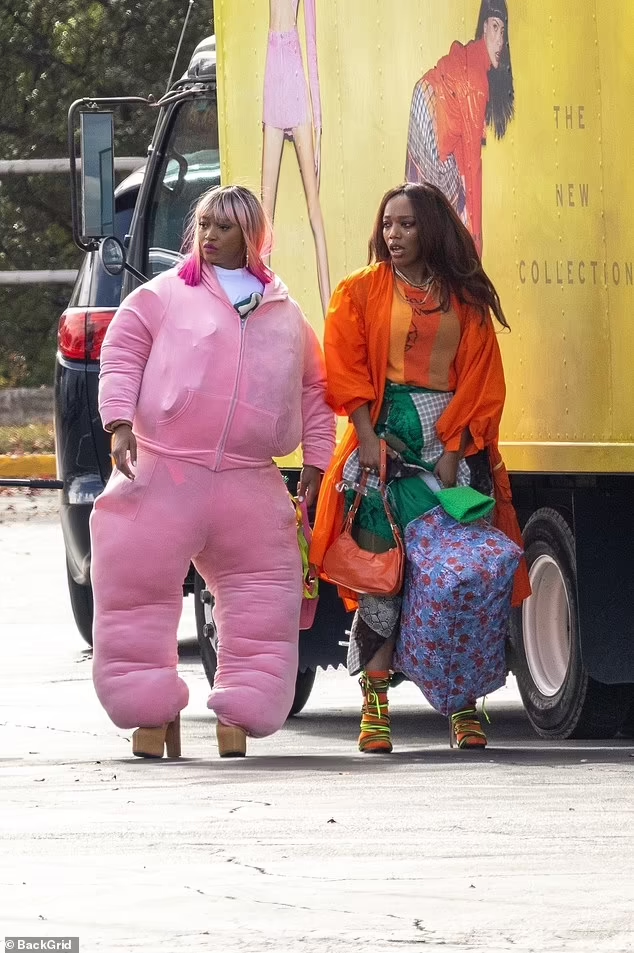
The film’s costume world appears to depend on contrast: plush surfaces, inflated athleisure, faux fur, crisp shirting, suiting, knits, and retail-polished garments all operating inside the same fashion economy.
Color Story
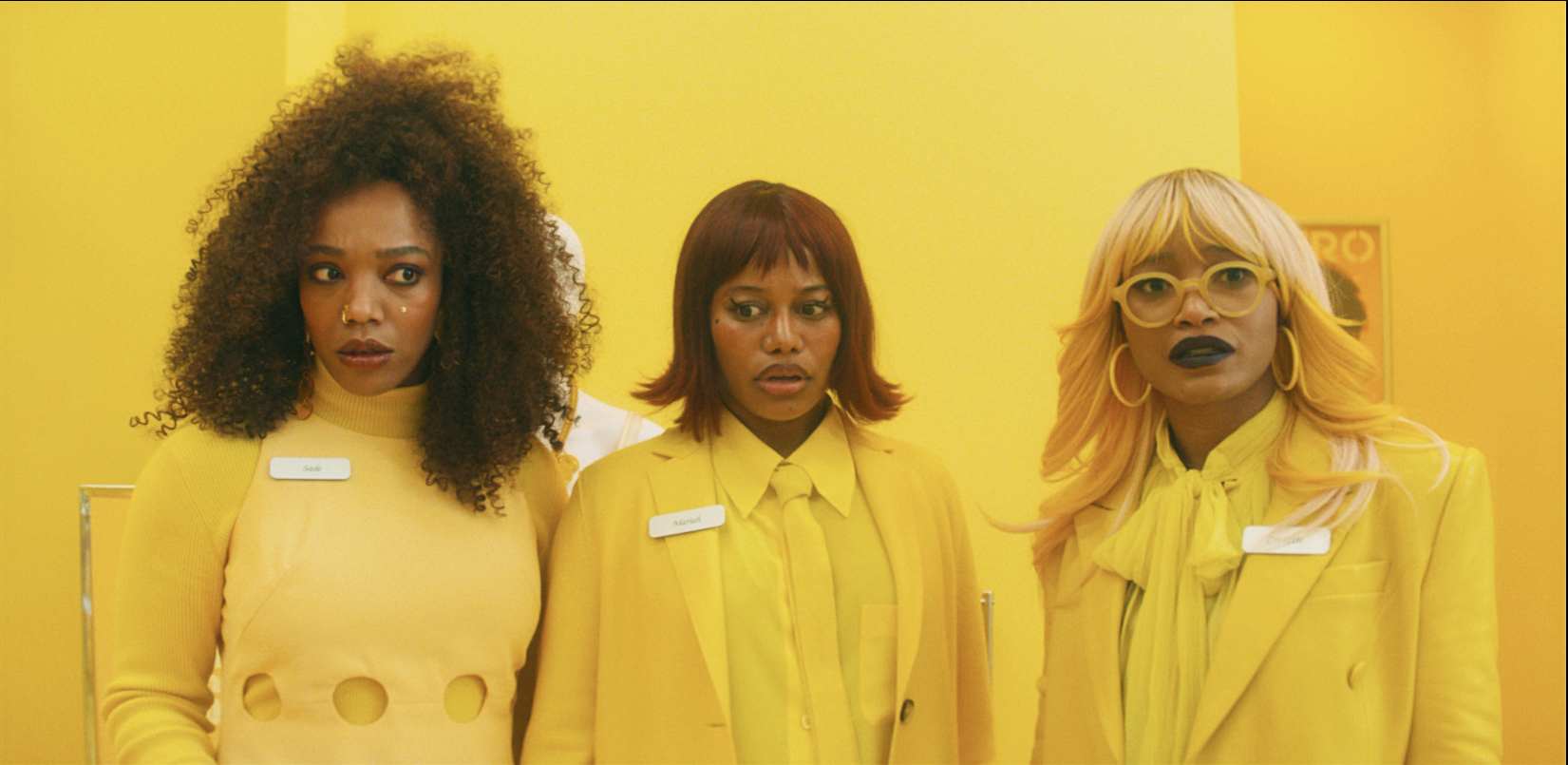
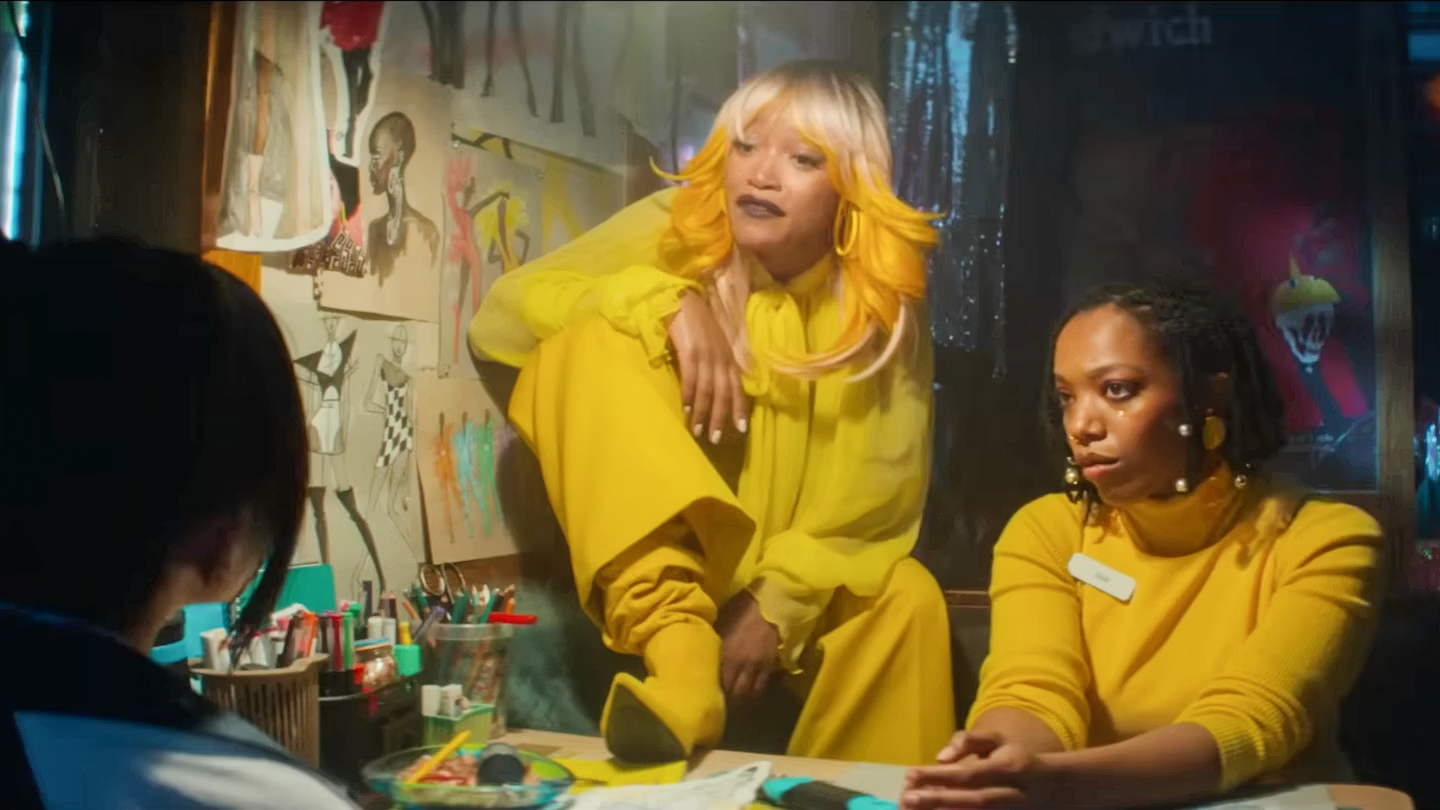
Yellow, green, pink, orange, and electric brights become part of the satire. Color is used as character code, retail seduction, group identity, and visual excess.
Construction
The costumes must support movement, comedy, group identity, and heist energy. Stuffed silhouettes, oversized pieces, platform shoes, and exaggerated accessories turn the body into part of the joke and part of the evidence.
Processing / Finish
The finish of the clothes matters because the film is about value. Shine, polish, wear, softness, bulk, artificial perfection, or thrifted clash can signal whether a garment belongs to luxury retail, street invention, or corporate extraction.
Material and Cultural Context
The brilliance of I Love Boosters is that it treats fashion as a system, not simply an aesthetic. The boosters are not outside fashion. They understand it intimately. They know what garments are worth, how labels create desire, how scarcity drives status, and how the fantasy of luxury depends on someone being excluded.
Demi Moore’s fashion maven represents another side of that system: institutional taste, money, ownership, and the power to turn someone else’s idea into a branded product. Her world is polished and authoritative, while the boosters’ world is kinetic, personal, and inventive.
This is where the film becomes especially important for costume and fashion audiences. It dramatizes the difference between inspiration and extraction. Fashion has long borrowed from street style, subculture, labor uniforms, thrift styling, club culture, protest dress, and communities whose contributions are often renamed once they enter luxury spaces.
In that context, costume design becomes more than character styling. It becomes a visual record of who created the look, who copied it, who wears it, who sells it, and who gets punished for touching it.
From Concept to Screen
A surreal crime comedy about boosters targeting a fashion maven after she steals their designs.
Shirley Kurata builds a wardrobe language where fashion signals power, survival, theft, and creative ownership.
The clothes carry comedy, character, movement, class coding, and the tension between street invention and luxury control.
The film enters the fashion-costume conversation as a story about who gets credit when culture becomes product.
Gallery
Browse the reference strip below and open each frame in the high-detail viewer to inspect costume, color, retail power, character styling, silhouette, surface, and the way Shirley Kurata’s wardrobe turns fashion into evidence inside I Love Boosters.
Why It Matters
I Love Boosters arrives at a moment when fashion is being forced to confront authorship, appropriation, labor, sustainability, and the origins of style. For costume professionals, the film offers something especially compelling: a story where clothing is not an accessory to character, but the structure of the conflict itself.
Kurata’s costume design helps make that conflict visible. The garments reveal how power moves through fashion, how class is performed through clothing, how desire is manufactured, and how creative labor can be extracted from people who are rarely allowed to own the final product.
This is why the film belongs in a deeper fashion and costume conversation. It understands that clothing is never neutral. Clothes can seduce, disguise, accuse, expose, protect, and revolt.
In I Love Boosters, fashion does not sit quietly on the body.
It fights back.