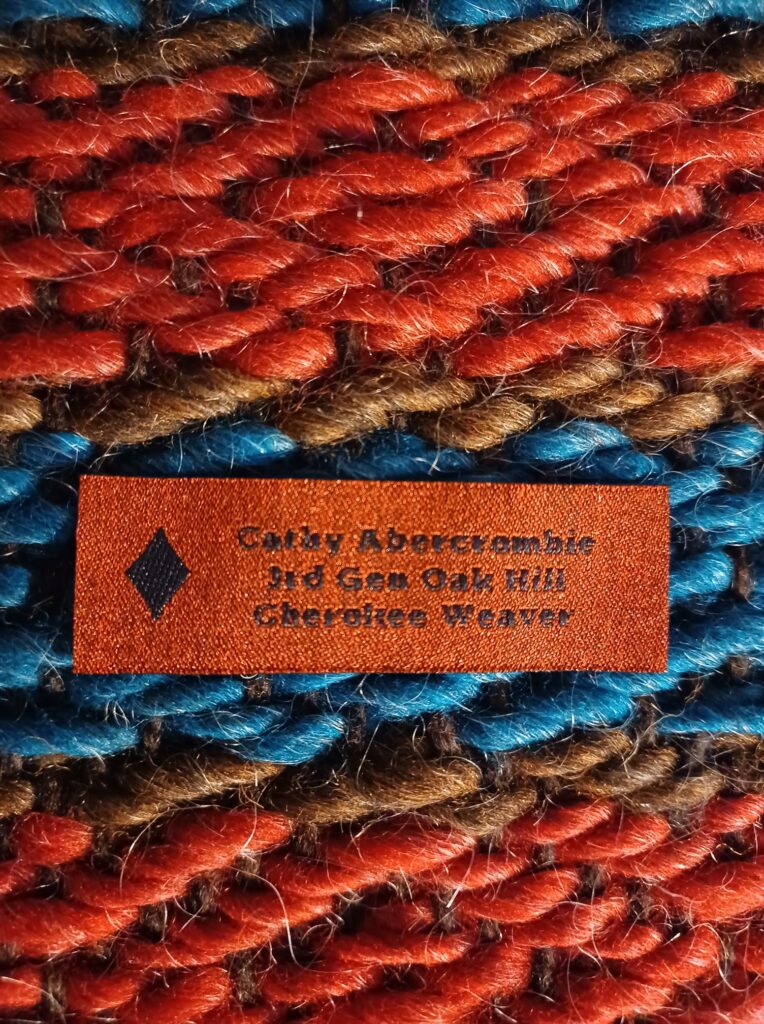
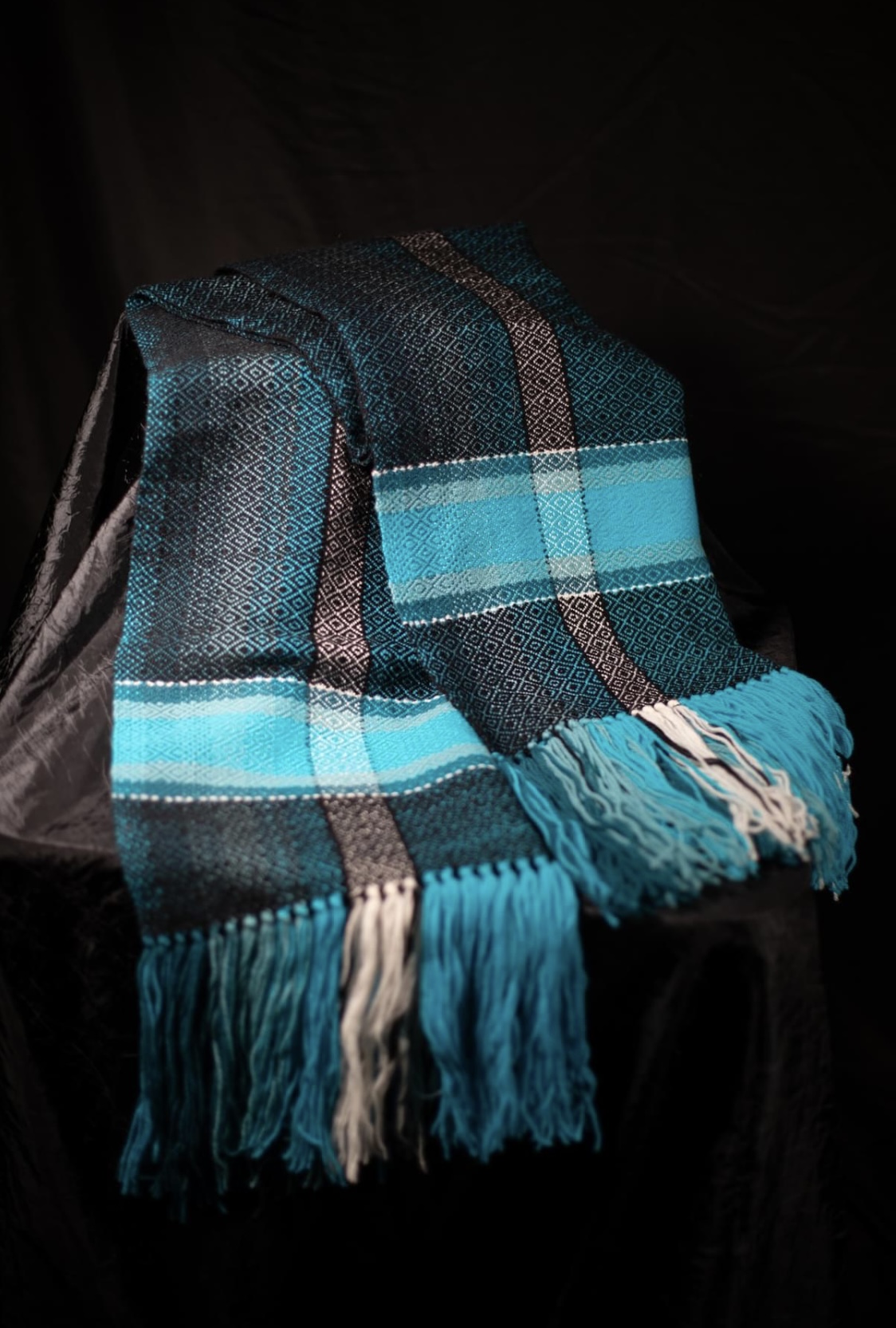
There are looms that simply hold thread, and there are looms that hold a family.
For Cathy Abercrombie, owner of Cherokee Woven Spirits Studio — Cathy Abercrombie Textiles, the loom is not only a tool of production. It is inheritance. It is memory. It is responsibility. It is the worn-smooth wood touched by the women before her, the rhythm of a Cherokee weaving tradition carried forward by hand, and the quiet determination to keep that knowledge alive for the next generation.
Abercrombie is a Cherokee National Treasure, a recognition she received in 2021 for her dedication to preserving Cherokee floor loom weaving. She is a third-generation Cherokee loom weaver, and her sons and grandchildren continue the work as fourth- and fifth-generation Oak Hill loom weavers on the Cherokee Nation Reservation in Oklahoma.
Her textiles are beautiful, but their beauty is not only visual. They carry lineage.
The Weight of an Old Loom


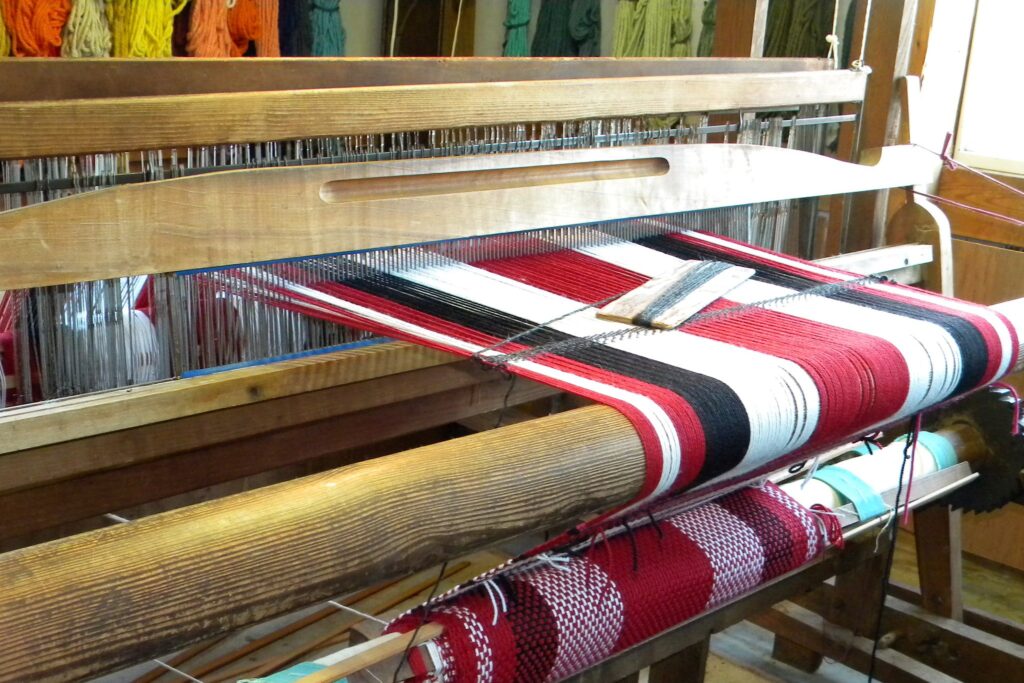
In a world of industrial consistency, there is something deeply moving about Abercrombie’s relationship with antique handmade looms.
She has written about the temptation of a modern loom: a comfortable bench, soft pedals, aluminum parts that do not rust, smooth mechanics, consistent tension, perhaps even a fly shuttle to make every edge behave. Anyone who works by hand understands that dream. Old tools can be temperamental. They can resist. They can demand physical labor in ways that new equipment does not.
But for Abercrombie, the inconvenience is part of the inheritance.
When an 80-year-old brake refuses to hold, when a deadline is approaching, when the solution is yarn tied around a problem and repeated trips up and down from the floor, the antique loom becomes more than a romantic object. It becomes a working partner, stubborn and alive with age.
Then comes the moment that explains everything: the cut-off.
The weaving leaves the loom. Her hand rests on wood worn smooth by her grandmother Pearl Abercrombie’s hand. She looks down at the gold ring made for Pearl in 1907 by Pearl’s father, a ring Cathy was given along with the loom and told to wear, not put away.
That is when the loom stops being merely contrary. It becomes a bridge.
The weaving may not be mechanically perfect, but it has passed through hands, history, and obligation. It was made by Cathy’s hand, guided by the two generations before her.
Oak Hill and the Transmission of Skill
Abercrombie’s story is inseparable from Oak Hill Indian Weavers in Piney, Oklahoma. According to her biography with the Institute of American Indian Arts, she wove her first set of placemats at age eight under the mentorship of her grandmother, Pearl Abercrombie, who had been a charter member of Oak Hill Indian Weavers since 1940.
That early beginning matters.
Textile traditions survive because someone teaches a child where to place their hands. They survive because a grandmother has enough patience to pass on rhythm, structure, and discipline. They survive because a family understands that a loom is not just equipment, but cultural infrastructure.
Abercrombie’s aunt, Cherokee weaver Charlene Johnson, later passed two family looms on to her, trusting that she would carry the legacy forward. That act of transfer was not simply about ownership. It was about continuation.
Today, Abercrombie operates Cherokee Woven Spirits Studio — Cathy Abercrombie Textiles within the Cherokee Nation Reservation in Oklahoma, where she continues to preserve, replicate, and innovate within Cherokee textile traditions. Dalton State College describes her work as both preservation and creative evolution, noting her skill in authentically replicating original Cherokee designs while also creating new dynamic designs rooted in heritage.
Weaving as Cultural Memory


Cherokee loom weaving is not only a technical practice. It is a form of cultural memory.
Through her textiles, Abercrombie works within a tradition that connects material, pattern, family, and identity. Her practice has been recognized for documenting, replicating, and preserving original Cherokee designs using historically accurate yarns.
That kind of work requires more than skill at the loom. It requires research, memory, and cultural care. It asks the maker to understand what must be preserved and where there is room for contemporary expression.
In Abercrombie’s textiles, preservation is not passive. It is active. Every warp is a decision. Every weft is a continuation. Every finished textile becomes part of a larger effort to make sure Cherokee weaving is not treated as a relic, but as a living practice.
This is one of the reasons her work matters so deeply to the wider textile world. In fashion, interiors, costume design, and material culture, there is often a tendency to admire Indigenous textile aesthetics without understanding the knowledge systems behind them. Abercrombie’s work reminds us that pattern is not decoration without context. It is history, belonging, technique, and responsibility.
The Beauty of Imperfection
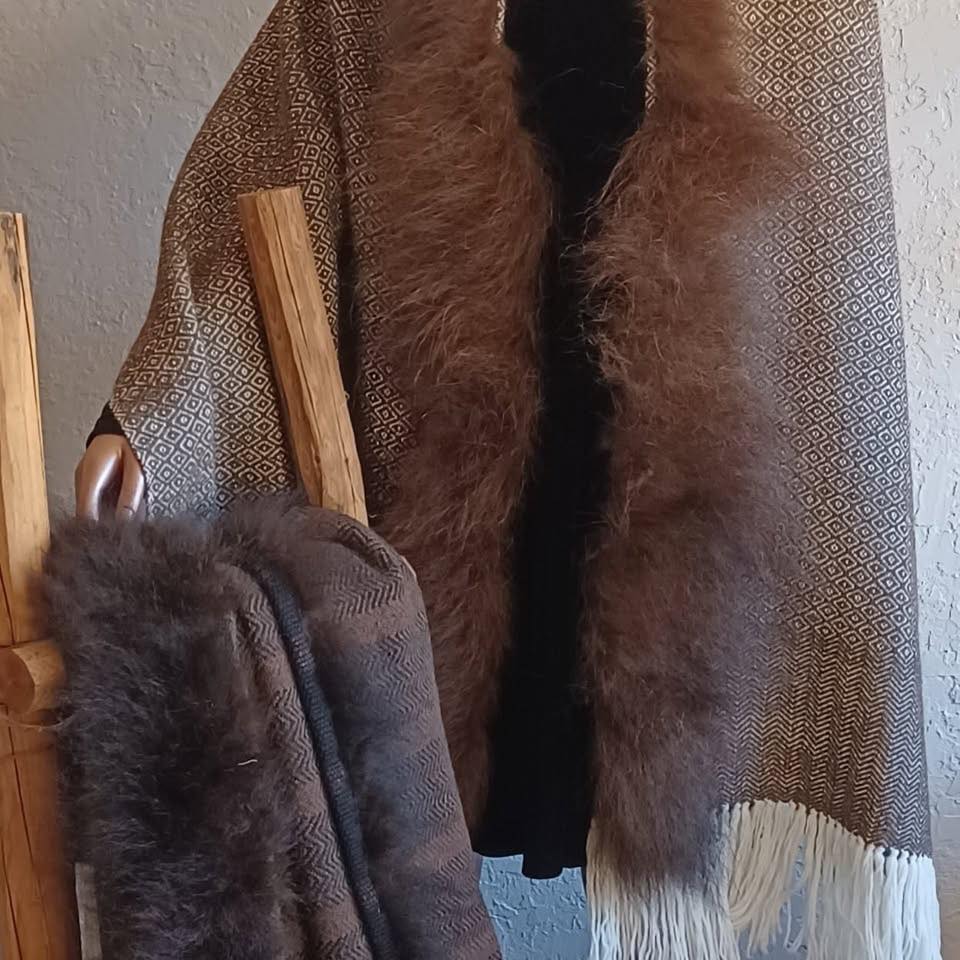
There is a particular honesty in Abercrombie’s reflections on imperfect weaving.
A modern loom might deliver cleaner edges, smoother tension, and a more predictable process. But the antique handmade loom gives something else: a relationship with those who came before.
The slight irregularity of the handmade textile becomes part of its truth. It tells us that this cloth was not manufactured into sameness. It was negotiated into being. The weaver had to respond to the loom, the thread, the tension, the deadline, the body, and the memory held in the tool itself.
In that sense, Abercrombie’s textiles challenge the modern obsession with flawless finish.
The value is not only in perfection. The value is in touch.
The value is in a granddaughter’s hand resting where her grandmother’s hand once rested. The value is in a ring worn as a promise. The value is in a fifth generation knowing that this work still belongs to them.
A Studio Built on Continuity
Cherokee Woven Spirits Studio is not simply a business name. It is a statement of purpose.
Abercrombie’s work carries the visible beauty of woven textiles, but it also carries the invisible labor of cultural continuity. She is not only making cloth. She is holding open a doorway for the next generation of Cherokee weavers.
OsiyoTV’s feature on Abercrombie describes her as a third-generation Cherokee weaver with a dream to see the tradition continue for seven generations. That vision expands the meaning of every textile she makes. The work is not just about what comes off the loom today. It is about who will still be weaving tomorrow.
That is what makes her practice so powerful.
In an industry often focused on novelty, Abercrombie is working with time. She is working with inherited tools, family teaching, Cherokee design, and the physical knowledge that can only be passed through use. Her studio stands as a reminder that textile heritage does not survive by admiration alone. It survives when people keep making, teaching, wearing, remembering, and returning to the loom.
The Cloth and the Calling
There are many ways to describe Cathy Abercrombie’s textiles: beautiful, meticulous, historically grounded, culturally significant. But perhaps the most important word is guided.
Guided by Granny Pearl.
Guided by Oak Hill.
Guided by Cherokee tradition.
Guided by antique looms that still ask something of the body.
Guided by the generations now learning beside her.
When Abercrombie gives thanks for the path she has been allowed to walk, it is clear that weaving is not only her craft. It is her calling.
Her work asks us to look at textiles differently. Not as surfaces. Not as trends. Not as objects detached from their makers. But as living records of family, place, perseverance, and cultural survival.
At Cherokee Woven Spirits Studio, cloth is not simply woven.
It is remembered.
Visit Cherokee Woven Spirits Studio